
أ مصعد منزلي is an assistive mobility tool that enhances safety and convenience in multi-story residences. Moreover, with the global trend of an aging population, an increasing number of people are choosing to age at home, which will drive a sustained rise in the demand for residential elevators—representing immense market potential.
If you are currently considering installing an elevator in your home, or if you are involved in the business of selling residential elevators—and you find yourself lacking sufficient knowledge, struggling with model selection, or unclear about market information—this collection of frequently asked questions will be of help to you.
Cost & Investment

Are home elevators expensive?
No, the price range for home elevators is quite broad. High-end elevators are indeed quite expensive, with prices potentially reaching hundreds of thousands of dollars. However, the price of a standard or basic-model elevator can be comparable to the cost of a set of kitchen appliances—roughly a few thousand dollars.
What does a home elevator cost?
The cost range for a home elevator—covering the equipment alone—is $8,000 to $80,000. However, calculating the specific price of a home elevator requires data such as site conditions, elevator type, number of floors, dimensions, load capacity, and any custom options selected.
How much does it cost to install an elevator in a home?
The installation cost for a home elevator primarily consists of expenses for obtaining relevant permits, civil construction work, labor, electrical and power supply modifications, as well as testing, commissioning, and final inspection.
The installation cost ranges from $5,000 to $15,000. The exact price depends primarily on site conditions—with significant cost differences between new and existing homes—as well as the number of floors and the labor costs of the chosen installation team.
Does an elevator add value to my home?
A home elevator can add value to your residence. In the secondary housing market, homes equipped with residential elevators broaden the pool of potential buyers—encompassing both those seeking greater comfort and those looking for a home suitable for aging in place or accommodating family members with limited mobility.
Furthermore, homes equipped with residential elevators typically command higher market prices; professional research indicates that a residential elevator can increase a property’s value by approximately 10%.
Does Medicare pay for home elevators?
Medicare does not pay for home elevators. Home elevators are considered home modifications rather than durable medical equipment covered by Medicare.
However, this does not mean you cannot access any benefits; there are alternative options available that can help you save on the costs of acquiring an elevator.
- برنامج Medicaid
- Veterans Affairs (VA) Benefits
- Medicare Advantage (Part C) Plans
- State and Local Grants
Product Types & Working Principles
How do home elevators work?
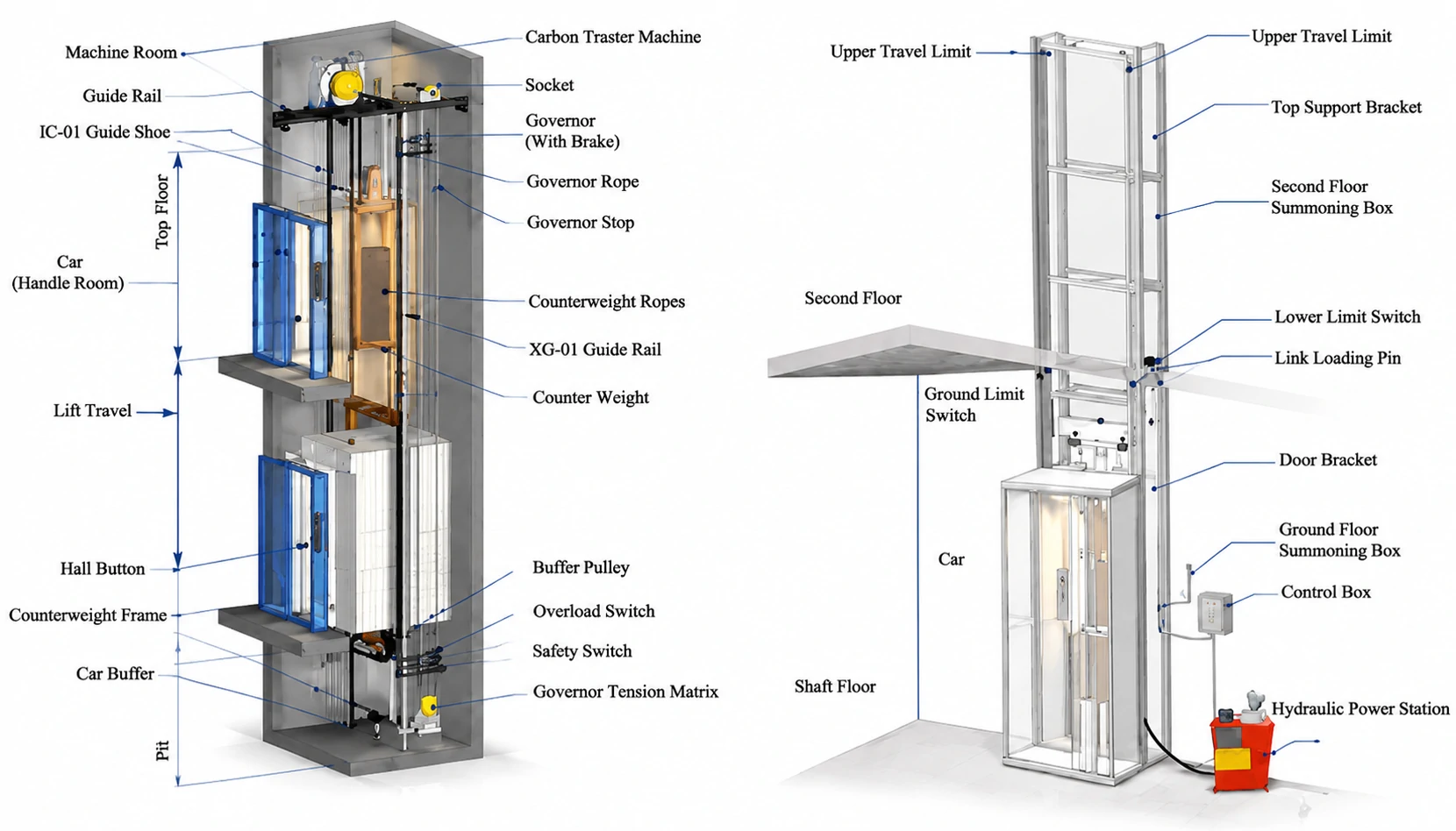
In simple terms, the operating principle of a home elevator involves a drive system that provides power to move the elevator car up and down.
Furthermore, it coordinates the control, braking, and safety systems to ensure safe operation as the elevator travels up or down, allowing it to reach the designated floor smoothly.
Currently, there are four types of drive systems for residential elevators: traction, hydraulic, screw, and vacuum.
Home elevator versus commercial elevator. Can I use a residential elevator in a commercial setting?
No. The design standards for home elevators and commercial elevators are different.
Home elevators are designed for private residential use; they typically have a capacity of about 6–8 people and are not intended for prolonged, high-frequency operation, meaning they do not meet the requirements for commercial use.
Furthermore, elevators in commercial settings are all subject to inspection—a requirement that residential elevators cannot meet.
Installation & Space Requirements
Can an elevator be added to existing homes & new construction?
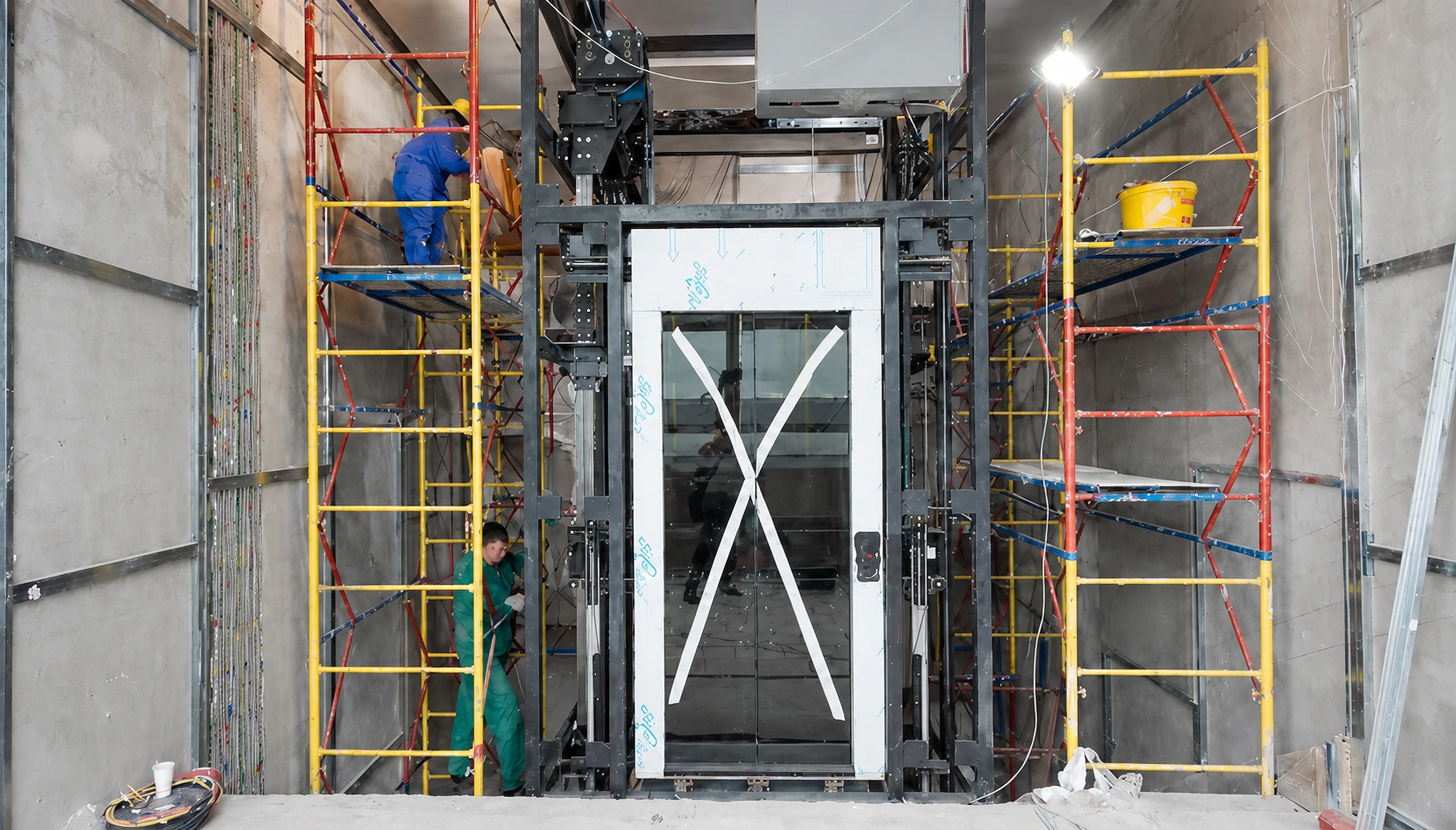
Elevators can be installed in both new and existing residential buildings; the only differences lie in the civil engineering requirements and the choice of elevator structure.
Installing elevators in new residential buildings is more straightforward, as elevator shafts can be incorporated into the initial design and construction; in contrast, for existing residential buildings, it may be necessary to modify floors or walls that have already been finished.
Where can a home elevator be installed?
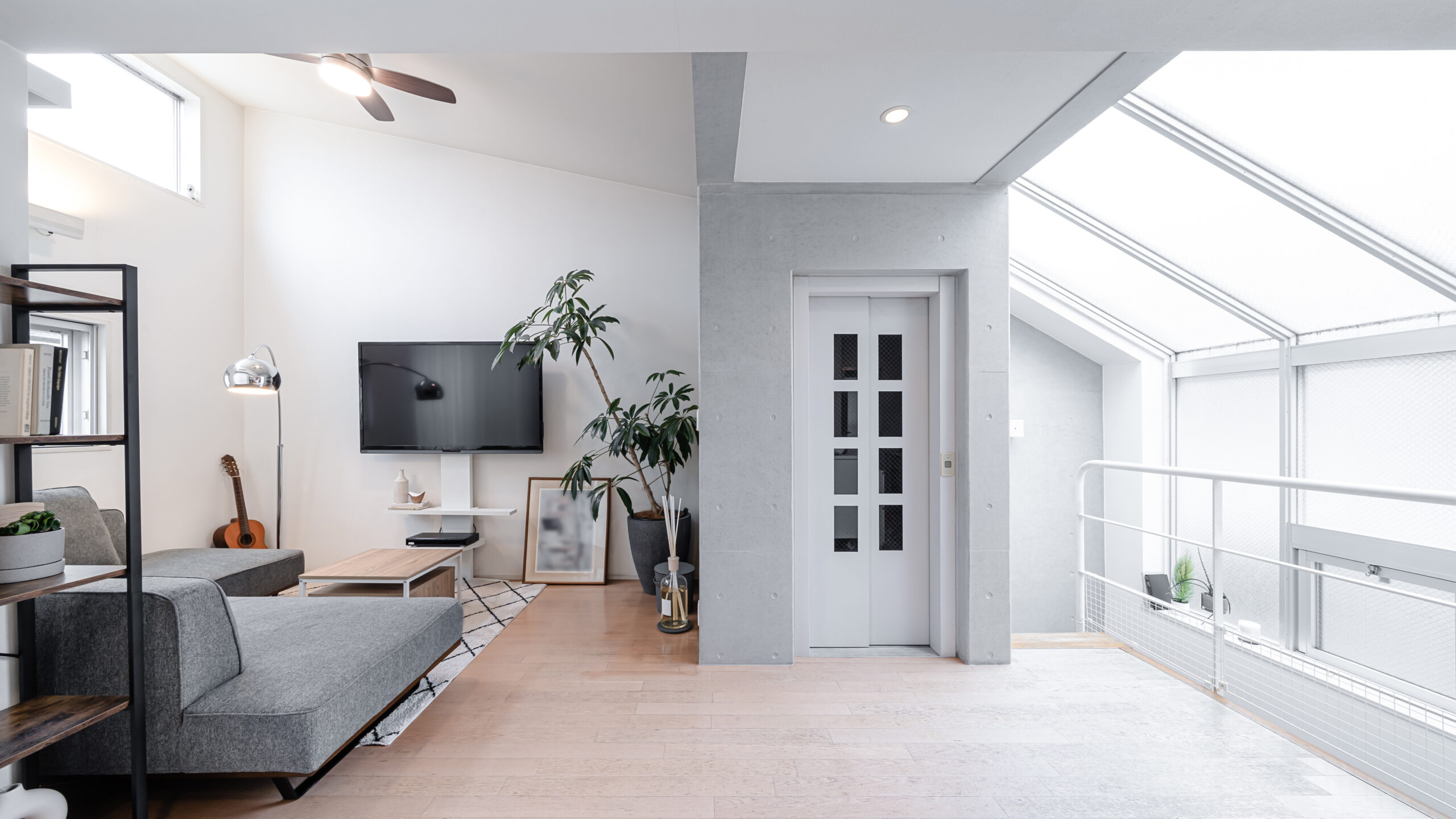
Nowadays, home elevators offer flexible choices for installation locations. The advent of shaftless و مصعد بدون حفرة models means that installation locations are no longer restricted; elevators can be installed beside or within a staircase, in a corner of the living room, in a hallway, in a bedroom, or even outdoors.
How to measure shaft dimensions for home elevator installation?
For the elevator shaft, it is necessary to measure the depth, width, and total height of the shaft, as well as the pit depth and the top-floor height.
Hoistway width: Use a tape measure and a laser distance measurer to measure the distance between the left and right walls inside the hoistway.
Hoistway depth: Measure the distance between the front and rear walls of the hoistway.
Hoistway height: The distance from the floor of the hoistway to the top of the hoistway.
Pit depth: Measure the distance from the lowest point to the floor of the lowest level.
Top-floor height: The distance from the ceiling of the highest floor to the top of the elevator shaft.
The dimensions of the elevator shaft are crucial when designing the size of a home elevator; if you are concerned about your ability to take precise measurements, you can consult a professional installation team or seek assistance from an elevator company.
How much space is needed for a residential elevator?
In the current market, the largest home elevators require 3 square meters of space, while the smallest can be installed in as little as 0.8 square meters.
How deep should my pit be for the home elevator?
The pit depth for a home elevator typically ranges from 100 mm to 500 mm, though the exact depth depends on the specific type of elevator chosen, as well as its parameters and configuration.
Can I install a home elevator myself?
We do not recommend that you install a home elevator yourself unless you possess the necessary local qualifications and have received the appropriate training. Because home elevators are precision mechanical devices that involve electrical wiring, safety testing, and similar procedures, any lack of care could pose a risk to personal safety.
How long does it take to install a home elevator?
For a two-story home elevator, provided that the site is fully prepared, installation period requires 2–3 days.
For a residential elevator serving 3–4 floors and featuring a standard elevator shaft, installation can be completed in 4–7 days.
For some elevators with 4-5 floors and above, which need to be installed in non-standard shafts and have more complex configurations, it may take 7-14 days.
Furthermore, for مصاعد دائرية with complex structures and high precision requirements, the installation process for a 4–5 storeys may exceed 20 days.
Performance & Specifications
How many floor levels can a home elevator travel?
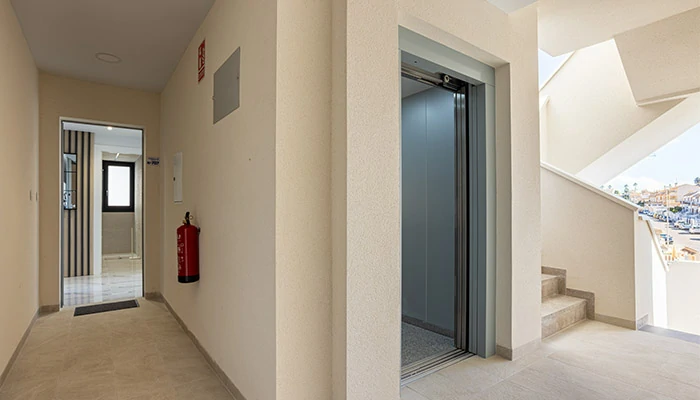
The most mainstream and common types of home elevators on the market are المصاعد الهيدروليكية و مصاعد جر. Hydraulic home elevators can travel 2-4 floors, while traction elevators can travel 2-7 floors.
How fast is a home elevator?
Home traction elevators and home hydraulic elevators differ in speed. Hydraulic elevators are slower, with a selectable speed range of 0.15m/s to 0.3m/s. Traction elevators, on the other hand, are relatively faster, with a selectable speed range of 0.3m/s to 0.63m/s.
How loud is a home elevator?
The noise level of a home elevator depends on the type of elevator and the technology of the manufacturer, and is typically between 30 and 80 dB.
Home elevators inevitably produce mechanical friction noise when moving up and down. However, current technology has reduced the noise level to a level that meets the comfort standards for families.
How much weight can the elevator hold?
Home elevators typically have a load capacity of 200-630kg and can carry a maximum of 2-8 people.
Will the home elevator accommodate a wheelchair?
Home elevators can have their cabin dimensions customized to fit the size of a wheelchair.
In addition, some manufacturers now offer special home wheelchair elevators. They not only have ample interior space and spacious entrances and exits, but also add accessibility features for wheelchair users, such as handrails and through doors.
كم يدوم عمر مصاعد المنازل؟
The average lifespan of a home elevator is 20-25 years. However, different types of elevators have different designs. Traction elevators are designed for a lifespan of 20-30 years, while hydraulic elevators are designed for a lifespan of 15-25 years.
Safety & Maintenace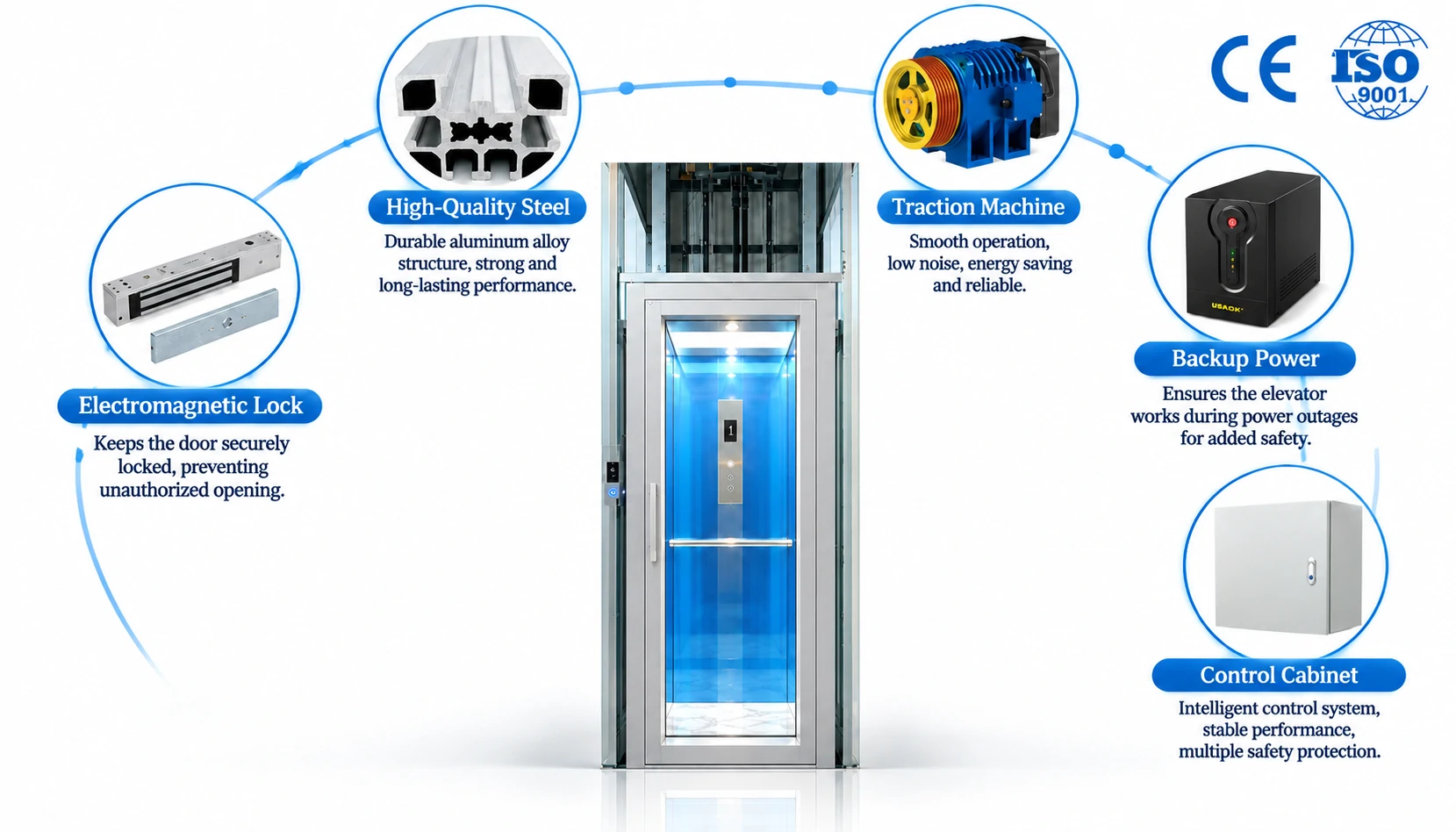
Are residential elevators safe?
A properly installed, compliant home elevator is very safe. These elevators are equipped with redundant أجهزة السلامة, such as overspeed limiters, fall protection safety clamps, emergency power supplies for power outages, automatic leveling systems during power outages, anti-pinch safety touch panels, and anti-hand-pinch light curtain sensors—which can prevent dangerous accidents from happening in various ways.
What happens if the electricity goes out?
If a sudden power outage occurs while using the elevator, don’t worry, the elevator will automatically activate and provide emergency assistance. The elevator will switch to the backup elevator within milliseconds, thus driving the car to the designated floor and opening the door.
How often should I have my elevator serviced?
The answer to this question depends on how frequently you use the elevator. If you use it frequently (15-25 times a day), a maintenance cycle of once every six months is recommended. If you don’t use it frequently, once a year is sufficient.
How much does home elevator maintenance cost?
The annual maintenance cost for a home elevator is approximately 500-1200. The actual cost will vary depending on the elevator’s brand, model, type, frequency of use, and local service pricing.
Puchase
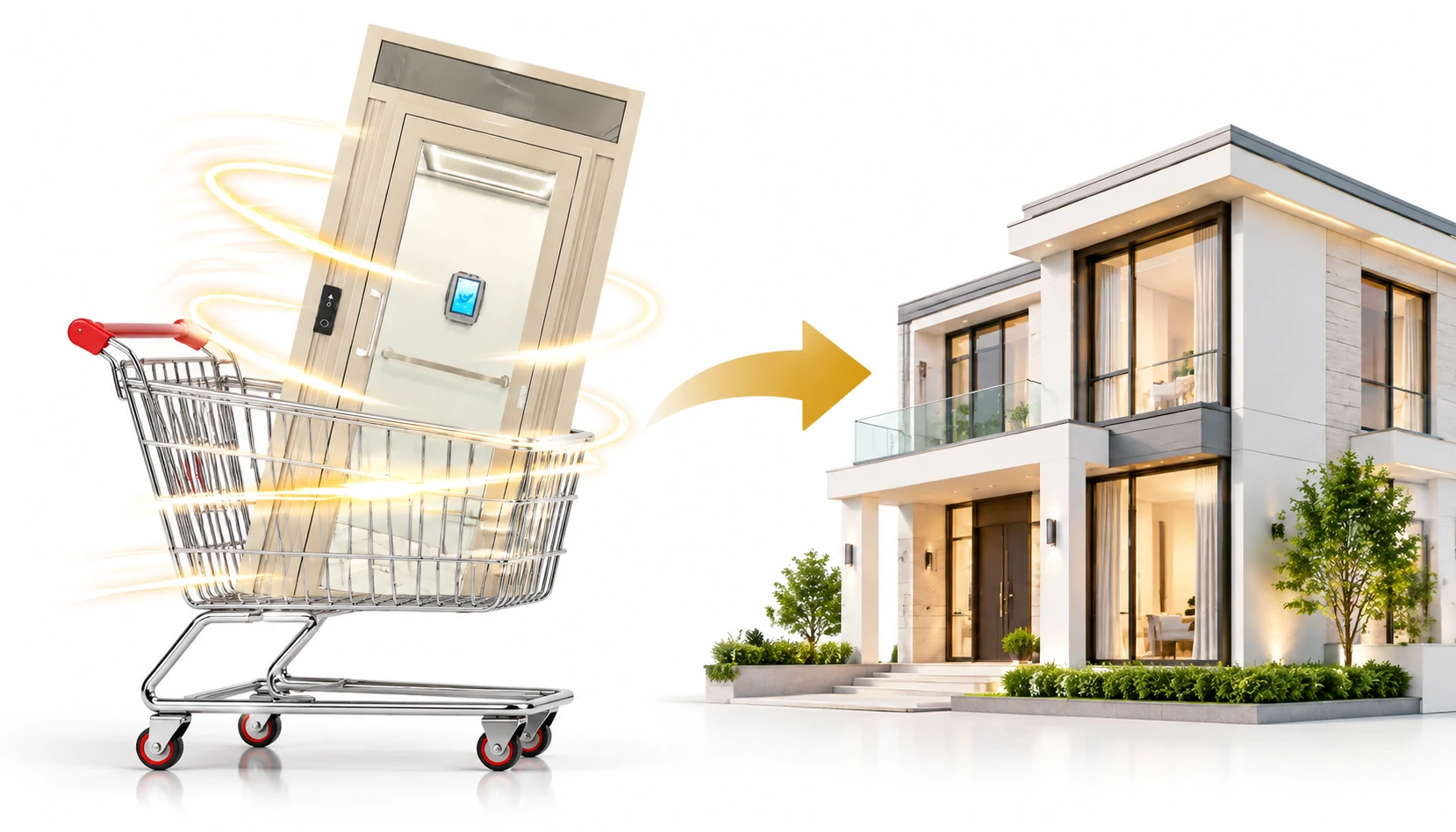
What’s the most commonly purchased elevator?
According to PW Consulting’s global Home and Residential Elevators market research, by 2025, traction elevators will account for 42.21% of the market, hydraulic elevators 25.05%, screw elevators 19.65%, and vacuum elevators 13.09%.
How to assess reliability of home elevator manufacturer?
A reliable home elevator manufacturer should possess the following characteristics:
- Possesses real factories and production capabilities.
- Have a professional design, technical, sales, and after-sales team.
- They can operate accurately according to the production process and have a strict quality control system.
- With product customization capabilities, we can provide suitable solutions for different types of residences.
- Processes a stable production cycle and the ability to supply goods reliably.
- Processes a complete after-sales service system.
- Possesses real-world project case studies and industry experience related to home elevators.
الخلاصة
Whether for personal use or as a core business element, a home elevator is a wise investment. If you have any further questions about home elevators, please feel free to اتصل بنا.
نحن have 15 years of experience in the design, production, and installation of home elevators, and have a number of professional engineers who can quickly provide you with professional guidance and solutions.
 Arabic
 English
 Vietnamese
 German
 Malay
 Thai