
Dalam interaksi tetap saya dengan pelanggan luar negara, saya sering bertemu pemilik vila yang—selepas menemui tutorial dalam talian dan kit pemasangan DIY yang lengkap—tersalah menganggap lif rumah sebagai mekanisme pengangkatan yang mudah. Mereka merancang untuk mendapatkan alat ganti dan memasang unit itu sendiri untuk menjimatkan kos peralatan dan pemasangan.
I have been exposed to some projects that had this idea in the early stage. Some of them were half-way through and found that the technical threshold was far higher than expected, so they were put on hold. A few were barely assembled, but later exposed various safety and compliance troubles. Lif rumah are specialized passenger-carrying lifting devices; they are in a completely different league from furniture or DIY woodworking projects.
Drawing on our experience with overseas projects, this article lists the various risks associated with building or self-assembling a home elevator. Whether you are a homeowner, a designer, or a contractor working on a villa renovation, this information can serve as a valuable reference for your project.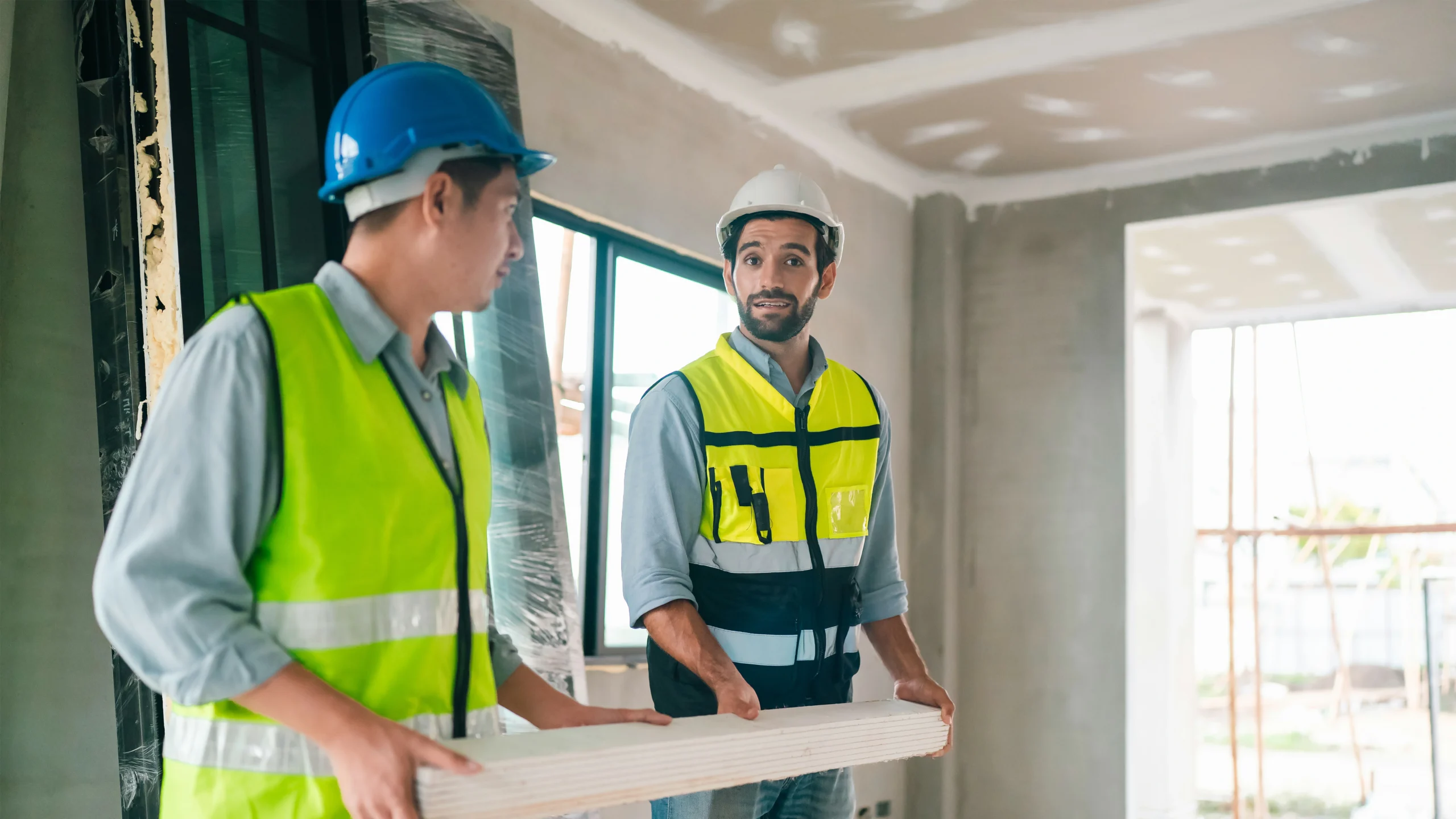
Risks to Personal Safety (The Most Critical Hazard)
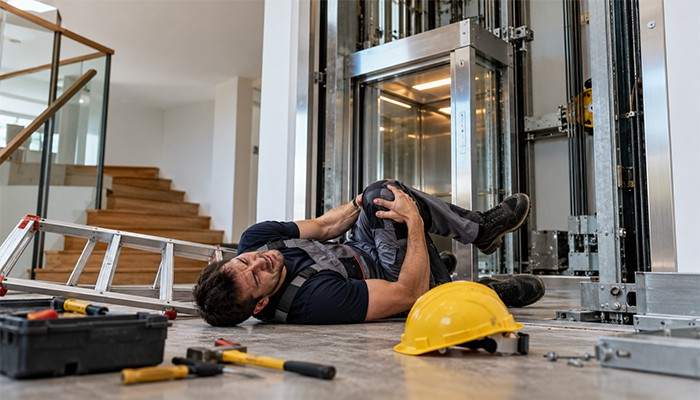
Many DIY home elevator kits available and online tutorials merely demonstrate the lifting and lowering operation, while downplaying the importance of redundant safety designs in the complete manned system.
A qualified home elevator does more than just lift the car. It also requires a comprehensive, integrated safety system comprising door interlocks, overspeed protection, emergency lowering upon power failure, overload protection, and an anti-fall mechanism. Furthermore, the vertical accuracy of the guide rails, the tension of the steel belts or wire ropes, and the brake clearance all require calibration using specialized tools. Even a deviation of just a few millimeters during installation can accelerate component wear over the course of long-term operation.
We have encountered cases where clients assembled elevators themselves; while the units appeared to operate normally, the emergency descent function failed during power outages. In other instances, improper brake adjustment caused the elevator car to slowly drift or slide downward. Such issues may not manifest immediately, but elderly family members or children are using the elevator.
Does Not Comply with Local Regulations and Compliance Requirements

This is a point easily overlooked by many private homeowners. The European EN8141 and North American ASME standards for home elevators apply to the complete, fully assembled unit; they do not cover systems assembled from disparate, individual parts.
Even if you purchase all the necessary components and assemble the unit yourself, a self-built device cannot obtain certification documentation for the complete system.
In some regions, the installation of home elevators requires the submission of relevant product certificates for construction filing and home insurance purposes. DIY-assembled units are highly unlikely to pass inspections by local building authorities, and in serious cases, owners may be ordered to dismantle them immediately. Furthermore, a homemade elevator lacking compliant certification can become an obstacle to the property’s resale.
Damage The Original Structural Integrity of The House
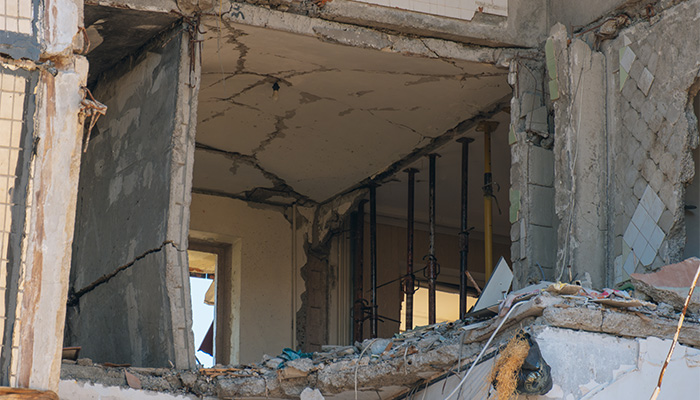
Many property owners assume that simply leaving an opening and installing the lifting mechanism is all that is required. However, the operation of a home elevator generates continuous dynamic loads; therefore, both the guide rail brackets and the shaft framework must be securely anchored to the load-bearing structure.
When carrying out construction independently, issues such as anchoring supports to non-load-bearing walls or failing to verify load-bearing capacity for floor slabs are prone to occurring. While no issues may be apparent in the short term, prolonged, repeated operation poses risks such as wall cracking and floor slab deformation. Remedying the situation later would require disrupting the finished interior and incurring significant additional renovation costs.
The Actual Total Cost Breakdown Is Higher
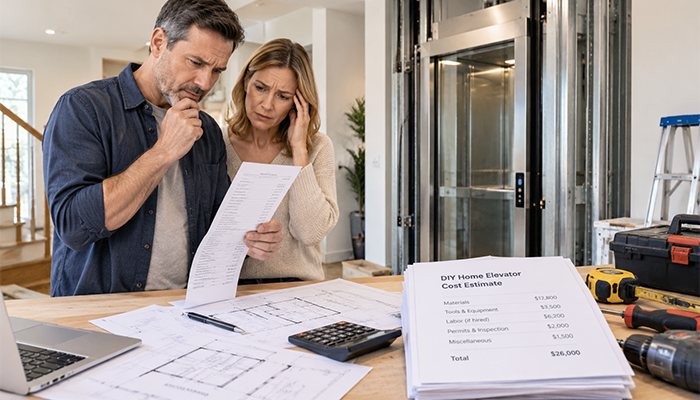
Most people choose DIY in order to save on their budget, but many projects end up costing more in the end.
- Assembly and debugging take far longer than estimated time; ordinary households often underestimate the difficulty of mechanical and electrical debugging, leading to indefinite project delays.
- Components are purchased piecemeal, without a complete machine warranty. If a part fails, troubleshooting must be done individually, and finding a matching spare part is difficult. Warranties from the original manufacturer are generally void for DIY-assembled equipment.
- If safety hazards arise, all costs for rectification or complete disassembly and reconstruction must be borne by the individual.
Originally, you wanted to save money, but after all the trouble, you still ended up having to buy a proper pre-built machine. All the parts and time you invested in the DIY project were wasted.
Later Maintenance and Troubleshooting Are Not Guaranteed
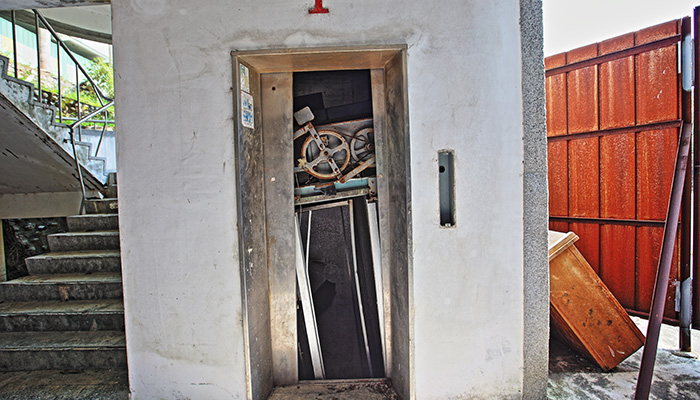
For standard, fully-assembled home elevators, the manufacturer provides a clear maintenance checklist and a complete spare parts supply chain. DIY assembly equipment, on the other hand, uses parts from a wide variety of sources, and the components may not have undergone compatibility testing. If a malfunction occurs, it’s difficult to pinpoint the faulty part. This is especially true in overseas regions, where it’s challenging to find repair personnel willing to take on a non-standard, homemade elevator.
What Are The Alternatives for Villa Projects with Limited Budgets?
Having discussed the risks, I’m not saying there are no low-cost options. If your budget is tight, I don’t recommend the DIY assembly route; you can opt for standardized, formal solutions instead.
- Prioritize compact, standardized home elevators, as this allows for cost control compared to highly customized models;
- Prioritize lif platform menegak, as compliant standard units are more cost-effective for renovation projects with minimal elevation differences;
- Conduct thorough on-site surveys beforehand to optimize installation locations and reduce civil engineering costs.
Tips for B2B Practitioners (Architects/Contractors/Distributors)
- When communicating with villa clients about design plans, you need to proactively inform them of the compliance and safety risks of DIY elevators for home assembly; many homeowners only watch short videos online and are unaware of local building regulations.
- When selecting a model, be sure to confirm that the entire machine has complete certifications for the target market; assembled from scattered components will not be able to obtain complete machine certifications.
- For renovation projects, a site survey must be conducted to verify the load-bearing capacity of the floor slabs and walls; do not base a plan solely on blueprints.
- For clients with tight budgets, prioritize recommending standardized and compliant complete unit solutions, rather than suggesting that clients purchase and assemble parts themselves.
If you are unsure about the feasibility of your project during the planning stage, hubungi kami and get your project assessed by one of our engineers for a free evaluation.
Kesimpulan
My experience after working on many residential projects is that DIY is suitable for furniture and decoration projects, but it does not apply to home elevators that carry people.
While building your own elevator may seem like a way to save on upfront costs, it can lead to a host of problems, including issues with personal safety, legal compliance, building structure, and ongoing maintenance. In many cases, the overall cost is not worthwhile. For villa projects with limited budgets, there are a variety of standardized and compliant complete machine solutions available on the market, which are far more reliable than piecing together parts yourself.
Soalan Lazim
I have strong hands-on skills and know about electrical engineering and mechanics. Can I build my own home elevator?
Passenger elevators are not just mechanical assembly; they involve a complete system, including safety systems, load calculations, and overall machine certification. While strong hands-on skills may allow one to perform some auxiliary civil engineering work, it doesn’t mean they are suited to assemble passenger elevators themselves.
My house is already renovated, but I don’t have enough budget. Are there any other options besides DIY?
Prioritize standard compact complete machine products to optimize installation location and reduce civil engineering work; in scenarios with small height differences, compliant vertical platform lifts can also be evaluated, and it is not necessary to take the assembly DIY route.
The client insists on DIY assembly of the elevator. As a partner, what should I be aware of?
You need to clearly inform your clients about local safety regulations and safety risks; self-assembled equipment cannot be issued with a complete machine certificate, which will affect filing and home insurance, so it is recommended to provide a written risk explanation to your clients.
For export projects, what is the core difference between whole machine certification and the procurement of individual parts?
Certificates like CE and EN8141 apply to complete machine equipment. Purchasing individual components such as motors, cylinders, and car parts separately, regardless of whether the parts themselves have certificates, does not equate to the overall machine being compliant.
What are the essential components for a DIY home elevator?
The most crucial components of a home elevator include the drive system, guide rails, car, control system, and safety devices. Self-installation without the necessary certifications may result in incorrect placement or insecure connections, threatening user’s personal safety.
How to install a home elevator by yourself safely?
If you have some relevant knowledge, we suggest you contact an elevator company or a professional installation company for help, requesting their on-site or remote assistance to complete the elevator installation, and finally arrange for an elevator expert to conduct an inspection.
Where to buy complete residential elevator kits for self-installation?
Anter can provide you with high-quality, complete home elevator packages. Our products are CE and ISO9001 certified and comply with European EN81-41 standards. Furthermore, we have several experienced professional engineers who can assist you with elevator installation.
What are the home elevator kits prices?
Excluding installation, the cost of home elevator kits is approximately $ 5,000-$8,000. If you require a stable and continuous supply of kits, please contact us. We are a source factory with a mature production line and can offer you more competitive prices.
 Malay
Malay  English
  Arabic
  Vietnamese
  German
  Thai
Thai