
Many people—yourself included, I imagine—may harbor various misconceptions about thang máy gia đình if they haven’t looked into them in any detail; for instance, wondering whether they are prohibitively expensive or if they require a significant amount of space…
Here, we have compiled some of the most common misconceptions regarding home elevators, helping you see them for what they truly are and understand why installing one is a sensible investment.
Myth 1: Are Home Elevators Only for The Wealthy?
Perhaps in the late 19th and early 20th centuries, residential elevators were indeed a luxury reserved exclusively for the wealthy. However, as times have changed—with continuous optimization and innovation in elevator technology and design—the pricing options for home elevators have become increasingly diverse.
The home elevator industry now offers both high-end, premium-priced models and more affordable, standard options. The average price range for high-end units is consistently between $45,000 and $150,000, while the average price range for standard, affordable units is between $7,500 and $40,000.
However, the exact price depends on the drive system, custom dimensions, number of floors, and site conditions. For simpler projects, the cost may be lower.
For example, installing a standard-sized hydraulic home elevator in a newly constructed two-story residence might cost only around $4,500.

Myth 2: Elevators Take Up Too Much Space
“Will installing a home elevator take up the entire space of my living room?” If that’s what you’re thinking, let me set the record straight.
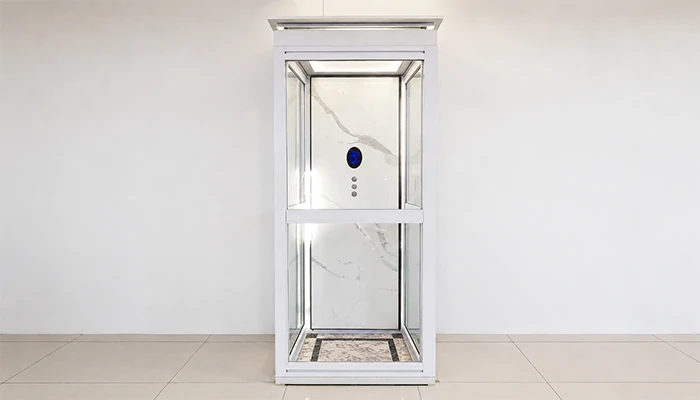
Many home elevator manufacturers now offer medium, small, and mini-sized models, moving away from traditional installation designs that require a dedicated machine room or a deep pit. Some home elevator models can be installed in a space of less than 1 square meter.
In addition, the footprint of a home elevator mainly depends on your site conditions and expected passenger volume, and the elevator size can be customized for your residence.
Myth3:Home Elevators Require Too Many Repairs
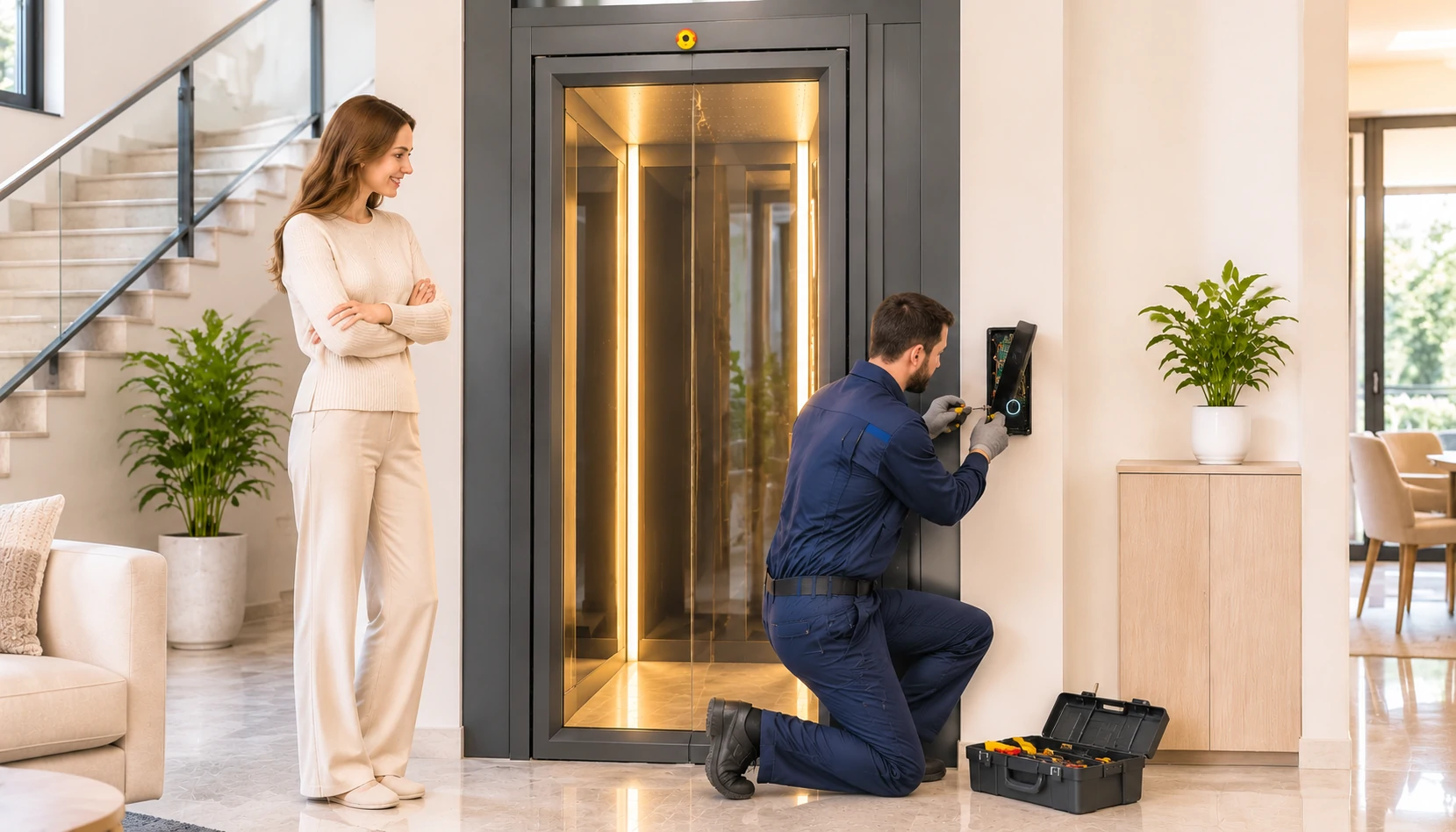
While a home elevator is indeed a product that requires regular maintenance, this does not mean it is prone to breakdowns or necessitates frequent servicing.
The frequency of maintenance for a home elevator is closely linked to how often it is used. If there are many family members and the elevator is used frequently—roughly 20 to 40 times per day—manufacturers typically recommend professional maintenance every six months. If usage is lower—around 0 to 15 times per day—professional maintenance once a year is sufficient.
Moreover, home elevators built using mature technology and high-quality materials maintain a low failure rate, typically requiring professional maintenance only once every 2–3 years. Furthermore, core components rarely fail; usually, only minor parts need to be replaced, which keeps costs low.
Myth 4: Home Elevators Are Only for People with Limited Mobility
Convenience is indeed a key attribute of home elevators, as they help wheelchair users and elderly individuals with limited mobility move between different floors more easily.
However, this does not mean that you have no need for a home elevator just because you do not face issues with limited mobility. A home elevator can also be used to transport groceries, strollers, laundry, luggage, and furniture—saving you both time and physical effort, while also reducing the risk of falls when moving between floors.
Furthermore, home elevators crafted by sophisticated, discerning designers are elegant and stylish, embodying a modern aesthetic that elevates the caliber of your residence and reflects your personal taste.
A home elevator that combines aesthetic appeal with practicality is perfect for anyone who aspires to a high quality of life.
Myth 5: A Home Elevator Will Disrupt My Entire Household
Before truly understanding home elevators, many people conflate them with commercial elevators—assuming that installation takes a long time, that they require thick concrete shafts and deep pits, and that they are nothing more than bulky, cold, industrial-looking pieces of equipment.
However, true residential elevators have undergone comprehensive innovation to better adapt to the structural characteristics of residential buildings. Depending on installation requirements, these elevators can be categorized into machine-room-less, pit-less, and shaft-less models.
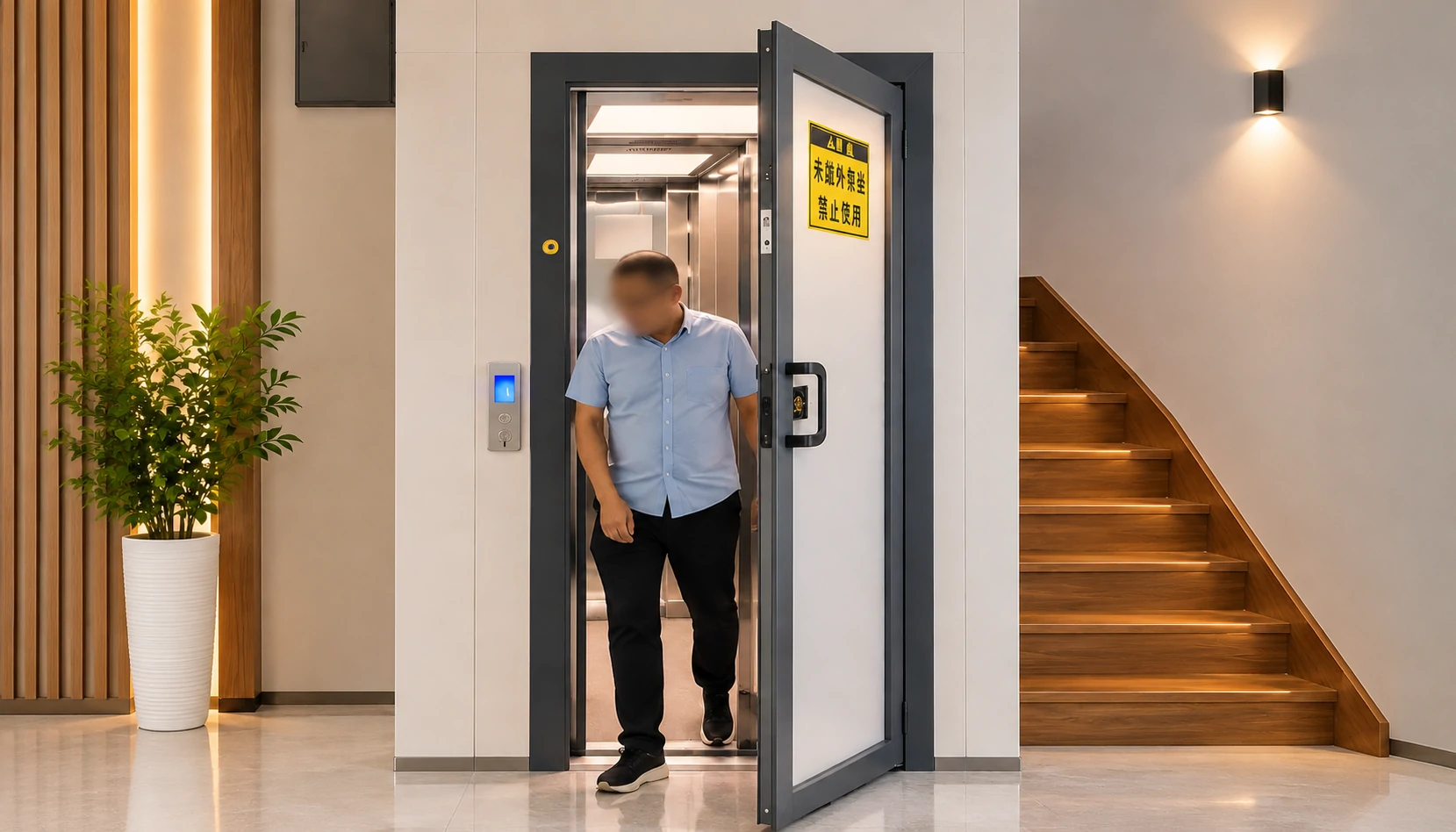
This design simplifies the equipment structure and shortens installation time, with the entire process taking only about 3–10 days. Furthermore, the unit comes with its own integrated frame and built-in buffers—eliminating the need for a deep pit—while the core components are positioned either on top of the car or around the unit itself. This significantly reduces the amount of required civil work and minimizes damage to the home’s existing interior finishes. Consequently, these types of residential elevators are exceptionally well-suited for renovation projects in older homes.
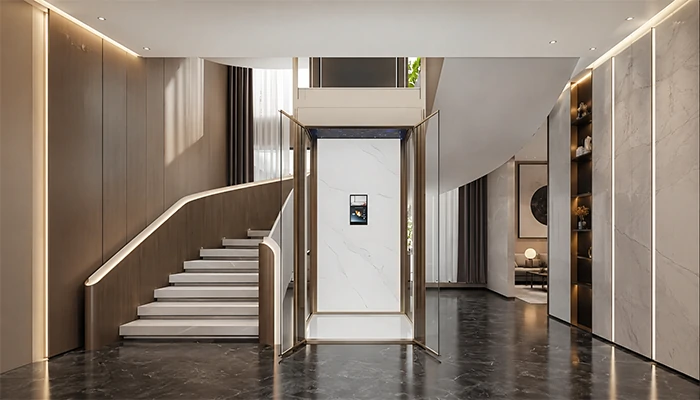
Furthermore, elevators have become lighter and more aesthetically pleasing; manufacturers have incorporated a wealth of decorative, atmospheric elements, making them look more like works of art.
Myth 6: Home Elevator Is Dangerous
The claim that home elevators are unsafe is not true. Home elevators purchased from reputable manufacturers—provided they comply with relevant codes and standards and are installed correctly—are very safe. The elevators produced by these manufacturers are typically driven by multiple robust steel cables, which can support hundreds of pounds in weight without breaking over time.
Furthermore, these elevators are equipped with redundant safety features—such as overspeed governors, anti-fall safety gears, emergency power supplies for use during outages, automatic floor-leveling functions in the event of a power failure, anti-crushing safety edges, light curtains to prevent entrapment, and emergency intercom systems—all of which serve to eliminate potential hazards from every angle.
Should a power outage or similar incident occur while you are using an elevator, there is no need to worry. The control system will automatically switch to a backup power source within milliseconds, moving the elevator car to the nearest floor and opening the doors.
Myth7:A Home Elevator Will Double My Electricity Bill
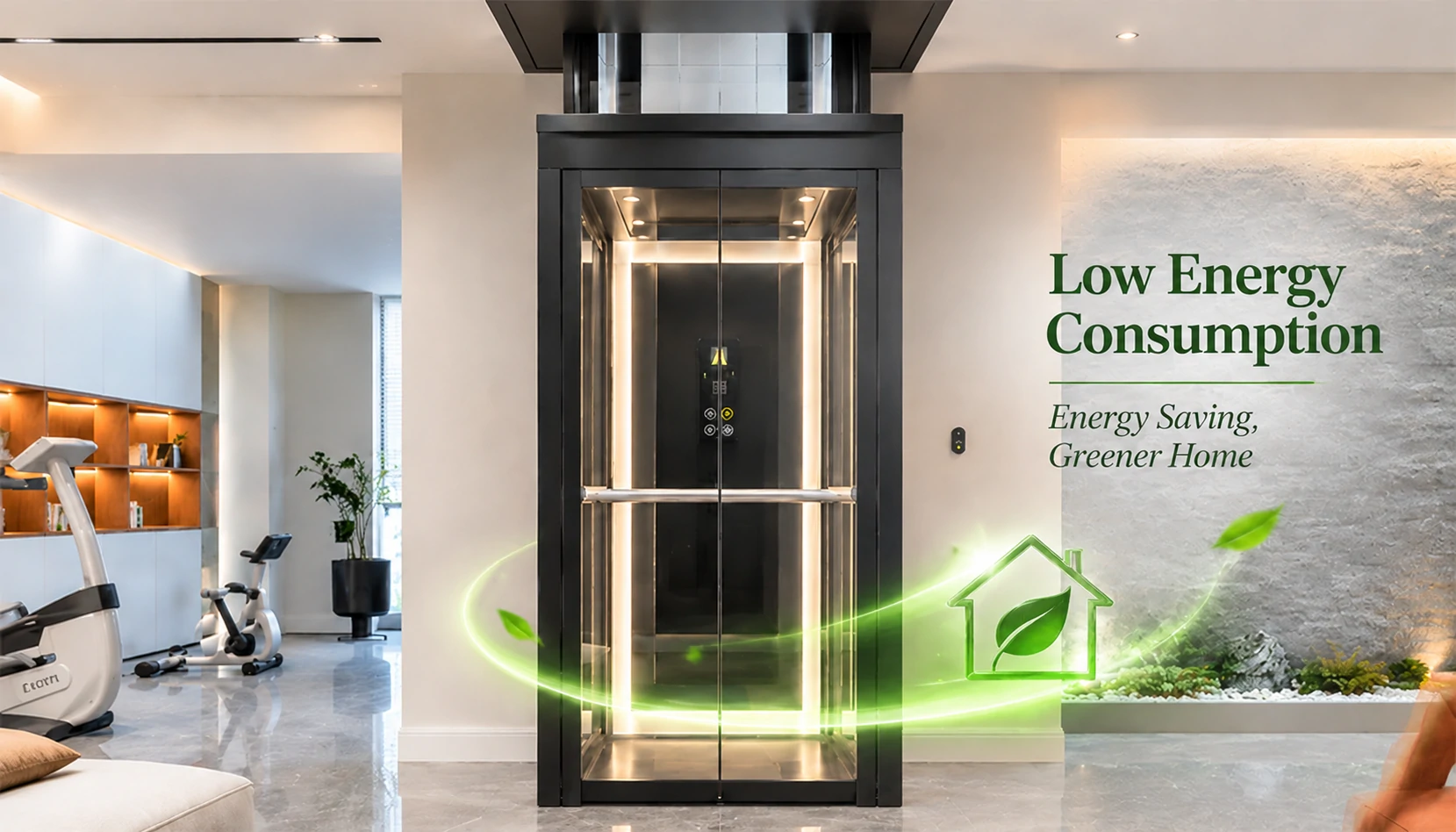
In reality, home elevators are not as energy-intensive as one might imagine, as they do not operate under a high load 24 hours a day. When not in use, they automatically switch to a low-energy standby mode, thereby reducing power consumption.
Additionally, when selecting a home elevator, pay attention to its overall power consumption and review its specifications. Components that can significantly reduce an elevator’s energy usage include permanent-magnet synchronous traction machines and variable-frequency, variable-voltage (VFVV) drive systems.
To help you make a better choice when selecting an energy-efficient home elevator, we have provided a formula for calculating power consumption. This will allow you to estimate the daily electricity usage of home elevators offered by different manufacturers.
E=P*t
E represents total power consumption.
P represents elevator motor power.
t represents the actual elevator running time, in hours.
Câu hỏi thường gặp
Which is safer, stairs or elevators?
Elevators that are compliant with regulations and regularly maintained are far safer than stairs.
Using stairs places high demands on a person’s physical strength, balance, and attention, while also requiring careful navigation of the stair surface itself; a momentary lapse in focus can easily lead to slipping, missing a step, or tripping. In contrast, using an elevator requires no physical exertion or active movement from the user, making it far less demanding.
Furthermore, elevators are equipped with various safety devices, making incidents like the elevator free-falls circulating online virtually impossible.
How much weight can a typical home elevator safely carry?
In line with mainstream EU standards, home elevators typically have rated load capacities of 200 kg, 300 kg, or 400 kg; however, some manufacturers are able to provide capacities of up to 630 kg.
Home elevators are equipped with an overload protection device; the elevator will not start if the load exceeds the rated capacity.
What kind of maintenance does a modern home elevator need?
The maintenance of home elevators consists of two types: routine maintenance and professional maintenance.
Routine maintenance includes the following:
Regular cleaning of elevator surfaces
Monitoring the operational status of the elevator
Recording any abnormal conditions
Clearing obstacles from the area around the elevator
Ensuring proper and compliant use of the elevator
Professional maintenance must be performed by personnel who hold a valid elevator maintenance qualification certificate; unauthorized individuals are prohibited from carrying out such work, as doing so could pose a serious risk to life and safety.
Scope of professional maintenance:
Inspection of mechanical systems
Inspection of drive systems
Inspection of electrical control systems
Maintenance of door systems
Testing of safety protection devices
Inspection of emergency rescue equipment
Operational testing of the complete unit
How much does it cost to maintain a home elevator each year?
Home elevators require regular maintenance, making an annual service contract with a maintenance company the most cost-effective approach. Based on market data from various countries, the annual maintenance cost for a home elevator typically ranges from $500 to $1,200 globally.
What is the typical cost to install a home elevator in the United States?
In the United States, the total cost to install a standard residential elevator—including the equipment itself—typically ranges from $40,000 to $50,000.
This is quite expensive. If you need to install an elevator in your U.S. home, we recommend importing one from China; doing so can bring your budget down to a range of $15,000 to $30,000.
What are essential safety features for residential elevators?
A compliant home elevator should be equipped with the following safety devices: an automatic rescue device, an emergency alarm and intercom system, a speed governor and safety gear, a door-locking protection mechanism, and an infrared safety light curtain.
Lời kết
There is no need for excessive concern; a home elevator is a convenient, safe, and affordable vertical transport solution, perfectly suited for multi-story residences. By choosing the right manufacturer, you can secure a configuration that offers excellent value for money, along with long-term operational reliability.
Right here, you can find a top-tier home elevator manufacturer recommendation—— Trước.
We have 16 years of experience in the design, production, and installation of home elevators, and have handled elevator installation requirements for a wide variety of residential structures and needs. Please share your site conditions and requirements with our engineers; we will promptly develop a solution for you and provide a detailed, itemized quotation.
 Vietnamese
 English
 Arabic
 German
 Malay
 Thai