
Introduction
To pursue a better quality of life, more and more families are choosing to live in villas and duplexes. With multi-story homes, have you considered installing a home elevator? If you’re still hesitant, or if you only know that home elevators can enhance convenience, then you must read this article. This article details ten advantages of installing a home elevator in 2026, which will help you become more confident that a home elevator can provide you with a great experience.
Benefits of the Home Elevator
If you’re considering installing a home elevator in residence, here’s a collection of benefits you absolutely shouldn’t miss.
Boosting Mobility and Accessibility
Home elevators are a vertical lifting solution that effectively contributes to the creation of accessible pathways, offering both mobility and accessibility. Currently, home elevators can connect up to seven floors of a residence, allowing elderly family members, children, or guests to move freely between different floors with just the touch of a button, eliminating the need for physical exertion and reducing fatigue.
Safety Features
Currently, home elevator technology is very mature, offering high safety while ensuring convenience. According to relevant statistics, the probability of safety accidents in home elevators is extremely low, ranging from one in a thousand to one in ten thousand. This figure is far lower than the probability of accidents in commercial elevators.
In addition, a home elevator, from manufacturing to installation, is equipped with various safety devices, including: overspeed governor, safety brakes to prevent free fall, emergency power supply in case of power failure, automatic leveling in case of power outage, anti-crushing safety panels, anti-pinch light curtain sensors, and buffers. Some elevators also feature one-button emergency alarm and child lock functions, which can fully guarantee the safety of you and your family.
Add Value to Your Home
Choosing to install a home elevator is a wise investment that can add value to your property. Homes with elevators can command a premium of 10% or more on the market, allowing you to recoup a significant portion of your investment. Furthermore, owning a home elevator elevates the overall quality of the property and becomes a major selling point, particularly attractive to families with mobility-impaired members, effectively increasing the home’s competitiveness. Additionally, statistics show that in the United States, 10%-15% of families prefer to buy homes with elevators, while in China the figure is 20%-30%, in Germany 20%-25%, and in the UK 10%-15%. Therefore, home elevators are a very popular option in the housing market.
Customization Is Available
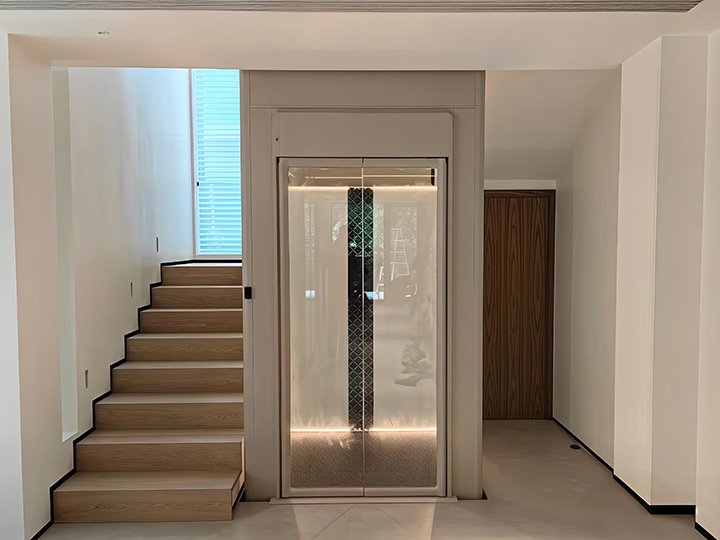
The biggest advantage of choosing a home elevator is the ability to fully customize it, creating a unique elevator tailored to your needs and home style. In terms of specific features, common customization options include: color, finishes (some elevators include carved designs), lighting, frame materials, and shape. Furthermore, functional customizations are also available, including Bluetooth connectivity, monitoring systems, and smart voice control. These customization options can add both aesthetic appeal and practical value to your home.
Convenient and Comfortable
Home elevators have become a symbol of convenient living, offering an alternative vertical transportation method that reduces reliance on traditional stairs. With just the touch of a button, you can reach your desired floor. Home elevators typically have a weight capacity of 400 kilograms or more and can be used to transport heavy items such as vacuum cleaners, washing machines, shopping bags, or pets. They save time and effort, and also prevent personal injury or damage to belongings during transportation, making them a very convenient aid in daily life.
Furthermore, the elevator car of the home elevator makes full use of the space reserved in the house, meeting your needs for transporting people and goods. The spacious interior provides you with a comfortable riding experience.
High Space Utilization
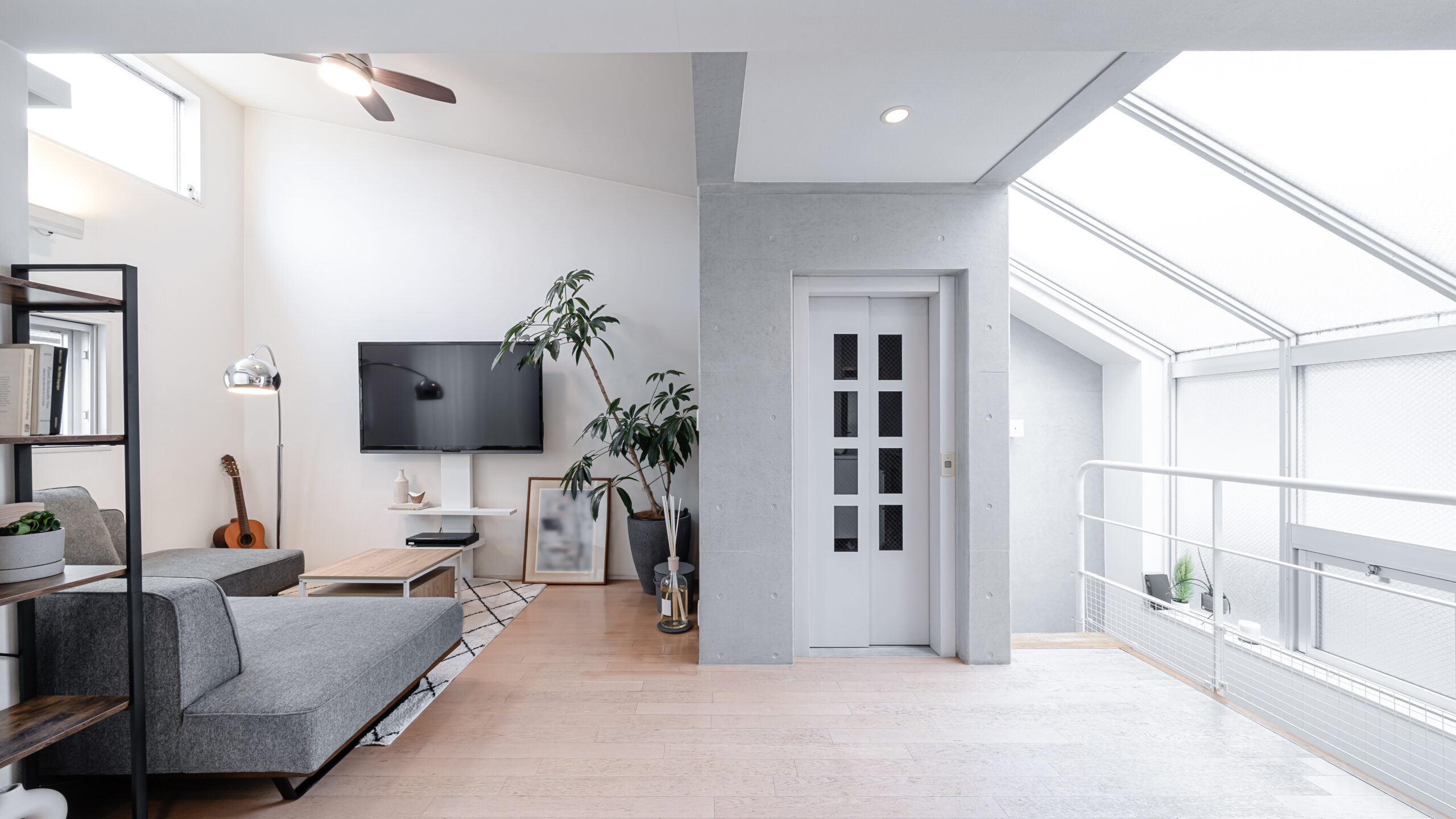
Home elevators are compact elevators characterized by their space-saving design, small footprint, and high space utilization. Currently, the smallest home elevators have a footprint of 0.8 to 1 ㎡, with a shaft size of 1.2m x 1.2m. Specifically, the minimum installation area for traction elevators is 1 ㎡, for hydraulic elevators it’s 0.9 ㎡, and for machine-room-less elevators and platform lifts it’s 0.8 ㎡. Furthermore, home elevators can be installed in any space within a residence, offering the dual benefits of saving space and increasing usable living area.
Low energy consumption
Modern home elevators often utilize low-energy designs, equipped with highly efficient traction or hydraulic systems. Under intelligent control systems, they employ more rational operating methods, thereby reducing energy consumption during operation and saving electricity for the household. Even with continuous up and down movement, the power consumption of a home elevator is far lower than that of common household appliances such as air conditioners, refrigerators, kettles, and microwave ovens.
Improving Home Architecture Appeal
Home elevator designs and appearances offer a unique aesthetic, enhancing the beauty and technological sophistication of the building. They combine aesthetics and practicality, featuring stylish designs reflecting modern aesthetics, the flow of natural light through transparent cabins, flexible designs to suit different spatial layouts, personalized customization options, and the selection of high-end materials. These features elevate the art of home design and contribute to the overall architectural beauty of residential buildings.
Wheelchair Accessible
The increasing aging population has led to a growing demand for accessible home elevators. Accessibility design is a major advantage of home elevators; their dimensions can be designed to accommodate wheelchairs, providing a level entry for the elderly and those with mobility impairments. Wheelchairs and elderly individuals can easily enter the elevator, helping those with mobility issues move between floors more independently and improving their quality of life. Furthermore, they feature easy-to-use control panels or buttons, making them simple enough for both the elderly and children to operate.
High Level of Privacy
Home elevators provide a private and secure space for individuals. Home elevator designs are increasingly focusing on personal privacy. Features include key-operated door locks, secure access control systems, password-protected elevator doors, card access systems, and remote-controlled door opening. This allows for individual access, ensuring that family members can only reach their designated floor and not access other floors, thus guaranteeing complete personal space and privacy without interference.
Future-proofing Your Home with Home Elevator
If you are still preparing for future home-based care and potential health emergencies, installing a home elevator is the perfect solution for you. As the best accessibility option, it will increase your convenience and enhance your property value, keeping you in line with modern trends, regardless of future changes.
Here, we recommend Anter Home Elevators, which provides 100% service support and comprehensive customization options, along with high safety and quality features, to help you face the unpredictable future. Contact us now to receive professional consultation.
FAQ
What is the average cost to put an elevator in your home?
Basic home elevators are priced between $3,000 and $7,500, while mid-range models cost between $7,500 and $15,000. High-end luxury home elevators can reach up to $30,000. However, the exact price depends on factors such as the number of floors in the building, chosen features, drive type, and size. If you would like to learn more, please contact us, and we will provide you with a detailed quotation.
Additionally, here is a detailed article about the cost of home elevators, which you can use as a reference.
How much does a home elevator cost?
What is the lifespan of a residential elevator?
Home elevators typically have a lifespan of 20-30 years, during which time they require regular maintenance and servicing. With proper maintenance, they can last up to fifty years.
Will Medicare pay for a home elevator?
Medical devices that are typically eligible for reimbursement include mobility aids such as wheelchairs, walkers, and hospital beds, as well as other mobility-assistive medical equipment.
How many floors before an elevator is required?
Currently, home elevators can reach a maximum height of 7 floors, approximately 21 meters. Hydraulic elevators are typically limited to 2-4 floors, while traction elevators can reach 2-7 floors.
If you are unsure whether a home elevator can be installed on your floor, please fill out the form on the right, and one of our professionals will contact you.
How much space is required for a home elevator?
Average relative data can be found in the table below:
| Car Dimensions | Width: Approx. 80 cm – 110 cm Depth: Approx. 90 cm – 140 cm Height: Approx. 200 cm – 250 cm |
| Shaft Dimensions | Width: Approx. 120 cm – 160 cm Depth: Approx. 140 cm – 170 cm Height: Determined by building floor height |
How to install a home elevator?
Currently, home elevators are mainly divided into hydraulic elevators and traction elevators. Below is a brief introduction to the installation steps of both types of elevators.
Hydraulic elevator:
Step 1: On-site preparation, technical briefing, and material inventory
Step 2: Shaft layout marking and guide rail bracket installation
Step 3: Guide rail installation and adjustment
Step 4: Hydraulic system installation (pump station, cylinders, and piping)
Step 5: Car assembly and door system installation
Step 6: Electrical system installation and wiring
Step 7: Safety device installation and commissioning
Step 8: Overall system debugging and trial run
Step 9: Acceptance and handover
Traction elevator:
Step 1: Site preparation, sample frame erection, and baseline marking
Step2: Shaft layout marking and Installation of the column/frame system
Step 3: Guide rail bracket installation, guide rail installation and adjustment
Step 4: Car frame assembly, counterweight frame installation
Step 5: Machine room traction machine installation, wire rope installation
Step 6: Electrical and control system installation and wiring
Step 7: Safety device installation and commissioning
Step 8: Overall system commissioning and trial run
Step 9: Acceptance and handover
For detailed instructions, please refer to The Comprehensive Installation Process of Home Elevator
How much electricity does a home elevator use?
Home elevators have relatively low energy consumption, which depends on their type, frequency of use, and load capacity. Their average power consumption is 1.5 kW to 7 kW, resulting in a daily energy consumption of 0.5 to 3.5 kWh, and approximately 200 kWh per year.
Is it possible to install a home elevator outdoors?
Yes, it is possible. Outdoor home elevators can be installed outdoors as long as corrosion-resistant and weather-resistant materials are used.
 English
  Arabic
  Vietnamese
  German
  Malay
Malay  Thai
Thai