
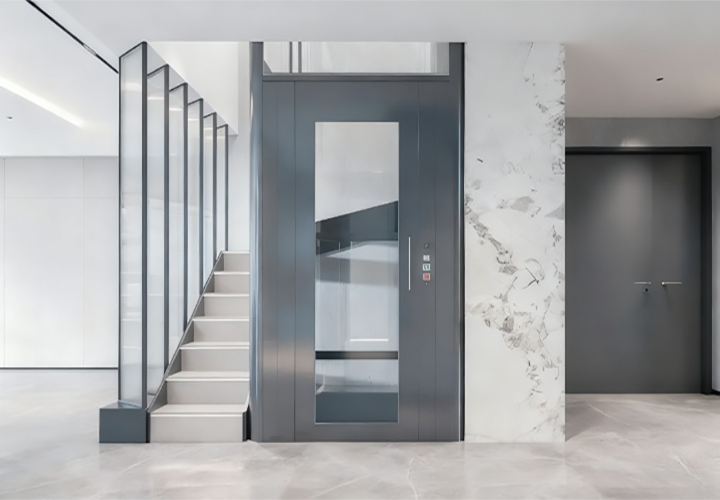
Home elevators first appeared in the 19th century, but due to immature technology and a lack of safety features, they were initially only used as a luxury item for royalty. Later, through continuous technological experimentation and improvements, by the beginning of the 21st century, home elevator technology had become very mature, and costs were effectively controlled. They were no longer limited to high-end residences and began to benefit more ordinary families, becoming a valuable aid for mobility within homes. This article discusses in detail the prices of various elevators and the costs of installing elevators in renovated and newly built homes. Join us as we explore this topic!
The Types of Home Elevator
Currently, the market offers a wide variety of home elevators. Based on different attributes, we can categorize them into various types.
According to the driving method, they can be divided into hydraulic elevators, traction elevators, screw elevators, and pneumatic elevators.
According to the structure, they can be divided into elevators with a shaft, elevators without a shaft, machine-room-less home elevators, vertical platform elevators, and pitless home elevators. According to the materials used, they can be divided into stainless steel elevators, glass elevators, and solid wood elevators.
According to application scenarios, residential elevators can generally be categorized as follows: villa elevators, small home elevators, duplex house elevators, apartment elevators, beach house elevators, townhouse elevators, and mansion elevators.
If you want to learn more about the classification of home elevators, you can read the article we have written specifically on this topic:different types of home elevator.
The Key Factors that Affect The Price
The price of a home lift is influenced by several factors. Below is a detailed list of factors affecting the price of the elevator equipment itself, excluding installation and renovation costs.
Drive System
There are four types of drive systems for residential elevators: hydraulic drive, traction drive, screw drive, and pneumatic drive. Different drive systems result in different elevator structures, leading to price differences.
Hydraulic drive: The electric motor drives the hydraulic pump, which generates a pressure difference and pumps hydraulic oil into the cylinder. This pressure difference causes the internal piston to move in a straight line, thereby indirectly driving the elevator car.
Traction drive: The traction machine drives the traction wheel to rotate, generating friction between the multiple steel ropes and the grooves on the wheel rim, thereby driving the elevator to move up and down.
Screw drive: The motor drives the screw to rotate, which in turn drives the nut fixed to the elevator car to move in a linear reciprocating motion. This is a purely mechanical structure.
Pneumatic drive: This type of elevator primarily relies on the pressure difference between the upper and lower parts of the elevator car to drive the car up and down.
For standard two-story buildings and under the same standard design, vacuum elevators are generally more expensive than traction elevators, while hydraulic and screw-driven elevators are less expensive than traction elevators, with screw-driven elevators typically being cheaper than hydraulic elevators.
Customization Option
Home elevators are customizable products, allowing you to design elevators in different shapes and styles according to your preferences. The price will vary depending on the customization options chosen. The main customization options currently available on the market are as follows:
Shape: Includes round, square, tubular, and capsule shapes; the round and capsule shapes are more expensive than the other two.
Finishes: The elevator interior finishes offer a variety of options, including different paint finishes, engraved patterns, finishing materials (glass, wood, stainless steel, etc.), illuminated back panels, and lighting strip styles. The price varies depending on the combination chosen.
Configuration
Home elevators offer various configuration options. For example, doors can be automatic, manual, through-type, or double-opening. The user interface can be either button-operated or a smart touch screen. Additionally, different functional configurations are available, such as the option to add a smart system including Bluetooth and voice control features.
Number of Floors
The number of building floors is one of the important factors influencing elevator prices. The higher the number of floors, the more expensive the home elevator will be. Starting from the second floor, each additional floor requires an extra set of landing doors, longer transmission components, and increased strength and precision of these components. At the same time, to ensure the safety of elevators in taller buildings, hydraulic elevators require an upgraded pump station, and traction elevators require a higher-powered motor. Therefore, changes in the number of floors will affect the elevator price.
Size and Capacity
The average standard dimensions for a home elevator are 700-1100mm in width, 700-1200mm in depth, and 2000-2500mm in height. For elevators with a shaft, the shaft width is 1000-1500mm and the depth is 2000-2500mm. Based on average market estimates, the price increases by 5%-10% for every 100-200mm increase in size.
The average load capacity of a home elevator is 300-500 kg, but this varies depending on the technology used by different companies. However, for every 100 kg increase in load capacity above the standard, the price of a home elevator will increase by 10%-20%.
Brand Premium
In the home elevator market, there is a very noticeable phenomenon of brand premium. Products from well-known elevator companies are typically priced 30%-75% higher than those from small and medium-sized brands. Currently, top international elevator brands include Otis, ThyssenKrupp, and Kone, whose standard 2-3 story elevators are usually priced at about twice the price of those from lesser-known brands.
The Cost of Home Elevator
Below are the price ranges for the most common home elevators currently available on the market, designed to meet your various needs.
Home Hydraulic Elevator
The price of home hydraulic elevators typically ranges from $15,000 to $60,000. Small hydraulic elevators (for 2-3 people) cost between $15,000 and $25,000, medium-sized elevators (for 3-4 people) cost between $20,000 and $35,000, large hydraulic elevators (for 5-6 people) cost $30,000 to $40,000, and luxury hydraulic elevators can cost up to $60,000.
Home Traction Elevator
Traction elevators are more expensive than hydraulic elevators due to their more advanced technology and compact design. The average price range for traditional traction elevators is between $45,000 and $70,000. Traction elevators without a machine room cost between $30,000 and $60,000. Traction elevators are suitable for medium to high-rise buildings, and the price will vary depending on the number of floors, potentially exceeding this range.
Vertical Platform Lift
Vertical platform lifts are an effective and relatively inexpensive alternative to traditional home elevators. The average price ranges from $5,000 to $30,000. Prices may be higher if there are special requirements for the equipment.
Pneumatic Elevator
Due to their unique design and the need for advanced pneumatic propulsion technology, pneumatic elevators have an average price ranging from $30,000 to $70,000, although luxury models can exceed $80,000.
Screw Elevator
The average price of a screw-driven elevator ranges from $10,000 to $50,000. Due to its simple structure and reliance on purely mechanical movement, its price is lower compared to hydraulic, traction, and vacuum elevators.
The Costs of New Construction and Renovations
The cost of installing an elevator during house construction is lower than the cost of installing one during a house renovation. When installing an elevator in a new house, the space for the elevator can be reserved in consultation with the elevator company and the building engineer, based on the house renovation plan provided by the elevator company. This preparation cost can be spread across the various aspects of the house construction project.
The cost of installing a home elevator in a house that has already been renovated is usually 10%-20% higher than installing one in a new house, especially for elevators that require a shaft, pit, and machine room. These types of installations typically require the removal of existing structures and the construction of new support systems, leading to increased costs. However, the specific costs will vary depending on the average construction and renovation costs in your local area.
Conclusion
Finally, this article is for reference only, and you can use the information above to make a brief budget estimate. For a more detailed price quote, Anter Home Elevator can help you. Please fill out the form on the right, and we will immediately provide you with a free, professional price list for home elevators. We also offer on-site installation services or remote guidance services in collaboration with your architect. Anter can meet all your needs.
FAQ
What is the price of the cheapest home elevator?
The price of a simple, basic home elevator platform device ranges from $1500 to $3000.
What types of home elevators are affordable and low-cost?
Shaftless home elevators, hydraulic elevators, and vertical platform lifts are relatively economical and low-cost options for home elevators.
How much electricity does a home elevator consume?
Home elevators consume very little electricity; their daily power consumption is far less than that of refrigerators, air conditioners, or water heaters.
Does health insurance cover the cost of a home elevator?
Medical insurance does not cover home elevators because they are typically classified as home renovation projects, not medical equipment.
How much does a small home elevator cost?
The price of a standard two-story, basic model small home elevator ranges from $18,000 to $45,000.
How much does the installation cost?
The cost of installing a basic home elevator with purely manual labor is approximately $3000-$7000. The price varies depending on the type of elevator installed. For more detailed information on installation, please refer to this article:The Comprehensive Installation Process of Home Elevator
What is the average price of a home elevator?
Typically, for a standard two-story house, the average cost of a standard model home elevator ranges from $20,000 to $35,000.
Do home elevators make noise when operating?
Modern home elevator designs produce very little noise during operation; they are essentially silent while running.
Do home elevators require regular maintenance? How much does the maintenance typically cost?
Home elevators require regular maintenance, typically 2-4 times a year. This ensures safe operation, prevents malfunctions, and extends the elevator’s lifespan. The maintenance cost is approximately $150-$600 per year, depending on the type of home elevator and the rates of local maintenance companies.
Can a home elevator accommodate a wheelchair?
Yes. Our home elevators are fully capable of accommodating wheelchairs. We offer specialized home elevators for wheelchair with spacious interiors, designed to accommodate a large electric wheelchair and an accompanying caregiver simultaneously.
 English
  Arabic
  Vietnamese
  German
  Malay
Malay  Thai
Thai