
Introduction
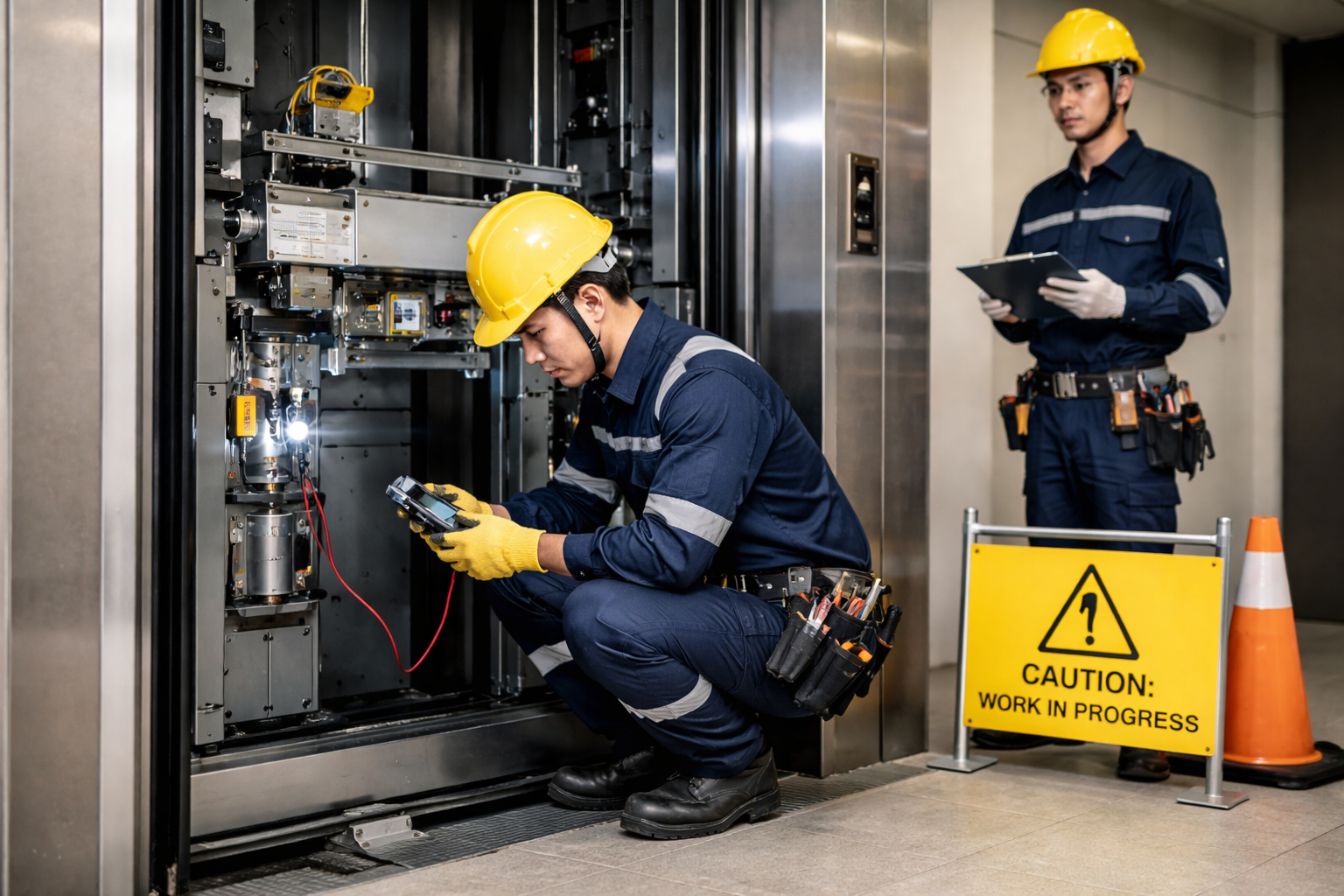
Home elevators are no longer exclusive to luxury homes and villas; they are becoming a modern home amenity that more and more ordinary families are investing in to improve their quality of life and accessibility. Although home elevators are compact, they are actually complex devices composed of mechanical and electrical control systems. Over time, home elevators can experience malfunctions leading to decreased performance. Without proper inspection, maintenance, and servicing, small problems can accumulate and lead to major issues. Regular maintenance and inspection are essential for the long-term use of home elevators. This article will explain how to troubleshoot common home elevator malfunctions, and we hope it will be helpful to you.
The Importance of Regular Troubleshooting
Many people mistakenly believe that as long as a home elevator is operational, it doesn’t need inspection or maintenance. This is a wrong idea, as many small problems can lead to major accidents if left unattended. Only by identifying and immediately addressing problems can you extend the elevator’s lifespan and ensure its stable operation.
Improvement of Safety: Regular maintenance ensures that safety components such as door locks, power systems, and braking systems function properly, maximizing the safety of home elevator use.
Prevent sudden malfunctions: Avoid sudden failures such as the home elevator failing to start or getting stuck due to dust accumulation.
Extending the lifespan of your elevator: The core components of a home elevator—the motor, guide rails, door system, drive system, and braking system—experience minor wear and tear with daily use. Over time, this can lead to problems. Regularly troubleshooting and addressing these issues will keep the elevator in optimal condition and extend its service life.
Reduced maintenance costs: Troubleshooting helps narrow down the scope of the problem, minimizes damage to other elevator components, and reduces overall time and financial costs associated with fault diagnosis.
Improved user experience: Regular troubleshooting ensures smooth elevator operation, low noise levels, and responsive performance, providing a comfortable experience for all family members.
Common Home Elevator Issues and Repair Methods
Home elevators are complex devices composed of mechanical and electrical systems. It is strictly prohibited for anyone other than qualified elevator maintenance professionals to perform specialized operations or major repairs on home elevators.
Unworking or Unresponsive
After pressing the button in the home elevator, there was no response; the door didn’t move, and the lights inside the elevator car didn’t turn on.
Possible reasons:
The power supply is not connected, or there is a power outage or circuit breaker trip.
The emergency button has been pressed.
The control panel has no power or is displaying an error code.
The remote control is not powered or the signal is not being received.
Troubleshooting Methods:
Check the power supply to the home elevator to ensure it is working properly.
Verify that the emergency stop button springs back after being pressed.
Check if the control panel has power or displays any error codes.
Ensure the key switch is in the “on” position.
If the elevator still does not start after performing the above checks, contact a professional home elevator repair technician.
Be Stuck Between Floors
Possible Reasons:
Safety device has been triggered.
There are debris or obstructions in the home elevator shaft.
Control system positioning error.
Sudden power outage and backup power did not activate.
Troubleshooting Methods:
Check for power outages.
Check if safety devices have been triggered.
Inspect the elevator shaft for debris.
Check the control system.
This troubleshooting should be performed by qualified elevator maintenance personnel. Non-professionals should not attempt this.
The Door Won’t Close or Opens/Closes Irregularly
Possible causes:
Debris or dust in the door tracks.
Door sensor is obstructed by debris.
Door was forcibly pushed manually.
Poor contact in the door lock mechanism.
Troubleshooting Methods:
Clean any debris from the door tracks.
Wipe the door sensor clean to prevent obstruction.
Gently test the door manually.
Check the condition of the door lock.
Unusual Noises and Vibrating during Operation
Possible Reasons:
Loose screws or worn parts.
Aging bearings.
Abnormal motor in the drive system
Lack of lubrication on the guide rails
Aging shock absorbers
Troubleshooting Methods:
Regularly tighten screws and replace worn parts.
Lubricate the guide rails with professional home elevator lubricant.
Clean the guide rails.
Slow Speed or Delayed Startup
Possible Reasons:
Insufficient or contaminated lubricant.
Wear and tear on the drive system, pulleys, or bearings.
Aging or overheating of the motor, or degraded performance of the control system.
Unstable power supply voltage.
Overuse or operation beyond specified limits.
Troubleshooting Methods:
Add lubricating oil to lubricate the tracks.
Check the motor, reduction gear, and steel cables for wear or misalignment, and replace worn parts regularly.
Check the stability of the power supply.
Avoid overloading.
Perform regular maintenance on the control system.
Stop on The Wrong Floor or Height Difference between The Floor Landing
Possible Reasons:
The leveling sensor is faulty or dirty.
The guide rails are misaligned.
The suspension ropes are worn out.
Troubleshooting Methods:
Clean and ensure proper alignment of the leveling sensor.
Check the straightness of the guide rails and the condition of the steel cables.
Replace aging components.
Buzzer Is Sounding
Possible Reasons:
The car door or landing door is not properly closed.
The elevator is overloaded.
There is an alert sound after power restoration.
There is a fault code alarm inside the control cabinet.
The door motor or traction machine is overheating.
Troubleshooting Methods:
Check if the door is properly closed.
Check for overloading and remove any heavy objects.
Check if there is a power outage or voltage instability in your home.
Check the control panel display for any error codes.
Check if the emergency button has been accidentally pressed.
The Indicator Lights inside The Home Elevator Car Are Flashing
Possible Reasons:
Unstable power supply voltage
Damaged or aging LED lights
Unstable elevator car communication signal
Control board malfunction
Troubleshooting Methods:
Restart the power supply.
Check the status of the lights.
Reconnect the communication cable and test for communication interference.
Check the circuit connections inside the control cabinet.
Control Panel Malfunction
Possible Reasons:
The control panel buttons are aging, damaged, or have been struck by external force.
The panel power supply is unstable.
The home elevator is in an emergency stop state.
Troubleshooting Methods:
Carefully observe the control panel and gently touch the buttons.
Check if the power supply is stable.
Check if the elevator’s child lock is activated.
If the home elevator experiences any of the above malfunctions, it is recommended to seek assistance from a professional.
Step-by-Step Troubleshooting Tips
When using a home elevator daily, malfunctions may occur. We may not have the same knowledge of elevator mechanics and electrical connections as professional repair technicians, and therefore cannot repair the elevator ourselves. However, this doesn’t mean we can’t do anything. Here are some basic steps you can take when your elevator malfunctions, which can help narrow down the problem and reduce repair time and costs.
Check the power supply
When you find that the elevator is not working, first check the power supply connected to the elevator to see if the connection is loose or if the power cord is old or damaged. If the power cord is indeed damaged, please contact a professional to replace it. Note: If you need to touch the power cord, wear insulated gloves to prevent accidents.
Check If The Circuit Breaker Has Tripped
A tripped circuit breaker will prevent the elevator from operating, but most modern home elevators are equipped with a backup power supply, so you don’t need to worry about being trapped inside the elevator. The elevator will automatically return to the nearest floor. After reaching the ground floor, check the circuit breaker. Circuit breakers usually trip due to overheating, overloading, or aging. Overheating and overloading can be mitigated by ensuring proper ventilation and reducing the elevator’s load, while aging issues require professional replacement of the relevant parts.
Check The Emergency Stop Switch
If the elevator is not working, it might be due to accidentally pressing the emergency stop switch, which prevents the entire elevator from starting. The emergency stop switch is usually located inside the elevator car, on the elevator door frame, or outside the door. Try pressing it and observe if the elevator responds.
Inspect the Elevator Doors
Elevator doors are usually equipped with a door interlock device, meaning the elevator cannot operate if the doors are not completely closed. Before using the elevator, always ensure that there are no obstructions in the way of the elevator doors and that they are fully closed.
Check the elevator doors for dust in the door tracks. Irregular cleaning of the elevator doors can lead to elevator sensor malfunctions, preventing the doors from closing and causing excessive noise during operation.
Inspect The Control Panel and Buttons
Check if the control panel is responsive and displays any errors. Press the buttons to test if the elevator reaches the designated floor. If a button is malfunctioning, try pressing several other buttons to determine if the problem is with a single button or the entire button system.
Check The Elevator’s Operating Environment
If your elevator is a hydraulic elevator, extremely low temperatures can cause the hydraulic oil inside the elevator to solidify, preventing the elevator from operating. Therefore, the operating environment of the elevator should be fully considered during installation. Additionally, elevators cannot operate for extended periods in humid environments, as this can lead to short circuits and damage to the electrical system. Therefore, when diagnosing the cause of an elevator malfunction, the environmental conditions must be taken into account.
Call a Professional When Meet the Trouble
For problems that you cannot solve yourself, such as the elevator car tilting or the display screen showing garbled characters, it is crucial to seek help from professionals. While this may incur some costs, these costs are likely not high compared to the more serious damage that could result from improper operation. Furthermore, many home elevators, with regular maintenance, do not experience very serious malfunctions. For professionals, it may only take a short time to get your elevator back to normal operation.
Here, I want to tell you that, for your safety, when you encounter an elevator malfunction that you cannot resolve yourself, you must seek help from professionals. This is for your own safety and the safety of your family.
Conclusion
Home elevators, a technology with a century of development and used worldwide, have a low failure rate. Each elevator may experience 0.5-2 minor malfunctions per year without maintenance, and major malfunctions are almost non-existent. Although home elevator technology is now very mature and rarely causes harm to people, we still cannot underestimate the importance of elevator maintenance. Even minor malfunctions can lead to major accidents. Therefore, when a malfunction is detected, it should be addressed immediately, and professional help should be sought if necessary. You can find nearby elevator repair companies through local websites or contact the elevator supplier for assistance.
Although the failure rate of home elevators is generally low, choosing a reliable home elevator company and high-quality elevator products is still very important. This can further reduce the failure rate of your elevator and minimize hidden costs associated with future repairs. If you are having difficulty finding a good elevator company, we recommend Ante Elevator, a high-quality, full-service supplier. With over 15 years of experience, they provide a complete range of services, including elevator manufacturing, maintenance, and repair, ensuring fewer malfunctions and quick restoration of normal operation.
FAQ
How often should a home elevator be serviced?
Under normal use, home elevators generally require maintenance 1-2 times a year.
What to do if there is a power outage while using a home elevator?
Don’t panic. Modern home elevators are generally equipped with backup emergency battery power, which allows them to stop at the nearest floor and open the elevator doors during a power outage.
Can a home elevator still be used if the door won’t close?
If the door of a home elevator won’t close, the elevator cannot be used. The door system is a crucial part of the home elevator’s safety.
Can you force open the door of a home elevator if it gets stuck?
You should not force open the door of a home elevator if it gets stuck, as this could lead to safety hazards.
Is unusual noise in a home elevator a sign of a malfunction?
Unusual noises in home elevators are usually caused by a lack of maintenance, typically due to insufficient lubrication of the guide rails or loose fastening screws.
How long do home elevators last?
With normal use and regular maintenance, the lifespan of a home elevator is generally around 25 years.
Does Medicare cover the cost of home elevators?
Medicare does not cover the cost of home elevators, as they are considered home modifications and not medical equipment.
Are home elevators expensive to maintain?
Home elevator maintenance costs are not high. Generally, the annual maintenance and inspection cost for a home elevator ranges from $200 to $500, but the exact cost depends on local market prices.
 English
  Arabic
  Vietnamese
  German
  Malay
Malay  Thai
Thai