
Introduction
For multi-story residences, outdoors is just as important as indoors. In the morning, you might be walking your dog outside the yard; in the afternoon, you might enjoy afternoon tea on the terrace; in the evening, you and your family might take a walk in the garden. These are truly beautiful scenes of family life. However, when there are elderly individuals or other family members with limited mobility in the home, their movement within both indoor and outdoor spaces becomes restricted. Therefore, you need an accessible lifting device that can connect to the outdoors.
However, outdoor home lifting equipment comes in a wide variety of forms. To help you select the right product more quickly, we have provided a detailed list of all currently available outdoor residential lifting equipment. Furthermore, we have also evaluated their strengths and weaknesses, in the hope of contributing to a more comfortable home life for you and your family.
Types of Outdoor Home Lifts
Outdoor Home Elevator
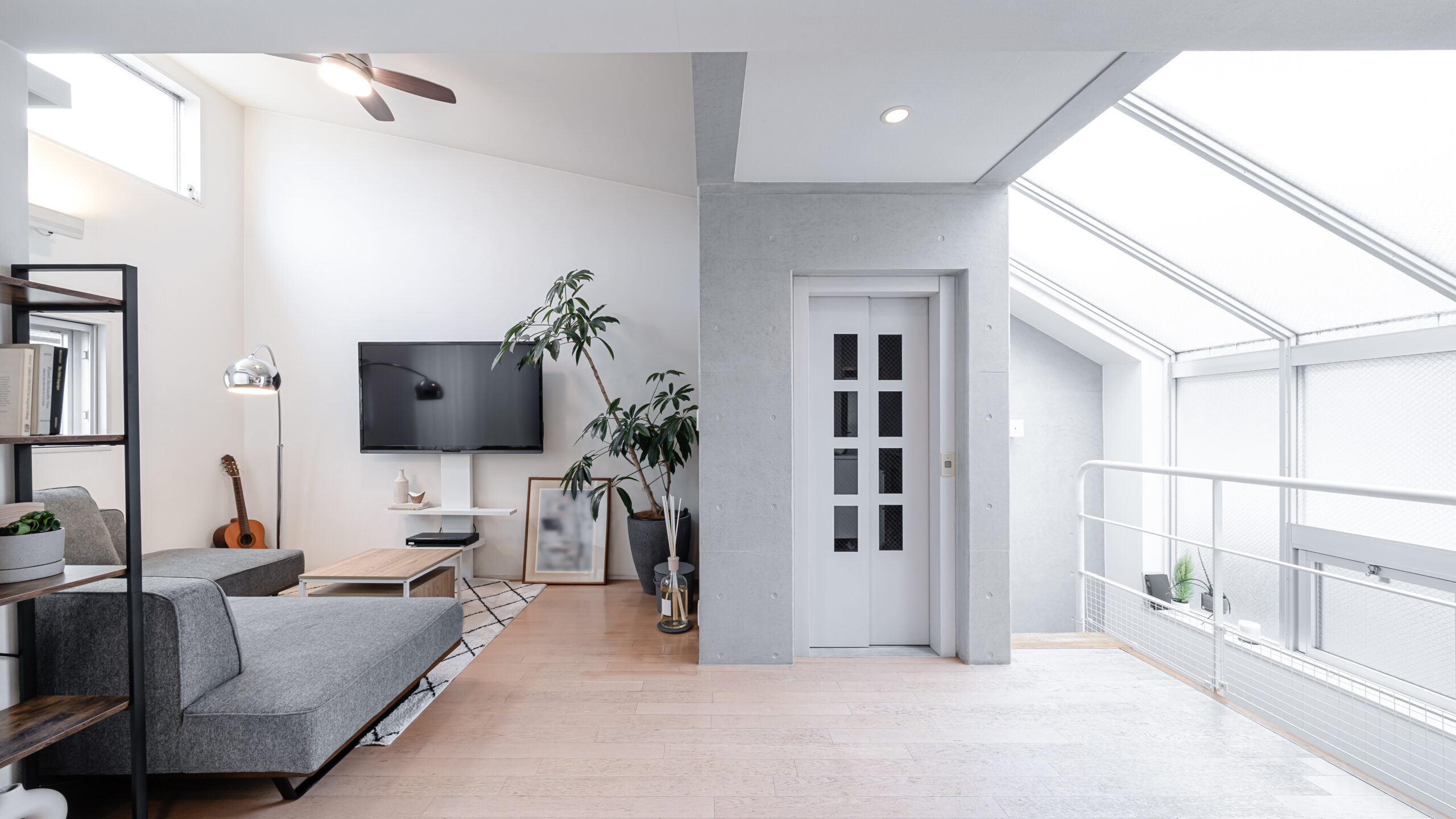
An outdoor home elevator is a rapid vertical transport device—specifically designed for private multi-story residences. It is usually installed on exterior walls, in open-air areas, or within courtyards to connect indoor and outdoor spaces. Outdoor home elevators typically combine both aesthetic appeal and practicality. They come standard with an enclosed cabin—rendering them impervious to weather conditions—and are capable of transporting family members, wheelchairs, pets, and various items. Currently, the two types of outdoor home elevators most widely popular by the market are traction and hydraulic systems; together, these two categories account for over 70% of the current home elevator market share.
Stair Lift (Outdoor)
Outdoor stair lifts are vertical mobility devices with guide rails installed on the side of stairs, where the electric seat moves up and down along the stairs during operation. Outdoor stair chairs and lift chairs are made of more durable materials and have properties such as waterproofing, weather resistance, and temperature resistance. The guide rails for this device come in two types: straight rails and curved rails, which are suitable for simple staircase structures and complex, curved staircase structures, respectively.
Vertical Platform lift
An outdoor vertical platform lift is a semi-enclosed, simple lifting device used for vertical movement. Outdoor vertical platform lifts can be divided into two types based on their lifting height. One type is a lift that can travel between 2-4 floors, similar to a home elevator. Another type is a lift used to replace the entrance steps and eliminate the height difference between the courtyard and the house, which usually has a lifting height of less than 1 m.
Wheelchair Lift
Wheelchair lifts are designed specifically for people who need to use a wheelchair for mobility. Its mainstream appearance is a semi-enclosed cabin, with a small number being fully enclosed. The cabin is spacious and wheelchair-sized, and safety doors are installed around the cabin to ensure the safety of users. Wheelchair lifts typically have a low lifting height, between 1 and 4 m.
Inclined Lift
Inclined lifts also install guide rails on the side of the stairs or on the handrail of the ramp, and then the semi-enclosed platform runs along the direction of the stairs. This lift is suitable for wheelchair users and can conveniently overcome the height difference between indoors and outdoors, serving as a connecting “bridge”. Users simply need to sit in their wheelchairs, and the platform is driven forward by a motor, which avoids the inconvenience of stairs and makes it convenient for wheelchair users to go to gardens, courtyards and other places.
Pros and Cons of Each Option
| Type | Pros | Cons | Cost | Best for |
| Outdoor home elevator
| 1.Stable and quiet operation 2.High security 3.Non-slip, can be used even on rainy days. 4.Sturdy structure, waterproof, sunproof and rustproof. 5.It is aesthetically pleasing, and the glass casing serves as a sightseeing attraction. 6.It’s easy to use; even the elderly and children can use it. 7.Suppose to move items 8.Value-added attributes 9.Can connect the patio, garage, terrace and living room. 10.Easy install 11.Suitable for multi-story, multi-slope residences 12.Long service life
| 1. Installation requires approval in some areas.
2. Requires regular maintenance 3.Installation space needs to be reserved in advance. 4.Relatively long installation time | Relatively high, prices start at $3,000, with luxury elevator models reaching $80,000. | 1. Long-term use 2.Various high-end residences 3.Old residential buildings 4.Used by the elderly and disabled |
| Stair lift (outdoor)
| 1. Relatively convenient 2. Fast installation 3.No separate space required 4.Simple to operate 5.Foldable 6.No civil engineering required | 1. Suitable only for single-story buildings 2The user may need assistance from others. 3.It will take up staircase space 4.Short service life 5.It can only be used by one person at a time and has limited load-bearing capacity. 6.Comfort level is average 7.Regular cleaning is required. 8.Unusable on rainy days | The price is relatively low; a standard straight-rail rail costs around $2,600. But the curved track could reach $7,300. | 1. 1. Short-term solutions 2. Residences with only a single-story staircase on the outside. 3. People with moderate mobility |
| Vertical Platform lift
| 1. 1. Convenient and saves physical effort 2. Sample to operate 3. Can carry 1-2 people at the same time 4.Suitable for wheelchairs 5.Suitable for low floors 6.Fast installation | 1. This is an open space and not suitable for people with a fear of heights. 2. Limited lifting height 3. Requires a certain amount of space 4. Not suitable for use on rainy days | Prices range from $2,500 to $15,000. | 1. Suitable for wheelchair users 2. Low-rise residential users |
| Wheelchair lift
| 1. 1. Suitable for wheelchairs 2. Spacious interior 3. Convenience 4. Fast installation 5. Stable operate 6. It can go straight in and out without turning around. | 1. Slow Speed 2. Frequent maintenance 3. Requires a dedicated space for installation 4.It gets very cold when used in winter. | Prices range from $2,500 to $10,000 | 1. Suitable for wheelchair users 2. Suitable for low-rise residential buildings |
| Inclined lift
| 1. Easy to install, quick installation time 2. Does not occupy ground space 3. Do not damage the building structure | 1. Slow speed 2. Require dust and water protection measures 3. Suitable for single-story staircases 4. It lacks aesthetic appeal. 5. Limited load capacity | The price ranges from $6,400 to $13,000 |
1. Suitable for entrance steps and courtyard steps 2. Old residential buildings 3. No space to install vertical lifting equipment |
Which Outdoor Lift Is Best for Your Situation?
Elderly Users
If it is for elderly people to use, the first thing we need to consider is safety, and the second is convenience. Outdoor home elevators and stair lifts meet the requirements, are very safe to use, and are unlikely to cause falls. Both devices are very easy to operate; they can be started with a simple press.
Wheelchair Users
For wheelchair users, outdoor home elevators, wheelchair lifts, tilt lifts, and vertical platform lifts are available. They all have spacious interiors, ensuring comfort during operation and easy access.
Small Space
If you have limited outdoor space but want to connect indoor and outdoor areas, small home elevators and small vertical lift platforms are suitable for you. They do not take up indoor space, have a small footprint, and can greatly improve the utilization rate of the space you have reserved.
Luxury Villas
For luxury residences, home elevators are an excellent choice. It features a customizable appearance that can blend seamlessly with your home’s decor, enhancing its aesthetics and creating a stylish, modern residence. In addition, outdoor home elevators are the most effective way to increase your home value among all types of lifting equipment.
Choose The Best Outdoor Home Lifts for You with Anter
Owning a lifting device that can be connected to the outdoors can make life more convenient for you and your family. After reading the above information, you may already have a product in mind. If you are looking to buy a home elevator, you must be careful and choose a company with excellent products and services.
Here, we recommend Anter—a outdoor home elevator company that has been operating for over 16 years. They insist on factory direct sales and can provide you with professional solutions and design drawings, as well as one-stop services including production, after-sales service, installation, and transportation.
Contact us now so you can soon enjoy the convenience of freely moving between different floors, both indoors and outdoors.
FAQ
What is the best outdoor home lift for residential use?
We recommend traction-driven home elevators as the best choice for outdoor use for the following reasons:
- Good weather resistance. Traction elevators primarily rely on motors to drive steel wire ropes or steel cables to pull the car; hydraulic elevators rely on hydraulic oil for operation, and hydraulic oil is easily affected by temperature, becoming viscous.
- Low maintenance costs. Outdoor home elevators all require regular maintenance, but the maintenance cost of traction elevators is lower than that of hydraulic elevators, which require regular replacement of hydraulic oil.
- Low energy consumption. When traction elevators and hydraulic elevators operate simultaneously, traction elevators consume less electricity, approximately 30%–50% less.
- High efficiency. Traction elevators are faster than hydraulic elevators.
Can a wheelchair lift be used as a home elevator?
Home elevators and wheelchair lifts are indeed easily mistaken for the same product, but they are not the same and their uses do not completely overlap. Home elevators are enclosed and can typically lift 2-7 floors, while wheelchair lifts are semi-enclosed and can typically only lift 2-3 floors. Furthermore, home elevators are essentially smaller versions of commercial elevators, making them safer, suitable for everyone, and aesthetically pleasing. Wheelchair lifts are essentially platforms with guardrails, which are not aesthetically pleasing but are more suitable for wheelchair users and the elderly.
How long does it take to install an outdoor home lift?
If you want to install an outdoor home elevator, the average installation time is 7 days. However, the elevator structure you chose is quite complex, so it may take about 10 days.
If you want to install a wheelchair lift chair, the installation time is about 1-2 days.
If a vertical platform lift or inclined lift, or wheelchair lift, is installed, the installation can be completed in 1-3 days.
Which outdoor lift is the safest option?
The safest option is an outdoor home elevator. Outdoor home elevators use a fully enclosed structure, making it less likely for users to fall. Home elevators are equipped with multiple safety devices, including buffers, safety brakes, emergency power supplies, safety light curtains, and automatic leveling systems, which can prevent accidents from occurring. Most of these safety devices are from commercial-grade elevators, and their safety is extremely high.
According to statistics from the past few decades, the accident rate of home elevators is very low. In the accidents that have occurred, the problems with the home elevators themselves are rare; most of the dangers are caused by improper use and installation.
 English
  Arabic
  Vietnamese
  German
  Malay
Malay  Thai
Thai