
Introduction
The full name of Lula elevator is Limited Use/Limited Application Elevator. It is a barrier-free equipment between traditional commercial elevators and wheelchair lifting platforms. But this type of elevator is generally not well known to the general public, and those who know it may have some misconceptions about it. They believe that it can be used flexibly in home scenarios like a wheelchair lift platform, and has the safer features of a commercial elevator, making it a better substitute for home elevators. But is this really the case? The Lula elevator seems to have many limitations.
As a professional elevator manufacturer, we have the obligation to explain to you the information and the key differences between lula elevators and home elevators to help you understand the most objective facts and choose the elevator that best suits your home.
What Is A Lula Lift?
Lula lift is a hybrid elevator that combines the advantages of traditional commercial elevators and wheelchair lifting platforms. The Lula elevator was originally manufactured to meet the ADA (Americans with Disabilities Act) proposed by the United States. When using a full-size commercial elevator is too expensive and the wheelchair lift platform is considered too crude, the Lula elevator is a very good choice———This is also the second reason why Lula elevators were manufactured.
Lula elevators typically have strict parameter requirements. As follows:
| Specification | |
| Maximum travel | 25 feet (about 7.6 meters) |
| Maximum load | ≤1400 pounds |
| Passenger capacity | 1-5 people |
| Maximum speed | ≤0.15m/min |
| Maximum area of the car | 1.67㎡ |
| Stops | ≤3 floor(6 stops) |
| Requirement of shaft | shallow pit(350mm) Low top floor(2.6m) |
Where Are LULA Elevators Used?
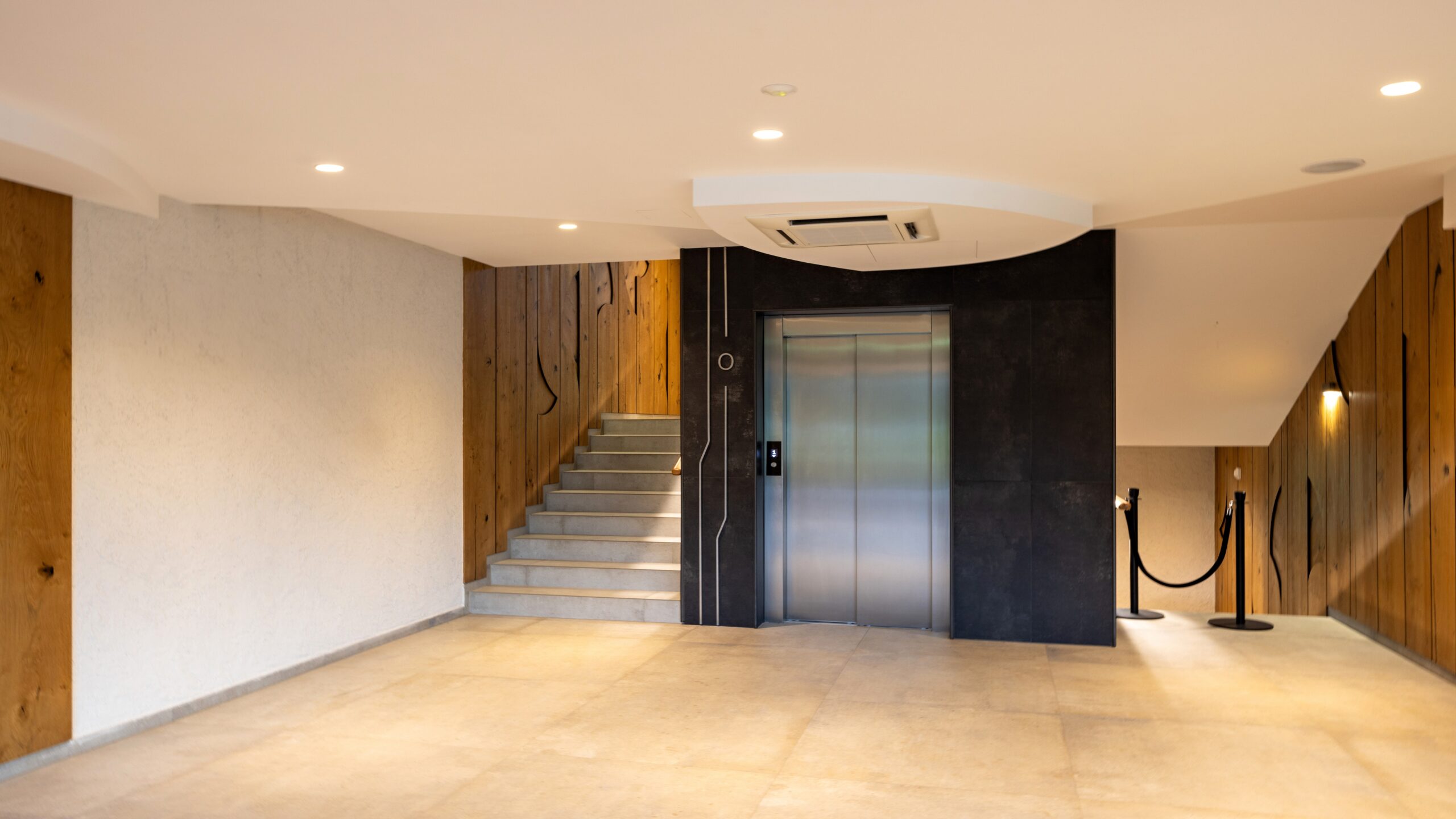
LULA elevators can be installed in commercial buildings as well as in private residences. But the Lula elevator is essentially a low-traffic public or semi-public facility. For the following places, after years of development, Lula Elevator already has complete installation solutions and rich practical cases.
Religious place like churches
Low rise office building
Small commercial establishments (small clinics, small restaurants, small cafes, small retail stores)
Community center
Old low-rise building
Motel, hotel
Small and medium auditorium
Apartments, multi-family buildings
Nursing home
LULA Elevator vs Home Elevator: Key Difference
| Name/Feature | Lula Lift | Home Elevator |
| Application | Mainly Used in commercial buildings | Primarily applicable to private residences |
| Drive System | Mainly driven by rope hydraulics | Traction drive, hydraulic drive |
| Load capacity | ≤635kg | ≤400kg |
| Travel Speed | ≤0.15m/s | ≤0.4m/s |
| Appearance | Inclined towards “industrialization” | Diverse styles, customizable |
| Travel | ≤7.6m | Generally less than 12m, but in special cases it can reach 21m. |
| Stability | Weaker, but more functional | Better, focusing on comfort and ride experience |
| Cost | High price | Relatively low(Wide range of costs) |
| Shaft requirements | There must be a shaft | A shaft is not required. |
| Law and Regulation | Compliant with commercial standards | Compliant with commercial standards |
| Pit | 300mm-500mm | Pit can be unnecessary |
| Civil engineering requirements | Strict and High Requirements | Flexible Requirement |
| Design Purpose | For use in low-rise light commercial buildings, barrier-free renovation | For use in residences(villa,duplex,mansion,townhouse) |
| Door | Mandatory installation of automatic doors | Both automatic and manual doors are available |
| Maintenance | Regular maintenance is required | Flexible maintenance schedule |
| safety | Higher security | It can ensure user safety and provide a better user experience |
| Dimension | The dimensions are designed to accommodate wheelchairs. | The dimension is flexible |
| Installation cycle | More time is needed | Install quickly |
Which One Is More Suitable for You?
After the above comparison, which one should I choose between home elevator and lula elevator? To make a more informed choice, you should consider the following factors:
Building Type
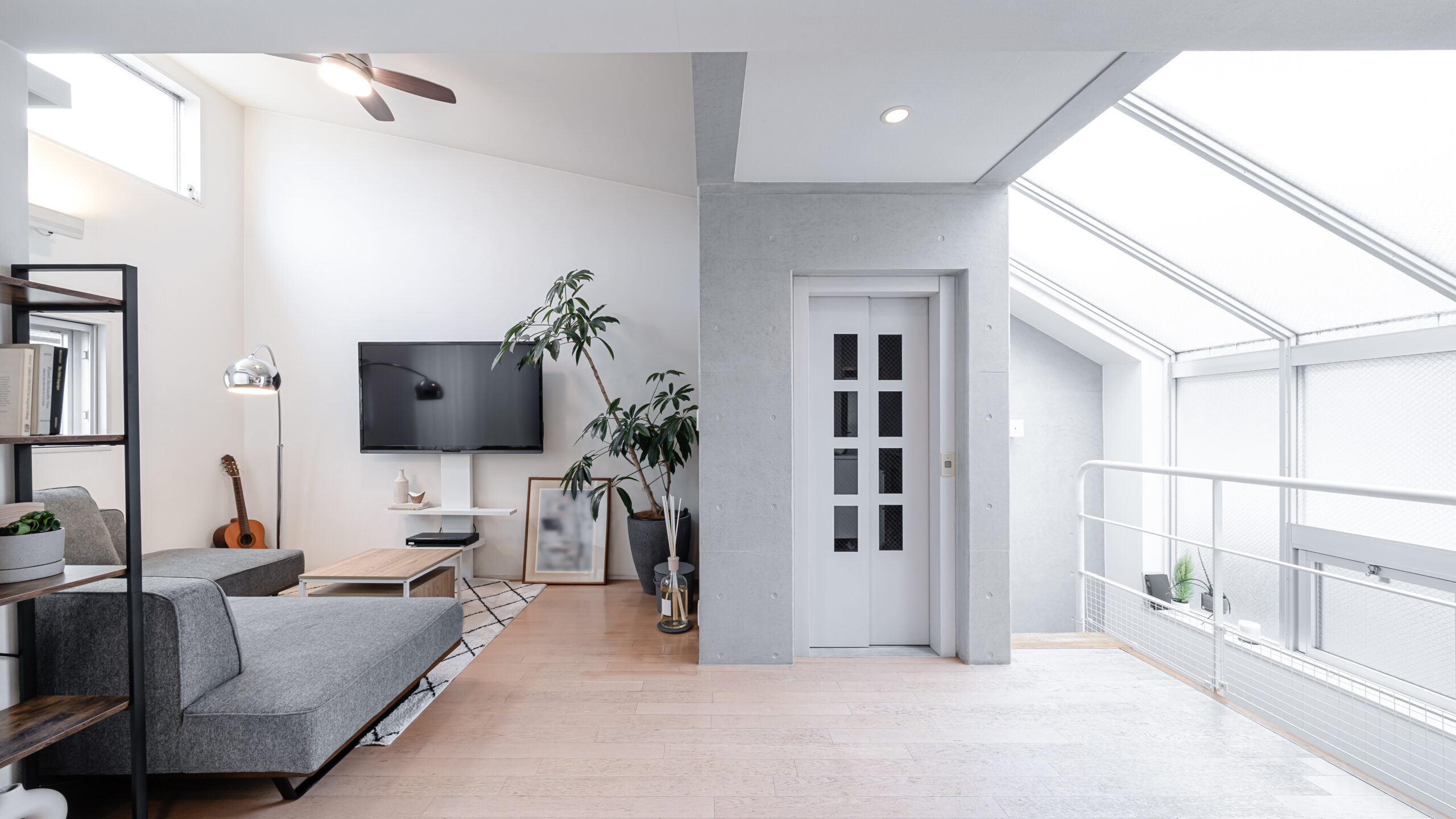
When you need to install an elevator in a low-floor commercial location, only lula elevators meet your needs. When installing elevators in residential buildings, home elevators are the best choice. Although lula elevators can also be installed in residences, they are not as effective as home elevators specifically designed for residences.
Note: The lower floor of the building is for commercial use, and the second floor and the floors above are for residential use. A home elevator can be installed on the second floor.
House Height
Lula elevators are only used in 2-3 floor residences. Therefore, when the height of your residential building is 2-7 floors, a home elevator is the best choice to meet your requirements.
Frequency of Use
Lula elevators are suitable for occasions with low traffic and less frequent use. If you need it for multiple uses by daily family members, a home elevator is more suitable for you because it has more stable performance.
Long-term Value and Utility
If you pursue the long-term value brought by lifting equipment, then home elevators are your first choice. Home elevators have a stronger sense of design and can be customized according to your house style and needs. They are more like works of art and can increase the value of your house. When a home is resold, a home elevator can increase the value of the home and attract more customers who are looking for the most practical and beautiful accessibility features. The Lula elevator pays more attention to functionality and is designed for wheelchairs to enter and exit. It is more practical, but has a weaker sense of design and beauty.
Comfort and Functionality
The Lula elevator car has a small area (≤1.67㎡) and can usually only accommodate a wheelchair and one person. When carrying multiple people at the same time, the interior will be crowded. Moreover, the speed of the lula elevator is also relatively slow, with a maximum speed of only 0.15m/S. There is also a sense of frustration when starting and stopping, so the overall comfort is low. The size of the home elevator can be customized and can carry up to 8 people. The interior car is spacious and very smooth when starting and stopping, without any shaking, so it feels more comfortable. In terms of functionality, lula elevators are more functional in commercial barrier-free renovations; and in home scenarios, home elevators have richer functionality, including: carrying heavy objects, child locks, emergency self-rescue, etc.
Flexible Installation
Compared with lula elevators, home elevators are more flexible to install. Hydraulic elevators in home elevators do not require pits, and traction elevators do not require hoistways and machine rooms. Therefore, home elevators have lower civil construction costs and shorter installation time. In addition, home elevator installation does not need to rely on walls and can be installed only with fixed points. The installation is very flexible and the installation location in the house is not restricted. The Lula elevator must have a pit and shaft before it can be installed.
Cost and Budget
Home elevators typically cost between $3,000-$60,000 and can go as high as $10,000. There is no uniform price standard for Lula elevators, but the price is generally between US$50,000 and US$100,000, or even higher. Therefore, your budget is very important in your choice.
Conclusion
If you are looking for a home residential project, choosing a home elevator can give you a better experience than a lula elevator. And when you want to choose a suitable home elevator manufacturer, I sincerely hope you can give us a chance. We (Anter), since 2010, have been working hard to help homeowners have a better residential experience and make their lives more convenient. We provide villa elevators, duplex elevators, small elevators, glass elevators, stainless steel elevators, etc. These products are manufactured and installed in our independent factories and undergo strict inspections, which can provide you with multiple certificates. Our products are trustworthy and our services are very comprehensive. We can provide you with one-stop service from design to transportation and installation.
Fill out the form on the right to get free information, we are waiting online 24/7 to serve you.
FAQ
What does LULA stand for in elevators?
Lula in Lula elevator means limited use and limited application. That is, the scope of use and application fields are limited, relevant regulations must be strictly followed during installation and cannot be installed and used arbitrarily.
Are LULA lifts cheaper than home elevators?
Lula elevators are manufactured according to the standards of commercial elevators, so their cost is higher than that of home elevators (except for home elevators with very high-end and luxurious configurations). However, Lula elevator is a low-profile commercial elevator, so it is cheaper than standard commercial elevators.
What is the safest type of home elevator?
In the home elevator market, the most common types are traction elevators, hydraulic elevators, screw elevators, and pneumatic elevators. These four types of elevators can ensure your safe use.
Traction elevator:The safest type of home elevator. At present, the technology of the traction elevator is very mature. Traction elevators usually consist of 8 steel wire ropes or steel wire belts connected to the car, which are not easy to break. Even if it breaks, the safety gear + speed limiter will make the car hug the guide rail tightly, so that it will not fall.
Hydraulic elevator:The second safest type of home elevator. The structure of the hydraulic elevator is very simple, so the failure rate is low, and it relies on the hydraulic cylinder to lift the car and will not fall.
Screw elevator: The third safest type of home elevator. This elevator mainly relies on the engagement of the screw and nut to achieve ascent and descent without falling. However, generally screw elevators are not equipped with safety gears and speed limiters, so compared to the first two, the safety is weaker.
Pneumatic elevator: Vacuum elevators have the weakest security. The entire elevator relies on air pressure for movement, without the support of steel cables and screws. When the elevator loses pressure, the elevator car is prone to falling.
Can a LULA elevator be customized?
Lula elevators have some customization options, but compared to home elevators, customization flexibility is lower. Lula’s size, load range, and speed are strictly regulated and cannot be changed at will. Therefore, only the color of the car, the style of the doors and panels, and the direction of the opening can be customized.
 English
  Arabic
  Vietnamese
  German
  Malay
Malay  Thai
Thai