
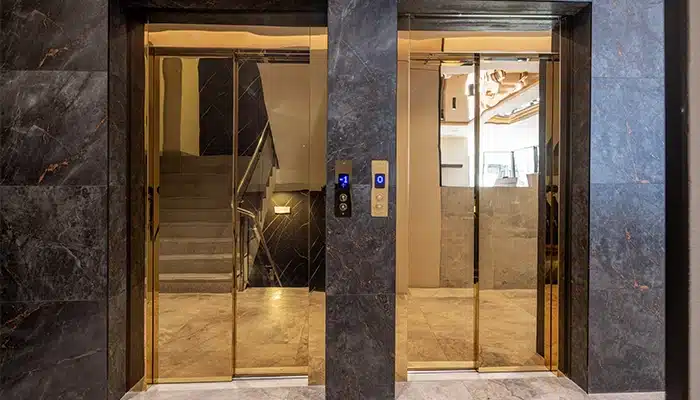
As of April 2026, the number of elevators (excluding escalators) in use worldwide is estimated at 22.6 million to 23.8 million. Whether in commercial buildings or residential homes, elevators have become an indispensable tool for us. Elevators have changed our lives and catered to the fast pace of modern society.
But when you ride an elevator, have you ever wondered: How do elevators accurately reach designated floors? What components are included in the control system behind an elevator? What elevator control systems do we directly interact with?
You can get objective and accurate answers to all these questions here. This article provides a systematic discussion of all aspects of elevator control systems. Whether you primarily use residential or commercial elevators, understanding these basics will help you use them more smoothly.
What Are Elevator Controls?
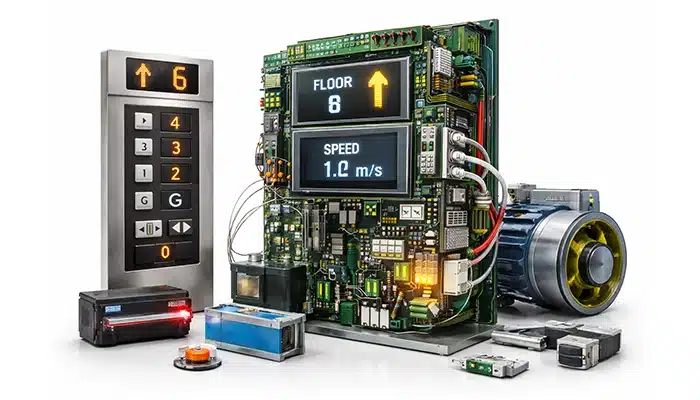
Elevator control refers to the core control system of an elevator, which is the “brain“ of the entire elevator system. Elevator control integrates the monitoring of elevator startup, operation, speed regulation, stopping, door opening and closing, leveling, and safety protection. Then, upon receiving a signal, it automatically executes each instruction based on its own logical judgment.
Why Elevator Controls Matter?
Of all the systems in an elevator, the control system is the most important. The control system is responsible for ensuring the normal operation of the elevator and accurately responding to every user’s needs—ensuring that the elevator stops precisely at the designated floor, starts and stops smoothly, and provides users with a comfortable riding experience.
The control system ensures user safety at all times, monitoring and intelligently activating various safety devices. For example, when the control system detects that the elevator is overspeeding, it will automatically activate the speed limiter to restrict the elevator’s speed to within the specified range;when the car rapidly descends to the lower end of the guide rail, the safety clamp at the bottom will automatically lock the car onto the guide rail.
When multiple elevators are arranged side by side, the elevator control system also serves as an intelligent dispatch center. It lets passengers quickly reach the elevator and improves operational efficiency while saving energy by calculation.
How Do Elevator Controls Work?
The following is the entire process of elevator control.
Receive Instructions
Users can issue start/stop commands via buttons inside or outside the car or via the smart control panel. These instructions are converted into signals and then received by the elevator control system.
Judge
Based on this signal, the elevator makes a judgment: its current location, its next direction of travel, plans the optimal route, and whether the safety conditions for performing the task are met. When multiple elevators are controlled simultaneously, determine which elevator is most suitable to perform the task.
Implement
After the controls makes a judgment and the safety conditions are met, it confirms that execution is possible. At this point, the control system will send instructions to the drive system to start the elevator. During operation, the control system will ensure the elevator runs smoothly and stops precisely at the floor specified by the user.
Opening and Closing Doors
The elevator control system needs to promptly confirm that the elevator has stopped running, the door area is safe and normal, and there are no interference signals in the surrounding area. Only after confirmation can the elevator doors be opened or closed. The confirmation process is very fast; basically, the elevator doors will open automatically 1-2 seconds after the elevator stops at the floor.
Full Safety Protection
Throughout the elevator’s operation, the control system rigorously monitors every safety device, including overspeed protection, overload protection, power failure protection, and door lock linkage protection. In the event of a malfunction, the corresponding safety devices should be activated immediately to prevent an accident from occurring.
Key Components of an Elevator Control System
Controller
The controller in an elevator control system is like the central part of the brain, the central computer. The controller receives, parses, processes, and then makes judgments and calculations, namely, determining whether the instruction can be executed and whether the current conditions are met; calculate the optimal and efficient path and operating parameters for executing the task (up or down, start or stop, etc.).
Driver System Interface
The drive system interface is the connection hub between the elevator controller (brain) and the drive system (muscles). Its main function is to transmit the signals sent by the controller to the drive system for execution, and then feed back the operating status of the drive system to the controller, thereby ensuring that the elevator can operate stably.
Sensor
Sensors are the “eyes” of elevator control systems. It monitors the elevator’s status in real time, such as position, speed, and load, and converts these non-electrical signals into electrical signals for easy reception by the elevator controller and serves as the basis for controlling and executing security protection commands.
Operating System
The operating system is an important window for users to issue commands and obtain elevator operating status. It also serves as the direct interface for elevator and user interaction, converting speech signals into non-speech signals and displaying them on the screen. Operating systems currently come in two types: control panels with buttons and touchscreens.
Door Control System
Doors are an important component of elevators and are indispensable for their overall operation. The door control system controls the automatic opening and closing of elevator doors, anti-pinch functions, and door lock linkage, with the purpose of protecting the safety of passengers entering and exiting.
Elevator User Interface & Controls
Users cannot directly send mechanical language signals to the elevator control. Therefore, a simple and easy-to-use user interface is needed to collect the issued instructions and send them to the control system for easy reading. A standard elevator’s user interface includes a hall call panel, a car control panel (including floor/door opening/closing buttons), and emergency safety control devices.
Hall Indicators
The outdoor indicator is the first point of entry for the interactive interface. It is installed outside the door and usually takes the form of a button or a touch screen. It is used to display the floor the elevator is on, the direction the elevator is traveling, and to indicate that the elevator is about to arrive at its destination. Furthermore, the prompting functions of outdoor indicators typically include visual cues (in digital form) and voice cues. Upon arrival at the station, it will emit an audio announcement or use intelligent voice prompts to indicate “ascending” or “descending”.
Note: When installing a Hall Indicator, the location must be conspicuous and at least 72 inches from the ground.
Car Operating Panel
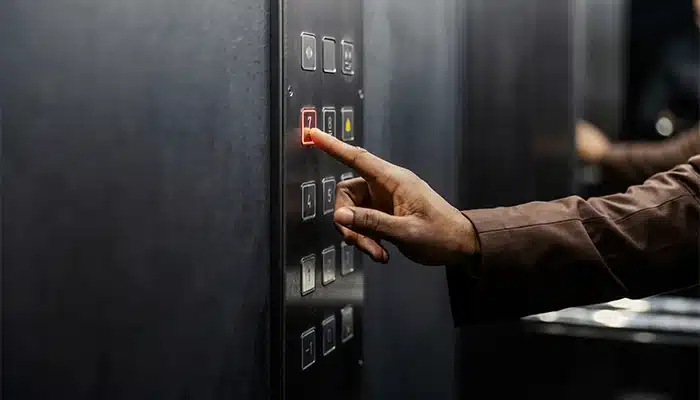
Car Buttons
Most elevator cars have numerous buttons inside for user operation and command control. These buttons include:
Floor selection button:Selecting the corresponding floor button tells the elevator control system where you need to go and which direction you need to go.
Door opening button:Pressing this button when the elevator door is closed will keep the elevator door open.
Door Closing button: If there is still some time before the elevator closes at the set closing time, pressing this button will immediately close the elevator.
Door lock button: Not all elevators have this button, but when it does appear, it is usually accompanied by a lock symbol. Its function is to keep the elevator in a stopped state and keep the elevator doors open for a long time when moving continuous items or performing maintenance.
Smart Screen
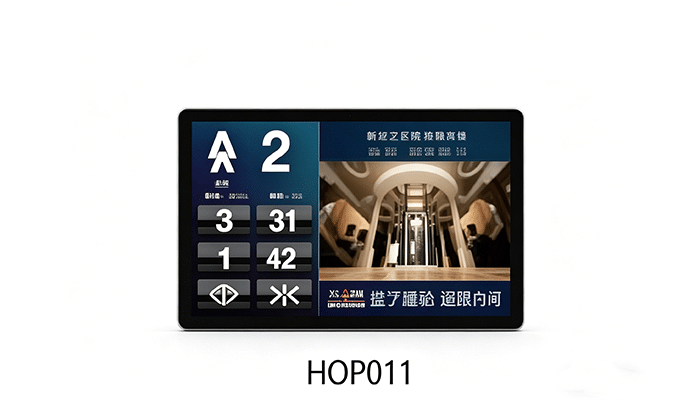
Currently, as elevators become increasingly intelligent, especially in the home elevator sector, smart touchscreens are gradually replacing buttons. When you use an elevator, you’ll find that there are almost no buttons inside; you can access all the elevator’s functions simply by clicking on the control panel.
Emergency or Safety Controls
Elevators are required to be equipped with certain emergency devices to protect the safety of users. These devices may be located on a control panel or on a separate button.
Emergency stop button: This is usually a prominent red button, located next to the control panel or door opening button. When the elevator malfunctions or encounters danger, use this button to immediately stop the elevator. The elevator can only be used again after a professional has reset the knob.
Emergency alarm: Emergency alarms are usually yellow or red round buttons with a bell symbol. Emergency alarms are usually connected to a buzzer. When pressed, the alarm will sound continuously, alerting people nearby that they are trapped in the elevator, and simultaneously sending a distress signal to the property management.
Telephone button: This button is the elevator’s only safety device that allows for two-way voice communication. Button labels are usually yellow or red and shaped like a telephone. Pressing this button will automatically transfer you to your property management office or call the local police station.
Emergency power supply: This device is typically located in the center or corner of the top of the elevator. When the elevator suddenly loses power, the control system detects the power failure signal and triggers the emergency switching procedure, thereby automatically turning on the emergency power supply.
Elevator Controls in Modern Home Elevators
With the continuous development of technology, home elevators are no longer limited to simple lifting devices for transporting people and goods. More and more home elevators are integrating intelligent control, comfort, safety and basic practical functions to create elevator equipment that is more suitable for today’s high-end homes.
Modern home elevators can be controlled via mobile app, voice control, and touch control, and their status can be remotely monitored in real time, with automatic fault detection. Meanwhile, the home elevator uses sound-absorbing materials and has been equipped with features such as child locks, facial recognition unlocking, card swiping, and password unlocking.
Compared to traditional elevators, modern home elevator control systems are increasingly developing towards intelligence, multi-functionality, quietness, personalization, and customized features.
Conclusion
Elevator control is the core of ensuring the smooth operation of elevators. Elevators are actually not complicated. After you understand these things about elevator control systems, you will be able to use elevators more properly and handle emergencies correctly. In addition, when you have an elevator, it will be smoother and more comfortable for your life.
Contact Anter— Let Your Life Be More Convenient
Contact Anter and let this elevator manufacturer with 15 years of experience provide you with the home elevator that best suits your needs.
Anter has its own factory, and whether you want a simple porch lift, a stainless steel elevator, or a panoramic elevator, we can provide you with a completely customized solution to meet your space and installation needs. You can design a beautiful and elegant home elevator for the house your loved ones love, and it will be unique and exclusively yours.
All home elevators provided by Anter comply with ISO 9001 and CE standards and have certificates of origin. In addition, Anter has multiple production lines, has introduced advanced foreign equipment and the latest technology, and can combine rich global export experience to provide you with a stable supply of elevators.
We are online 24/7, and we will respond quickly and provide you with professional answers if you have any questions. Furthermore, we are experienced and can guarantee quality while enabling rapid production, with factory delivery in as little as 20 days.
Fill out the form on the right, and we’ll send you the drawings and plans tomorrow!

FAQ
What are the different elevator controller types?
With the development of the elevator market, elevator controllers have come in a variety of types.
Here, I will list the types of elevator controllers according to the most mainstream attribute: the stage of technological development.
Relay controller
PLC (Programmable Logic Controller)
Microcontroller/MCU controller
Dedicated microcomputer controller
Smart IoT controller
Relay controllers and PLC programmable controllers have now been replaced by other controllers, and only a very small number of elevators still use them. Microcontrollers (MCUs) are commonly used in home elevators. Dedicated microcomputer controller, the mainstream controller for commercial elevators. Intelligent IoT controllers represent the future trend of elevator development.
How to use elevator buttons?
First, outside the elevator, select the up or down button. Once inside the elevator, ensure it aligns with your desired direction, then press the button for your desired floor. The button will light up when you’ve successfully selected your floor. Although the elevator doors open and close automatically, they are still equipped with open and close buttons to help extend the opening time and close the elevator doors immediately.
The elevator is also equipped with an emergency button; please refer to the above for details. Click on them if necessary. It is important to note that you should not repeatedly press a button or randomly click multiple buttons inside the elevator.
Are elevator control systems safe?
Yes. Elevator controls are equipped with multiple safety mechanisms. Its sensors and real-time monitoring technology can effectively prevent the dangers caused by elevator malfunctions.
How do elevator controls improve safety?
The elevator controller monitors all safety points of the elevator around the clock, and immediately activates the corresponding safety devices to protect it when an anomaly is detected. Elevator control also has an active early warning function, capable of self-diagnosing faults, alarming abnormalities, and remotely monitoring elevator health—nipping danger in the bud.
Simultaneously, the elevator controller controls multiple safety devices. When the elevator loses power or malfunctions, it will automatically activate the emergency power supply, automatically level the floor, and activate the buffer to ensure the safety of users.
How often do elevator control systems need maintenance?
The control system of a commercial elevator needs to be maintained once a month. Home elevator control systems only need maintenance once every six months or a year, although some local laws require maintenance every three to six months.
 English
  Arabic
  Vietnamese
  German
  Malay
Malay  Thai
Thai