
Elevators have become an important means of transportation connecting high or low or middle buildings. Elevators are very common in shopping malls, office buildings, hospitals, hotels, and even residential buildings. We come into contact with and use elevators almost every day, but are you familiar with the etiquette for riding elevators?
Although these etiquette and rules seem simple and most are considered common sense, many people still don’t follow them and believe they are unnecessary. But in fact, it is an outward manifestation of social civilization, reflecting a person’s cultivation and morality.
Therefore, the next time you ride an elevator, try to follow these five core rules of the elevator to leave a good impression on your fellow passengers.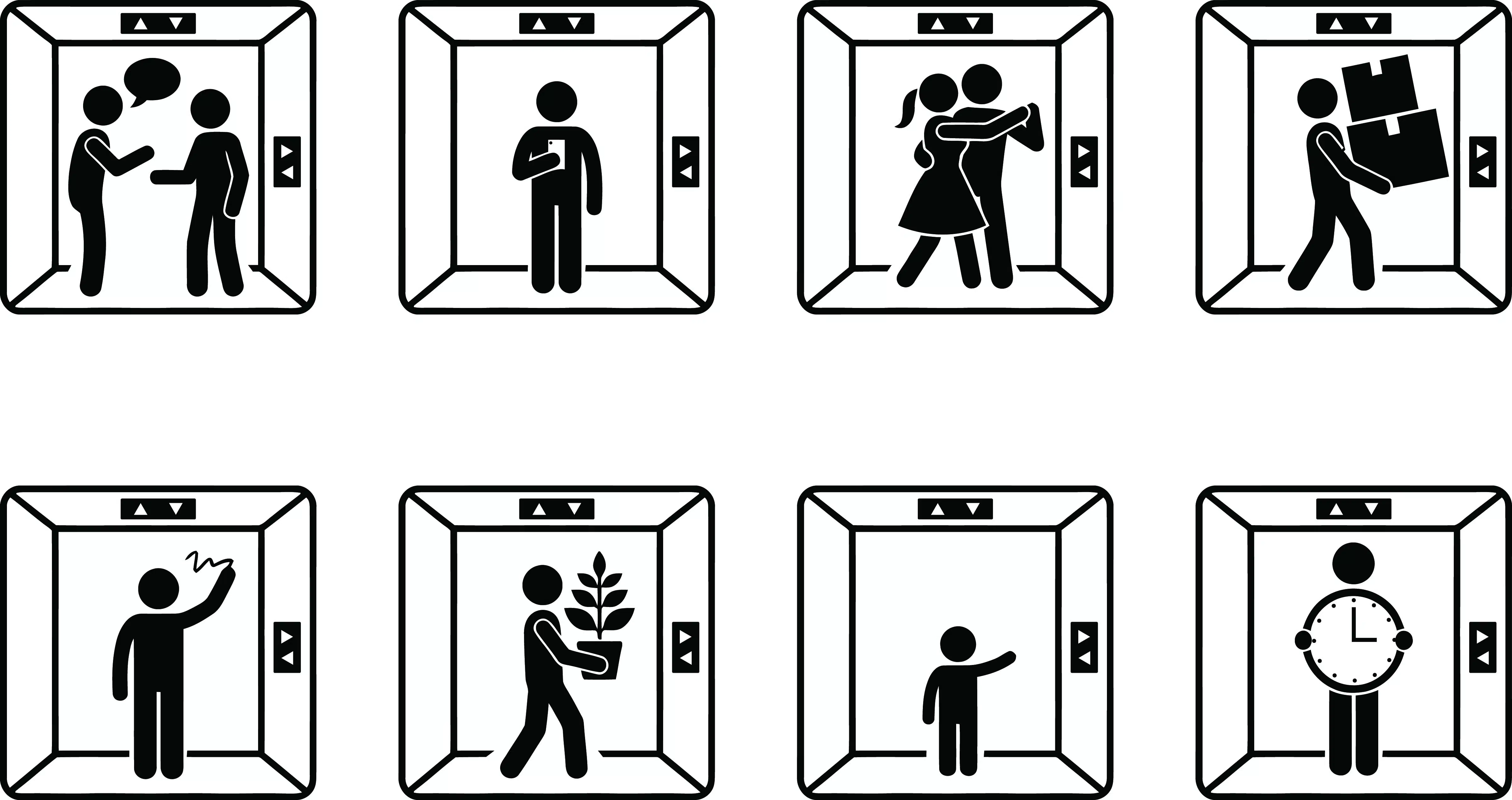
Why Elevator Etiquette Matters
First, the world is made up of rules. In China, there is a saying: “Without rules, nothing can be accomplished.” Every place has its rules, and fundamental order must be maintained by relying on these rules. As a small public space, elevators should also have their own set of etiquette rules. Furthermore, following this set of rules will help ensure the order of the elevator and the safety of every passenger, and make the elevator operate more efficiently. In a word, following the rules is essentially about protecting your own interests.
Secondly, an elevator is a small, enclosed shared space that requires short-distance contact. Following elevator rules can enhance the user’s riding experience. Although the process only lasts for a few tens of seconds, there is no sense of oppression or fear.
Third, elevators are a microcosm of public society. When we follow elevator etiquette guidelines, it reflects our high quality and personal cultivation, as well as the level of civilization in the city.
Finally, following elevator rules helps avoid unnecessary conflicts. Rash and impolite behavior can lead to friction between people and may cause unimaginable harm. But when we all follow the rules for riding elevators, only friendship and harmony will remain in this space.
The 5 Core Elevator Etiquette Rules
Follow the Passengers Exiting First
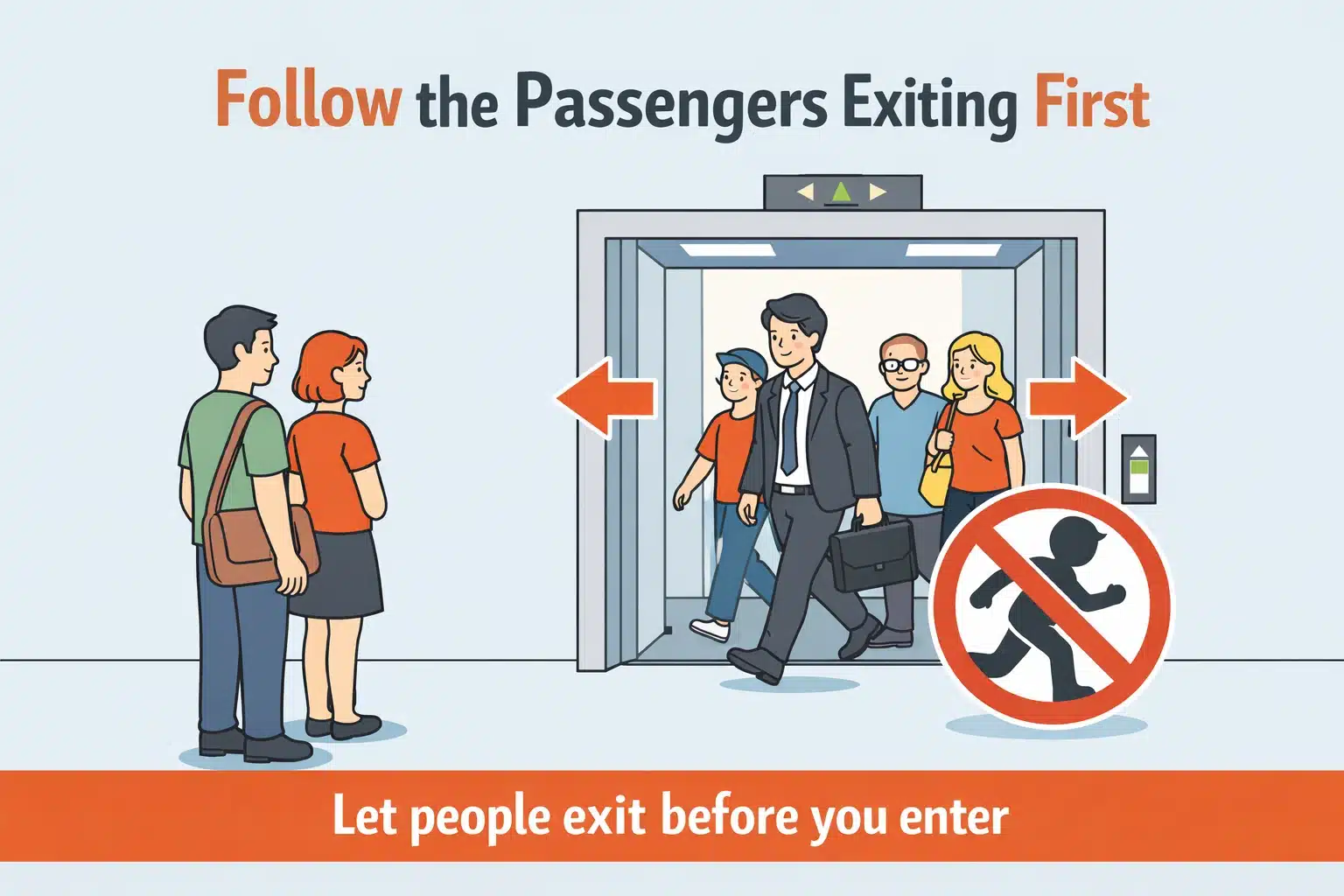
Please adhere to the principle of “first out, then in”. No matter how long you have been waiting, or how much of a rush you are, please do not rush into the elevator the moment the doors open— because you cannot predict what will happen inside. Spending a few extra seconds waiting for the people in the elevator to exit first will better ensure your safety.
When you are waiting outside the elevator, please do not stand too close to the elevator door, and try not to stand directly facing the elevator door. These actions could easily lead to you being accidentally injured by someone rushing out of the elevator. The correct way is to stand on the right side of the elevator, which allows you to observe the situation inside the elevator and makes it easier for people inside to get out.
When you enter the elevator first, please stand to the back or sides to leave room for others. This also allows people behind to enter smoothly, thus avoiding pushing and crowding. Note: When there are people with mobility impairments or wheelchair users, allow them to enter the elevator first, and help them open the door or select a floor.
Avoid Overcrowding the Elevator
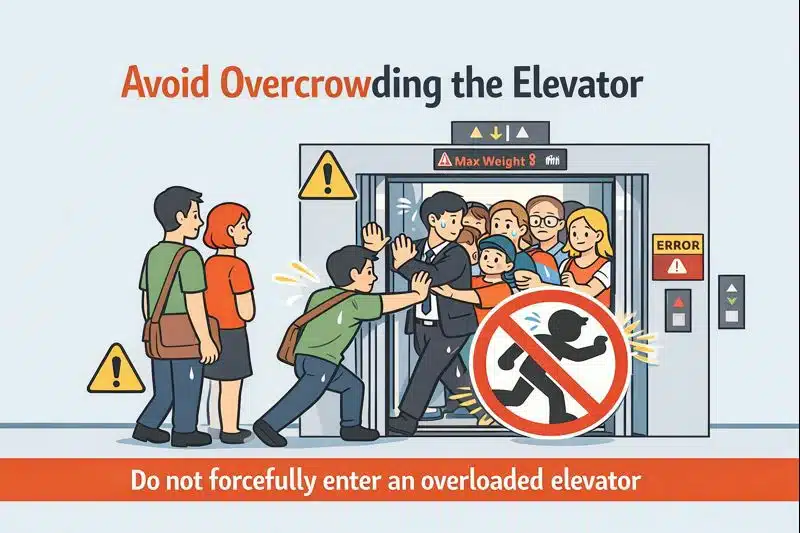
When an elevator is overloaded, the last passenger to enter the elevator or the passenger at the elevator door should exit before the elevator starts moving—this is a common consensus in everyone’s subconscious. Some elevators will automatically close their doors when they reach their rated load capacity; forcing your way in could result in injury. In addition, most elevators on the market currently fail to close their doors and frequently display error messages when overloaded. If you forcibly close the elevator doors that may cause the elevator to malfunction and stop operating, resulting in dangers such as people being trapped, falling, or being hit by a falling object.
Repeatedly operating at the rated load limit will accelerate the wear and tear of elevator components, leaving safety hazards and making escape difficult in the future. Therefore, avoiding being overweight is a way to protect everyone’s life.
If you find the elevator very crowded, you can wait a few minutes unless it’s an emergency. Entering the elevator under these circumstances would make you and other passengers feel extremely uncomfortable:Other people’s hands might touch your body, and your backpack might scratch others. Additionally, a crowded environment can make it difficult for passengers arriving at their destination floor to leave the building.
Keep Noise Levels Low
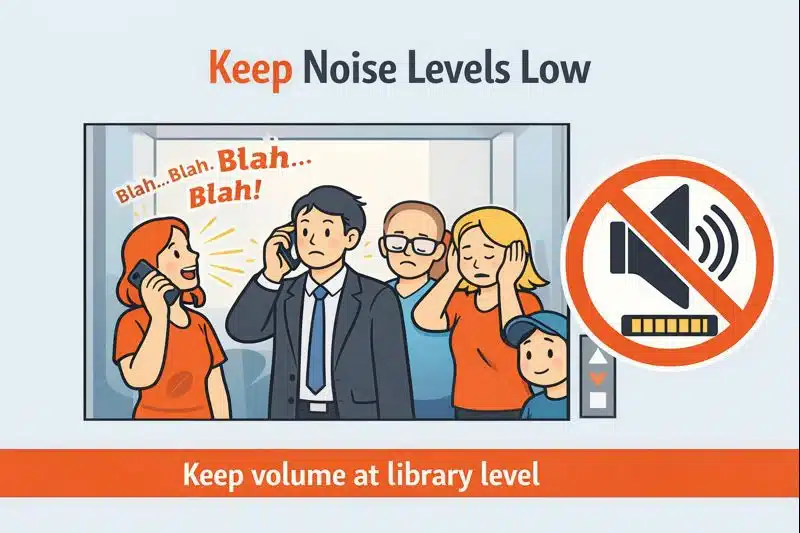
When entering the elevator, please keep the volume at library level. Elevators are enclosed environments, and if someone is making a lot of noise, it can have a significant impact on others.
Not everyone wants to hear your story, but not everyone will ignore what you’re saying either. First, don’t talk loudly to others in the elevator, especially in an emotional tone. Not everyone wants to listen to it; to others, it’s just noise. In addition, avoid discussing your work or personal information with colleagues face-to-face or over the phone in elevators, as not everyone will be unaware of what you are saying. If these words fall into the wrong hands, they could become a means for them to gain profit, thereby causing you harm.
Respect Personal Space
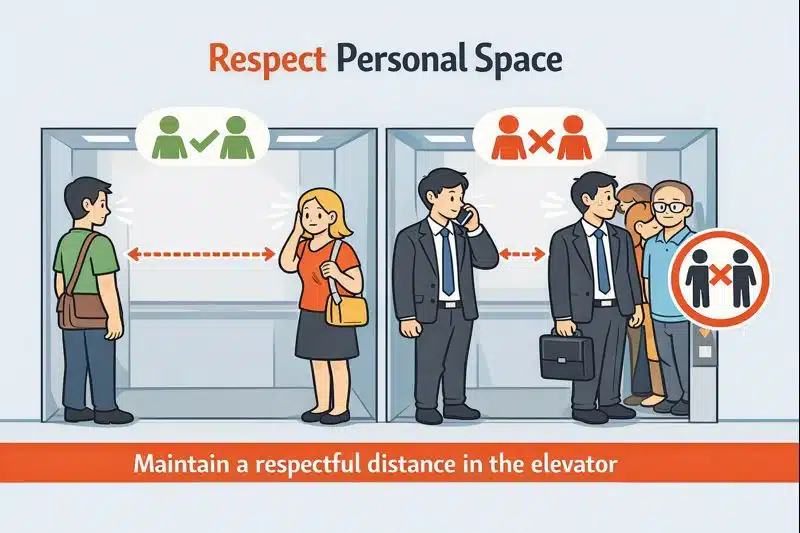
Although elevators are public spaces, people should still respect the space of others. When there are only two people in the elevator who are not familiar with each other, it is recommended that they stand on opposite sides of the elevator. Furthermore, when there is enough space and it is not crowded in the elevator, do not stand too close to others. Please maintain a distance consistent with social distancing. When the elevator is crowded and you must keep close to others, keep your arms down at your sides to avoid touching or bumping into them. At the same time, avoid staring directly into the other person’s face for an extended period of time; it is impolite and embarrassing.
If you encounter someone you know in the elevator, please do not shout or stand too close to them. Maintain a comfortable distance between people; a brief glance, a nod, or a smile is sufficient.
Be Considerate with Buttons and Doors
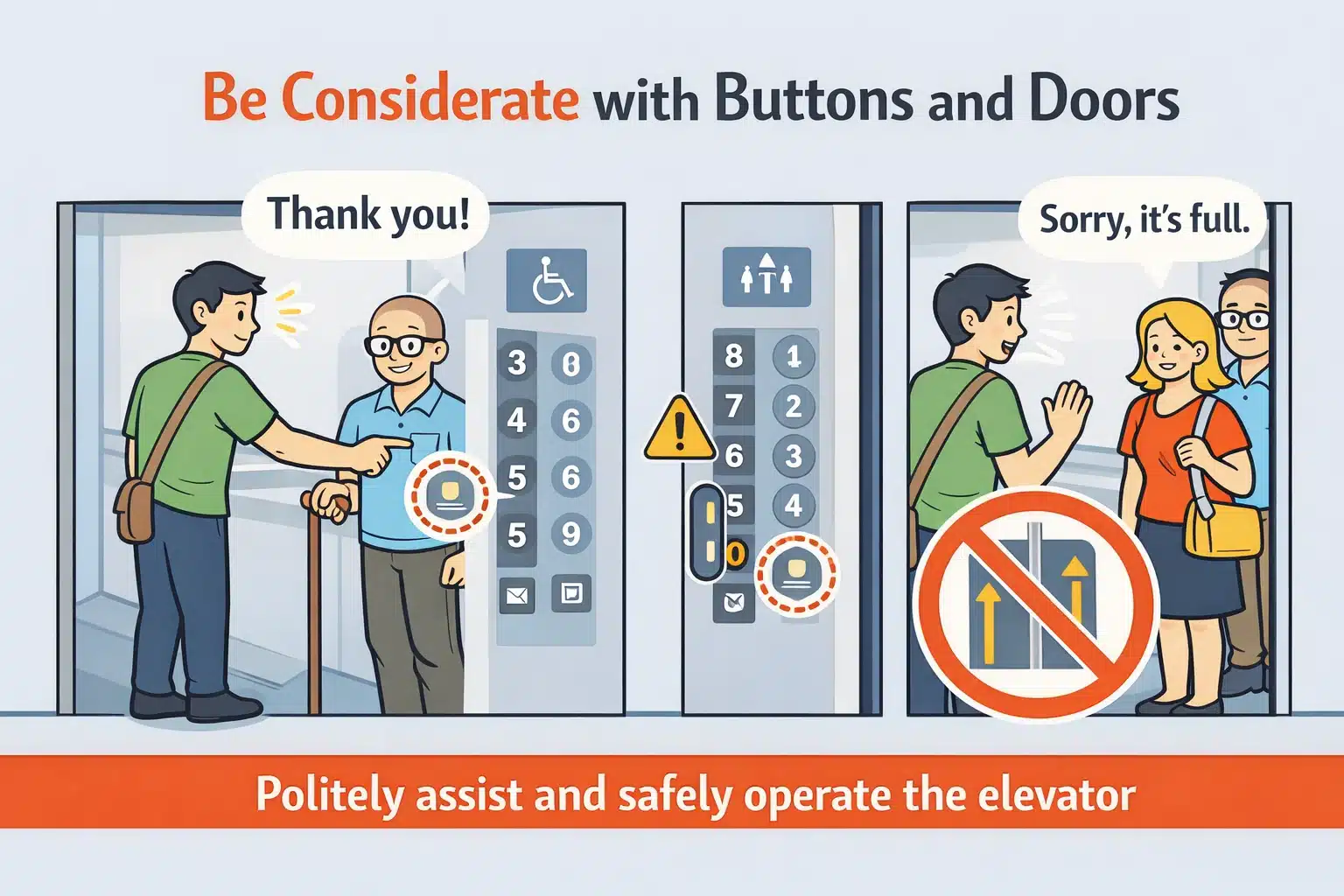
Take elevator doors and buttons seriously. When you are standing next to an elevator button, please help the person at the back of the elevator or someone with mobility issues press the button for their desired floor. This will make you appear very polite and earn you their gratitude. Be careful not to touch the buttons that are already lit up, as this may cause some people to miss the floor they want to go to. If the elevator is full, politely inform the person about the elevator of the reason, and then click to close the door. Do not click directly, as someone may resent you for it, or you may accidentally cause a pinching accident.
Alternatively, when you press the button, simply press the floor number you want to go to. Don’t treat the buttons like toys and press them randomly, and don’t repeatedly click the open/close button when the elevator doors are open. These actions may cause elevator malfunctions, leaving you unfortunately trapped in the elevator. If a child or other person presses elevator buttons randomly, please act as a champion of justice and stop them. This is also to protect your safety.
Do not press the emergency alarm button in the elevator unnecessarily, if you have heard the story of “The Boy Who Cried Wolf”. Pressing this button indiscriminately can cause significant problems for elevator management personnel. However, if you discover any potential hazards in the elevator, please report them promptly.
Elevator doors are important entrances and exits for people using elevators. Do not block the elevator doors with your hands for a long time, as this will affect the elevator’s judgment and cause danger. Do not try to block the door with objects. The elevator may not recognize this and will close the door automatically, causing your object to get stuck and the elevator door to be damaged. Do not lean against the elevator door. The elevator door is not a fixed wall, and leaning against it may cause the elevator door to open suddenly, resulting in a fall.
Conclusion
Congratulations! You have mastered the five most essential etiquette rules for elevators! You will be a courteous passenger and have a comfortable and pleasant elevator ride.
Following these elevator etiquette guidelines is not only a sign of respect for others, but also a way to protect yourself. Share these etiquette guidelines for sharing, just like you would share an apple pie. Let’s take action together! To make every trip for you and your family safer and smoother, and to create a harmonious elevator environment that promotes social civility.
Browse Residential Elevator Options from Anter
It is essential to follow elevator etiquette guidelines in public elevators; failure to do so may result in reprimands. This is not the case with home elevators. Home elevators offer more freedom and a stronger sense of privacy; they are elevators exclusively for you, and their comfort and functionality are superior to public elevators.
If you would like to learn more about home elevators, please click here. If you are looking to purchase a home elevator, you can contact Anter. As a leading Chinese elevator manufacturer with 15 years of experience, we offer:
- ODM/OEM services, and support for comprehensive customization and installation solutions.
- One-stop service, with professional staff providing assistance from design to transportation to installation.
- Products with the most stringent testing and the most favorable prices.
- Lifetime free technical consultation service, 24/7 online support to meet your needs.
- Multiple home elevator solutions are available: villa elevators, hydraulic elevators, traction elevators, and panoramic elevators.
To help you quickly own an elevator that makes your life more comfortable and your home more upscale, please fill out the form on the right. We will send you the design plan and quotation tomorrow.
FAQ
What is elevator etiquette definition?
Elevator etiquette refers to the civilized behavior norms and safety guidelines that people should follow when riding elevators. Its core purpose is to ensure the elevator operates normally and efficiently, as well as to guarantee the safety of users and provide them with a good riding experience.
Is it rude to hold the elevator door?
If it’s necessary, and it’s just a brief press of the elevator button, it’s not considered impolite. Some elevators have a special button designed to keep the elevator stationary for a period of time, with the elevator doors remaining open. However, holding down the elevator door for an extended period of time is extremely impolite and could potentially cause an elevator accident.
What should you not do in an elevator?
Firstly, You should not talk loudly or make phone calls in the elevator, and you should not play around or jump. Secondly, do not forcibly pry open the elevator doors, or use your body parts or objects to block the elevator doors, and do not rush towards the elevator doors quickly. Third, do not press the buttons inside the elevator unnecessarily. Finally, be a polite person in the elevator; do not push or bump into others.
What is the most important elevator etiquette rule?
The most important rule is the first of the aforementioned core etiquette guidelines: follow the order of bottom to top. This is the most basic one, but not everyone follows it. Have you ever witnessed two people colliding when entering or exiting an elevator at the same time? But in fact, it was entirely possible to avoid the people outside having to wait a few extra seconds.
How can I avoid waiting for elevators?
First, follow the two-flight rule: when you are in a public place and going up or down fewer than two floors, do not take the elevator—because while you are waiting for the elevator, you may have already walked to your destination. However, this excludes the elderly and those with mobility issues.
Secondly, use the buttons correctly. Outside the elevator, select the up or down button, press it, and then check if the selection was successful. Some buttons may be worn out and unresponsive. If necessary, please report this to the elevator manager. Finally, try to avoid taking the elevator when it’s crowded, as this may cause it to run slowly.

 English
  Arabic
  Vietnamese
  German
  Malay
Malay  Thai
Thai