
When planning to purchase a home elevator, you will encounter many specialized terms. Understanding these terms is crucial; not only does it enable you to communicate professionally and effectively with home elevator manufacturers, architects, and general contractors, but it also helps you evaluate various options and elevator design choices.
We have made a comprehensive glossary of common terms related to home elevators. Hope the following content helps you arrive at the most wise solution.
Common Home Elevator Terminology
Basic Home Elevator Terminology
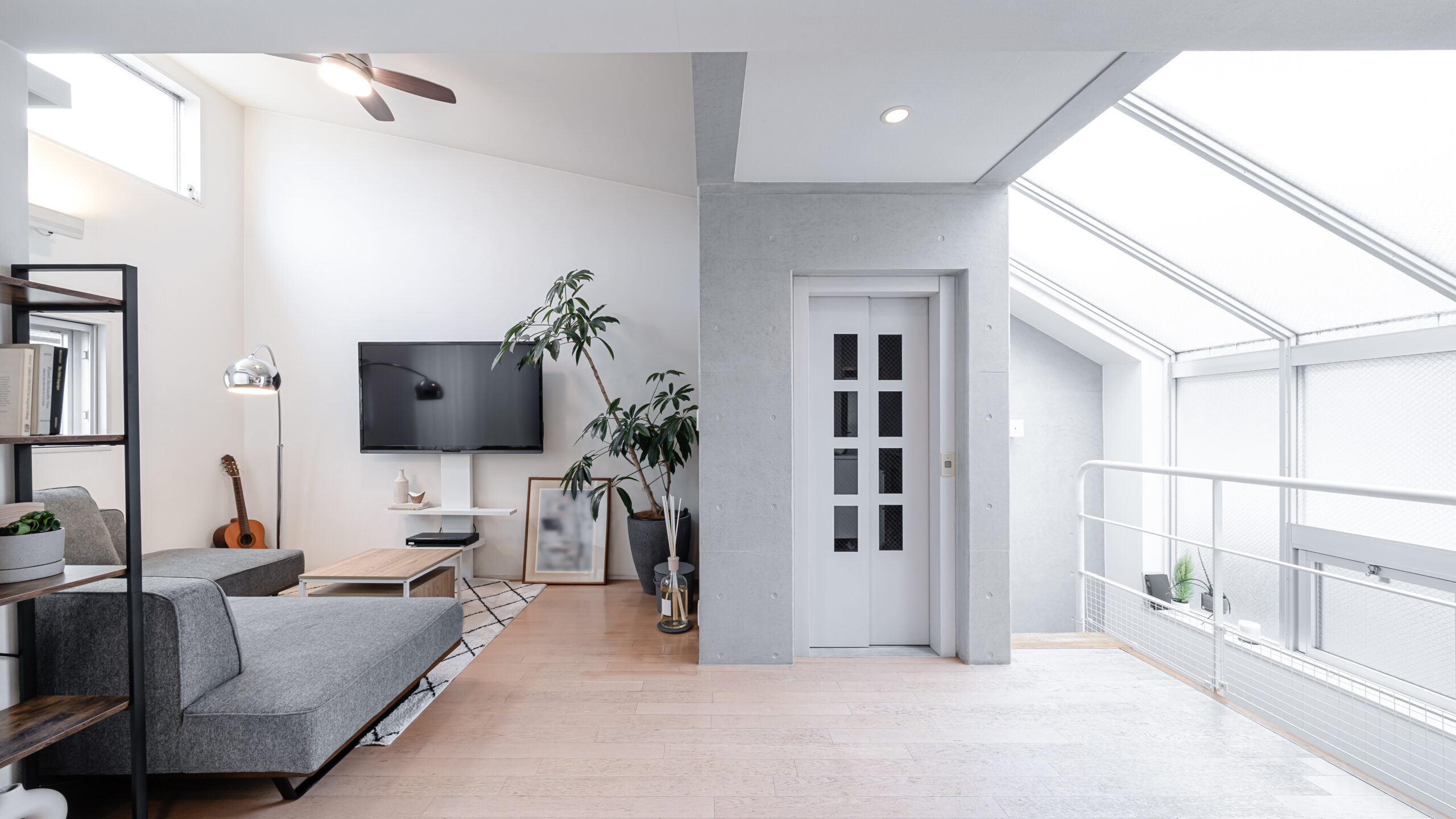
A home elevator is a small-scale elevator system installed within private residences, villas, custom-built homes, or duplexes, designed exclusively for use by household members. Unlike commercial elevators, residential elevators cannot be used in public areas, and the applicable standards are less stringent. Both installation and appearance offer high flexibility.
Weight Capacity
The load capacity of a home elevator refers to the maximum weight it can safely carry—specifically, the combined total weight of both people and objects. It is rated and constitutes a core safety parameter of the elevator. When communicating with the manufacturer, it is essential to clarify this data; otherwise, the elevator will not function properly.
Travel Height
The travel distance of a home elevator refers to the actual vertical height over which the equipment operates—typically defined as the height from the floor level of the lowest story to the floor level of the highest landing. When purchasing a home elevator, you must measure the height of each floor of your residence in advance to ensure that the elevator can fully cover the required travel distance.
Stops / Landings
A term referring to the total number of floors at which an elevator in a residential building makes stops, as well as the highest floor it can reach.
Rated Speed
The rated speed is the factory-set speed of a home elevator—specifically, the standard travel speed at which the equipment operates normally and stably. If the elevator exceeds this speed, it indicates a malfunction that could lead to safety incidents such as car derailment or free fall.
Types of Home Elevators
Hydraulic elevators are currently one of the most commonly used types of home elevators. It generates power through a hydraulic pump station and a hydraulic cylinder, utilizing hydraulic fluid to drive the cylinder or plunger to extend and retract vertically; this action, in turn, indirectly drives the elevator car—connected via steel cables or chains—to move up and down.
Traction elevators are synonymous with mid-to-high-end home elevators and currently represent one of the types holding the largest market share within the home elevator sector. A traction elevator operates by utilizing a traction machine to drive steel belts, thereby generating static friction between the traction sheave grooves and the steel ropes—which suspend counterweights at both ends—to drive the elevator car upward and downward.
Screw Elevator
Screw-driven home elevators utilize a motor to rotate a vertical screw, causing a nut to travel along the screw and thereby raising or lowering the elevator car.
Vacuum Elevator
Vacuum elevators operate by using a vacuum pump to extract and release air within an enclosed glass shaft, thereby generating a pressure differential that drives the elevator car to move up and down.
Click here to continue reading about the features and differences of various types of home elevators.
Key Structural Components
Car (or Cab)
Load-Bearing Main Unit of a Home Elevator. It typically consists of a car frame and a car body, and takes the form of an enclosed enclosure. The elevator car is the ideal space for personalized customization; its interior lighting, patterns, and style can all be selected. The aesthetic appeal of a home elevator is primarily determined by the elevator car.
Gate
The gate is the inner door built into the elevator car. When the elevator is in operation, it moves vertically together with the car so as to prevent users from accidentally leaning out.
Hoistway
An enclosed or semi-enclosed dedicated space within a building, designed for the operation of an home elevator. Currently, a shaft is no longer a requirement for home elevators. If there is no suitable space available for a hoistway, you may opt for a home elevator with a self-supporting frame.
Pit
A pit excavated in the ground at the lowest level, designed to accommodate the support components situated beneath the elevator car. Additionally, the pit serves the functions of shock absorption and facilitating maintenance. Currently, some home elevators do not require a pit—or require only a very shallow one—thereby imposing fewer structural requirements on the home.
Rail
The long, strip-like metal rails inside the elevator shaft. Its primary function is to restrict the direction of travel and position of the car, thereby preventing the car from falling.
Machine Room
Traditional elevators require the installation of a machine room to house the drive system and electrical drive system. The machine room is typically a small, independent room located at the top of a floor.
Machine Room-less
Driven by technological advancements and market demand, modern home elevators no longer require a separate machine room. The drive system can be positioned directly inside the hoistway or in the vicinity of the elevator.
Counterweight
A counterweight is typically used in traction elevators; it consists of a single, solid block of iron located behind the elevator car. The function of the counterweight is to offset the weight of the elevator car, enabling the elevator to operate smoothly.
Sheave
The sheave—a wheel located on the traction machine—works in conjunction with steel ropes or steel belts to connect the elevator car and the counterweight, thereby maintaining a balance between the two.
Control & Operation Terms
C.O.P.
C.O.P.—short for Car Operating Panel—is located inside the elevator car and contains the buttons required to perform all elevator operations. These include floor selection buttons, door open/close buttons, an alarm button, and an auxiliary button.
Call Button
The call buttons are located outside the elevator and are used to select a direction and summon the elevator to your floor.
The drive system serves as the heart of the power source of a home elevator, comprising the complete assembly of components responsible for enabling the elevator to ascend, descend, and stop.
Door Operator
The door operator controller can be regarded as the brain behind the opening and closing of elevator doors. It controls the opening, closing, and speed of the elevator doors, and automatically opens them when an obstacle is detected.
Controller
The controller serves as the central brain of the entire home elevator system. It controls the elevator’s operation and safety protection, making it the most critical component.
Safety Features Terminology
Electromechanical Interlock
Electromechanical interlocking is a safety device shared by both the hoistway door and the car door. While the elevator is in operation, all doors are mechanically locked and cannot be opened. Furthermore, if any elevator door is not securely closed, the electromechanical interlock device will control the elevator, preventing it from operating.
Backup Battery
Home elevators come standard with a backup power supply, commonly referred to as a UPS. When the elevator is in operation and a sudden power outage occurs, the backup power supply activates to sustain the elevator’s various functions.
Service Disconnect
It serves as the elevator’s main power switch and is used to manually cut off the power supply in the event of a malfunction or during maintenance.
Overspeed Governor
Elevator Speed Monitoring Device. It monitors the elevator’s operating speed in real time to prevent overspeeding, free fall, overtravel, and similar incidents.
Automatic Rescue Device
Unlike a UPS system, when a sudden power outage occurs while the elevator is in operation, the elevator automatically proceeds to the nearest floor and opens its doors. It cannot be used to provide power for an extended period.
Frequently Confused Terms
Lift vs Elevator
“Lift” and “elevator” are essentially the same device, but they are used in different regions. In the United States and Canada, the term “elevator” is predominantly used, whereas in Europe, “lift” is more common.
The meaning of “lift” is slightly broader than that of “elevator.” A lift may include equipment such as vertical lifting platforms and stairlifts. An “elevator,” on the other hand, refers exclusively to an enclosed, vertical lifting device.
Platform Lift vs Home Elevator
Platform lifts are also a commonly used alternative to stairs within residential settings. It encompasses both vertical platform lifts and inclined platform lifts, with the fundamental difference lying in the method of rail installation. Platform lifts feature an open-cabin design; consequently, they offer less travel distance, lower load capacity, and less operational flexibility compared to residential elevators. Home elevators typically feature an enclosed cabin, which can be constructed from either stainless steel or tempered glass. Highly flexible in terms of both installation and design, they are essentially personalized products. Furthermore, home elevators surpass platform lifts in terms of travel distance, load capacity, and speed.
| Platform Lift | Home Elevator | |
| Basic Definitions | A simplified version of the lifting equipment, focusing more on auxiliary functions. | A complete vertical transportation system is similar to a public elevator system. |
| Is there a complete car? | NO | Yes |
| Is a hoistway required? | NO | It’s optional. |
| Door system | Ordinary manual door | Automatic door with door interlock |
| Comfort | Basic comfort, slow speed | High comfort, moderate speed |
| Applicable Scenarios | Mid-to-high-end villas, self-built houses, duplexes | Residences with short vertical distances and small spaces |
Conclusion
Understanding the terminology related to home elevators is very important, as it can help streamline the purchasing process and familiarize you with information that may be mentioned in quotations, contracts, or other documents.
When planning your home elevator, please specify the maximum load capacity, maximum travel distance, and rated speed you need in advance to save time and facilitate better communication with the manufacturer.
Once you receive a quote, carefully compare the specifications from various suppliers based on the explanations of the relevant terms above to To understand the components of a price, one can avoid losses.
If you have any questions about the above terms, or if you are looking for a reliable home elevator supplier.
Contact Anter—-With professional technical and sales staff, we can solve your problems 24 hours a day and provide you with the best home elevator solutions.

Faq
How much space do your home elevators require?
Our home elevator has a minimum size of 960*1250mm and can only be used by one person at a time. The largest home elevator can be 1850*1600mm and can accommodate 6-8 people. At the same time, you need to prepare a pit 20-30 centimeters deep on the ground floor of the house.
How often should a home elevator be maintained?
In some regions, laws stipulate that home elevators must be inspected every six months or a year. For countries without mandatory regulations, our elevators have a low failure rate, and if used properly, they only need to be inspected every two years.
Will a home elevator increase resale value?
Yes. Installing a home elevator will increase the resale value of a house. On the one hand, home elevators are a standard feature of modern high-end residences, and installing home elevators can improve the quality of a house. On the other hand, home elevators, as convenient stair-lifting devices, can be used for home-based elderly care and recuperation, serving as an effective means of transportation. Therefore, it is one of the most desired accessible facilities for homeowners. Homes with elevators have a wider market appeal and higher demand, and can typically command a 5%-15% premium.
How Much Does a Home Elevator Cost in 2026?
The global average price range for home elevators is $30,000 to $60,000. If you choose Ant, you can get a more affordable price. Contact us now and we will send you a quotation immediately.
What factors affect home elevator installation cost?
There are many factors that affect the installation of home elevators. It includes: travel height, available space, type of home elevator, load capacity, customization options, and more.
 English
  Arabic
  Vietnamese
  German
  Malay
Malay  Thai
Thai