
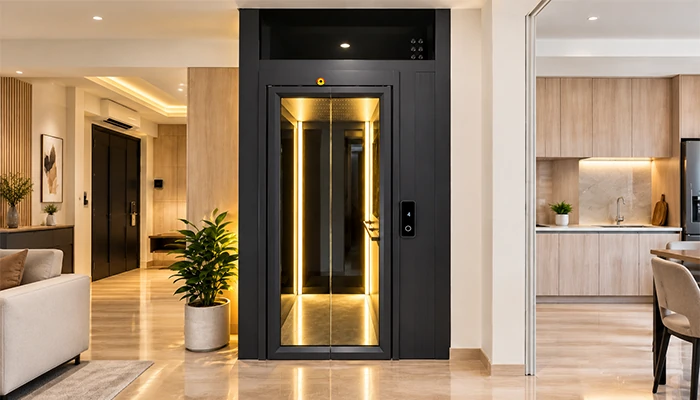
How long does it take to add a home elevator, from the arrival of the equipment container at the installation site to the completion of all commissioning and safe delivery?
Drawing on our 15 years of experience in installing residential elevators, I will break down the installation timeline for you, along with the most common reasons for project delays.
Reference Durations for Two Types of Scenarios
Scenario 1: A newly constructed villa where all civil works—including the elevator shaft, pit, and top-floor clearance—are fully completed. The shaft is dry and waterproofed, a dedicated power supply point is reserved on-site, and all civil construction conditions conform to the blueprints.
Under these ideal conditions, the installation and commissioning of a traction-type home elevator can be completed quickly, and the unit made ready for use, in about a week. This type of site offers the best control over the installation schedule.
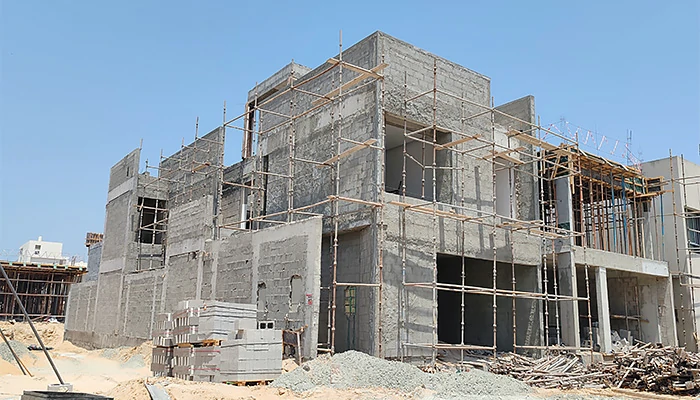
Scenario 2: Installing an elevator in an old existing house requires concurrent civil engineering modifications, including cutting floor slabs, reinforcing the elevator shaft, and excavating and waterproofing the elevator pit.
The time required for structural modifications is often far greater than the time needed to install the elevator equipment itself. For a typical older villa, such structural work generally takes 10–20 days; however, if the site conditions are particularly complex, preparing the space could take as long as a month. Consequently, the overall project timeline is significantly extended, and the level of uncertainty increases.

Time Required for Phased Installation of Home Elevators
- Arrival, unpacking, inventory, and verification of parts: Generally 1 day. This step is a risky point in the project schedule. If parts are damaged or missing during transportation, work can only be stopped while waiting for replacements from overseas, and the waiting period is unpredictable.
- Installation of guide rails, main frame, and counterweight frame: The main mechanical frame is erected, which takes up to 2-3 days of installation time and is the core construction stage.
- Assembly of car frame and door opening mechanism: After the main mechanical frame passes the acceptance test, assemble the car chassis, door operator system and door panels in 1-2 days.
- Wiring, control system wiring, and item-by-item debugging of safety components: This step requires high technical skills. All safety protection functions, limit switches, and alarm devices must be tested one by one for 1-1.5 days.
- Complete machine self-inspection, function verification, and delivery training: Complete machine trial operation, and teach the owner basic operation and emergency handling methods in 0.5 days.

Key Factors that Extend Installation Period
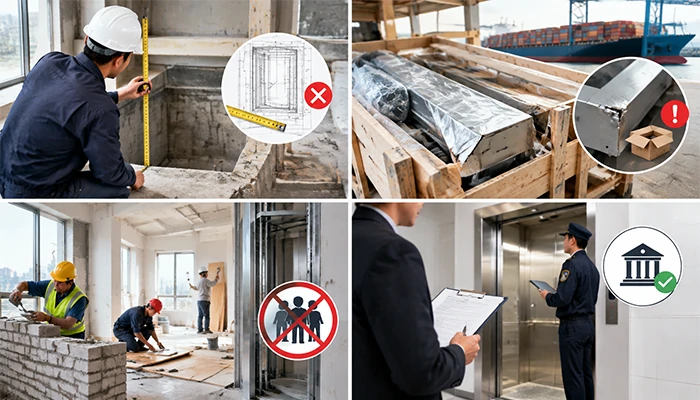
- Inconsistent civil engineering conditions with drawings: The dimensions of the household elevator shaft, the depth of the pit, and the load-bearing capacity do not meet the standards in the drawings, requiring on-site temporary modifications and reinforcements, and necessitating a work stoppage and adjustment of the plan. This is the most common reason for delays among all projects.
- Missing parts and damage during transportation: In ocean container shipping, there is a probability of parts being bumped, damaged, or missing, and the waiting time for cross-border replacement is very long.
- On-site construction conflicts: Masonry, carpentry, and painting teams are working on-site at the same time, occupying the elevator installation area, making continuous construction impossible, resulting in intermittent installation and a prolonged construction period.
- Local regulatory approvals: In some countries and regions, residential elevators need to be reported and inspected by local authorities after completion. The approval queue time is not controlled by the factory and installation team.
Feasible Methods to Shorten The Construction Period
For newly built villas, elevator drawings should be finalized during the civil engineering phase, and the shaft, pit, and load points should be reserved strictly according to the drawings.
Before the equipment container arrives, the well shaft should be waterproofed, dried, and leveled in advance.
Working alongside the home renovation team, you reserved continuous and independent work windows for the elevator crew, staggering dusty and wet work processes.

FAQs
What are the differences in installation time between hydraulic elevators and traction elevators?
Their mechanical structures are different. Hydraulic elevators require the installation of oil cylinders and hydraulic pipelines, and the sealing and debugging of the pipelines require additional labor time. Under the same ideal site conditions, the overall commissioning cycle of the hydraulic model will be slightly longer.
Would a compact elevator with an integrated glass shaft be installed faster?
Yes. The integrated shaft frame is prefabricated in the factory, and only the frame needs to be assembled on site, saving the civil engineering shaft construction, which is very suitable for old houses to be retrofitted and to meet the construction schedule.
Will the rainy season affect the installation schedule of home elevators?
The waterproofing work and civil engineering excavation of outdoor elevator pits will be affected by rain; however, the mechanical assembly of purely indoor elevators will be almost unaffected, provided that proper on-site rain protection is in place.
How much does a home elevator cost to install?
Excluding civil engineering and renovation costs, the average cost of installing a traction home elevator is US3,000–8,000; the average cost of installing a hydraulic home elevator is US$3,000–7,000. However, the specific installation cost depends on the country and region, the number of floors, and the complexity of the elevator.
What Is the Recommended Maintenance Schedule for a Residential Elevator?
For frequently used home elevators, maintenance is recommended every 6 months. However, most standard-compliant elevators only require professional maintenance once a year.
However, users need to perform routine daily maintenance, such as removing obstructions around the elevator and wiping the glass exterior.
Final Thought
The installation and commissioning cycle of elevator equipment itself is relatively controllable. Most delays in the construction period are due to civil engineering support and on-site construction conditions.
If you are scheduling a villa renovation, you can send us your site conditions. We have a professional engineering team to help you estimate a reasonable installation period, so you can coordinate the overall renovation progress and avoid the risk of delays in advance.
 English
 Arabic
 Vietnamese
 German
 Malay
 Thai