
Home elevators have become an important feature for many families in creating accessible spaces.
If you need a home elevator to complete your project, understanding the different types of home elevators is the first step, enabling you to find one that meets your needs more accurately and quickly.
This article introduces 28 types of home elevators from the perspectives of drive systems, materials, and applications.
This diagram is a simplified version of the introduction to home elevator types. Reading it will give you a quick overview of the content.
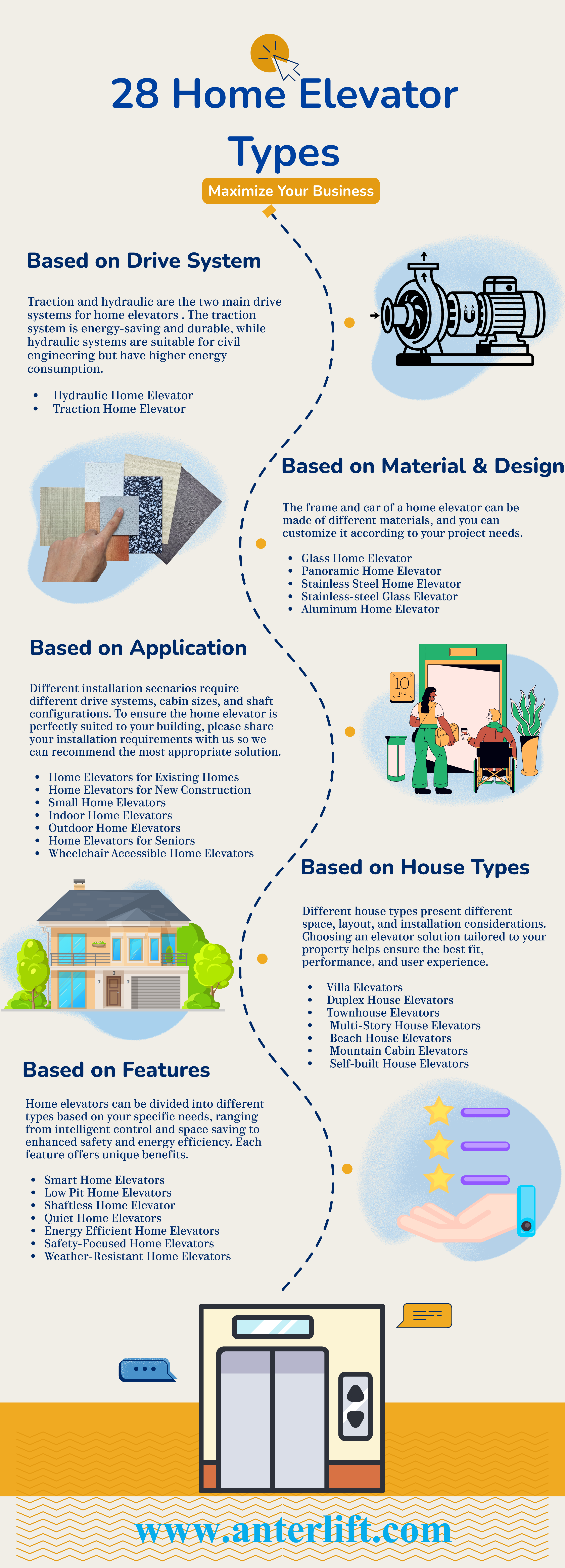
The Different Types of Home Elevator
Based on Drive System
Hydraulic Home Elevator
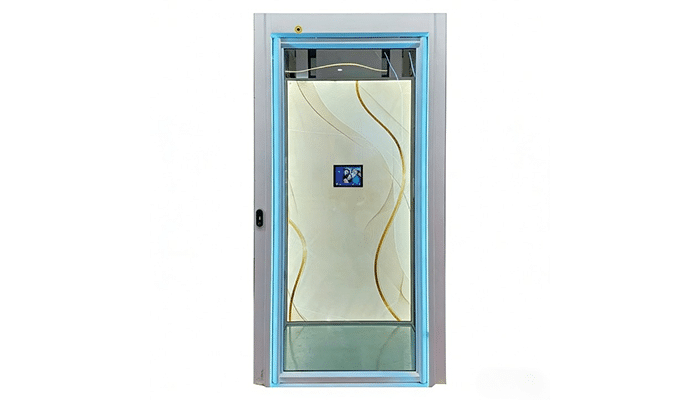
A hydraulic elevator is driven by hydraulic pressure. It uses a hydraulic power source to press hydraulic oil into the cylinder to squeeze the plunger, causing it to push the car upwards and complete the upward movement. During descent, the hydraulic elevator relies on its own weight to push the hydraulic oil back into the oil tank.
A hydraulic home elevator consists of seven independent but interconnected systems: a pump station system, a hydraulic system, a guide system, a car, a door system, an electrical control system, and a safety protection system.
Hydraulic elevators are currently very popular in the market due to their many advantages. It is low in cost, small in size, high in load-bearing capacity, quiet and stable in operation, reliable and durable, have a wide range of applications, high safety and are easy to install.
Traction Home Elevator
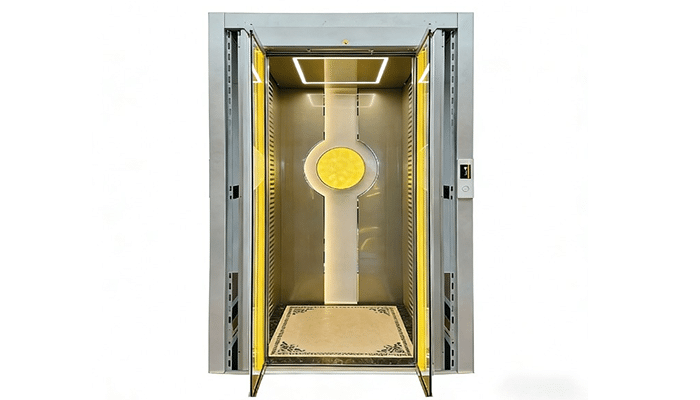
Traction elevators are one of the most recommended types of home elevators on the market, boasting high travel speed and high performance. After more than a hundred years of development, its technology is very mature, with a low failure rate, and it has comprehensive solutions to deal with potential risks.
The work principle of a traction elevator is that a motor drives a steel wire rope or steel wire rope with a counterweight attached to one end and a car attached to the other end. The static friction generated in this process enables the car to move up and down.
Traction elevators consist of eight major systems: traction system, guiding system, car, door system, weight balancing system, electric drive system, electrical control system, and safety protection system.
Compared to other types, traction home elevators have the following advantages: longer service life, smooth and comfortable operation, low maintenance costs, stable performance, and are unaffected by temperature. It represents the mid-to-high-end home elevators and can give you the most comfortable experience.
Based on Material &Design
Glass Home Elevator
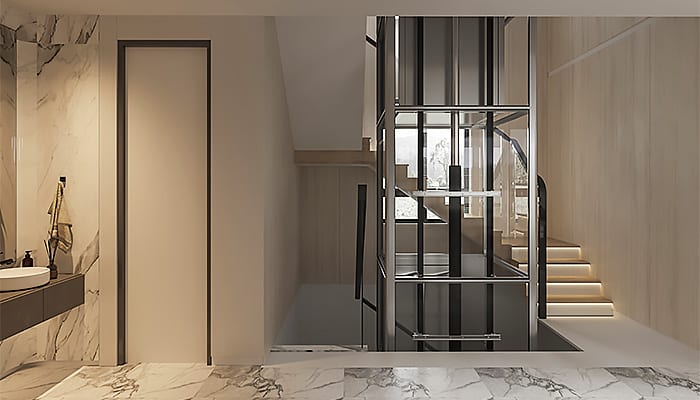
A glass elevator is a type of home elevator whose cabin or shaft is made of transparent or semi-transparent glass. Manufacturers typically choose tempered laminated glass, which balances aesthetics, safety, and durability.
Glass elevators can be designed with or without a shaft, saving space while providing visual appeal and a sense of spaciousness.
Panoramic Home Elevator
The core design concept of panoramic home elevators focuses on the viewing experience and the display of spatial effects, enabling interaction between people and space— enjoying the scenery outside the window or inside the residence during operation.
Panoramic elevators are the perfect partner for high-end residences. Their transparent, large-area structure, combined with custom designs, can seamlessly integrate into the interior design, further enhancing the sense of luxury and modernity. It’s not just an accessibility aid; it’s a smart investment that can increase home value.
Stainless Steel Home Elevator
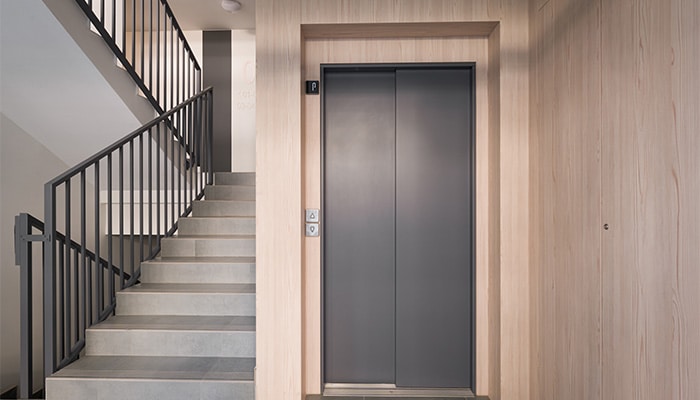
The various components of the stainless steel home elevator are made of 304/201 stainless steel. With its robustness, durability, and ease of cleaning and maintenance, it has become one of the most frequently chosen types for high-end residences.
High-quality stainless steel home elevators are made of internationally premium steel and undergo 5*5 internal and external hot-dip galvanizing treatment, which provides rust prevention, corrosion resistance, impact resistance, and waterproofing. They can be used both indoors and outdoors.
Stainless-steel Glass Elevator
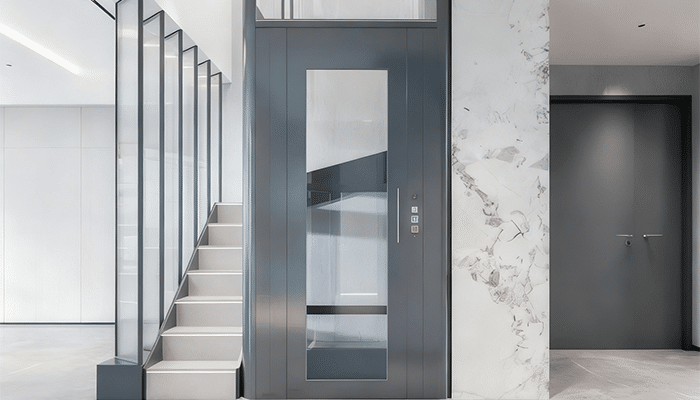
The stainless steel glass elevator is a type of home elevator made of two materials combined. Home elevator manufacturers typically use stainless steel for the frame and glass for the cabin enclosure.
Stainless steel glass elevators combine the strength, durability, corrosion resistance, impact resistance, and wear resistance of stainless steel with the aesthetic appeal and high-end feel of glass elevators.
It uses tempered laminated glass, and the surface can be either frosted or frosted, which can be perfectly integrated into the decoration style of any modern home and maintain a service life of more than 20 years.
Aluminum Home Elevator
Aluminum alloy home elevators are a type of elevator that uses high-strength aerospace-grade aluminum alloy profiles as the frame. Compared to traditional steel-structured home elevators, aluminum alloy home elevators have lighter frames and a smaller overall weight, making them suitable for residences with lower floor load-bearing capacity.
However, it has a robust structure, strong stability, strong corrosion resistance and wear resistance, and a long service life.
Based on Application
Home Elevators for Existing Homes
Home Elevators for Existing Homes are designed for homes that have already been built. They allow for the addition of lifting equipment while minimizing damage to the existing decor and reducing the amount of civil engineering work required.
The elevator comes with its own frame, eliminating the need to construct a concrete shaft or dig a deep pit. Furthermore, it can be installed outdoors or in the middle of a staircase without damaging the building’s wall structure.
Home Elevators for Existing Homes are also designed for small and irregular spaces, and can be customized in size and shape—its appearance is entirely determined by the actual conditions of your home.
Home Elevators for New Construction
This home elevator is designed for new homes, offering flexibility in terms of appearance and building wiring, allowing for advance planning of the shaft and pit. Compared to existing residential installations, new home installations can choose models with a larger load-bearing capacity.
Home Elevators for New Construction are highly integrated with residential buildings, becoming part of the architectural aesthetics. Furthermore, it is installed inside the shaft, which enhances safety, stability, and overall aesthetics.
In addition, installing a home elevator in a new house can ensure that the civil engineering reserved space is up to standard and the installation environment is clean, which can effectively reduce installation time and make later maintenance simpler.
Small Home Elevators
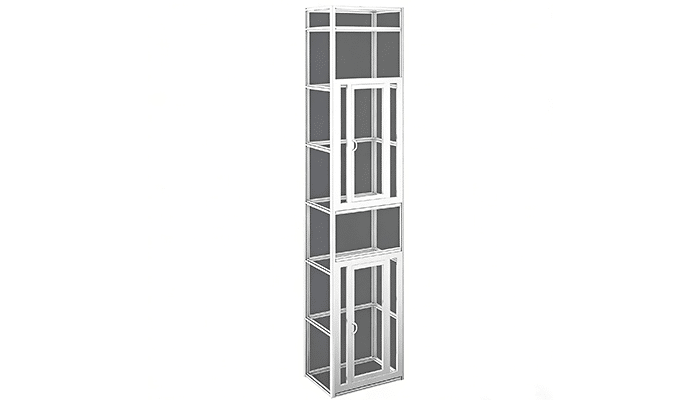
Small home elevators are suitable for homes with limited space, maximizing the use of every inch of space without encroaching on the main living areas.
The smallest home elevators on the market currently occupy an area of 0.76–0.9 square meters, but the mainstream small home elevators are 1000×900 mm in size. Some manufacturers can achieve a footprint of 0.8 square meters.
Small home elevators keep a small footprint while having a moderate load capacity, usually within 250kg-400kg, which can carry people or be used to move heavy objects.
Indoor Home Elevators
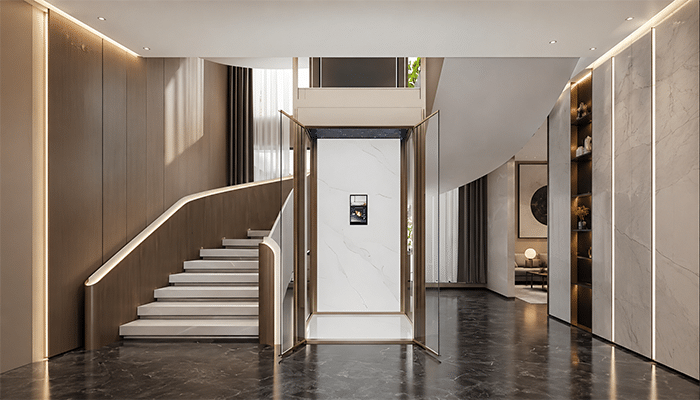
Installed inside a residence, this barrier-free vertical lifting device connects different floors, ensuring that every family member can more conveniently go up and down stairs.
In terms of design, indoor elevators emphasize aesthetics, comfort, quietness, and safety, ensuring a pleasant riding experience for every user.
In terms of appearance, the indoor elevator adopts a complete customization, which can take into account the design style of the house and the client’s project needs.
In terms of comfort, the cabin is spacious and can be used with a wheelchair, and the ride is smooth with no bumps when starting or stopping.
In terms of quietness, qualified indoor elevators use sound-absorbing materials and operate at a noise level below 50 decibels, allowing you to have a good night’s sleep, day or night.
In terms of safety, indoor elevators are equipped with multiple protective devices such as UPS, safety clamps, buffers, safety light curtains, and overspeed protection. When operating normally, it can effectively reduce the risk of being trapped in the elevator and being pinched by the elevator.
Outdoor Home Elevators

Home elevators designed specifically for outdoor settings are typically installed on building exteriors, balconies/terraces, courtyards, or next to outdoor staircases.
To protect elevators from outdoor wind and rain and ensure their long-term stable use, outdoor elevators typically use heavy-duty aluminum as the structural frame, paired with tempered glass, and the surfaces and accessories are treated with waterproof, rustproof, and corrosion-resistant materials.
Meanwhile, outdoor elevators have better component performance, more reliable quality, and less wear and tear during daily use compared to indoor elevators.
Home Elevators for Seniors
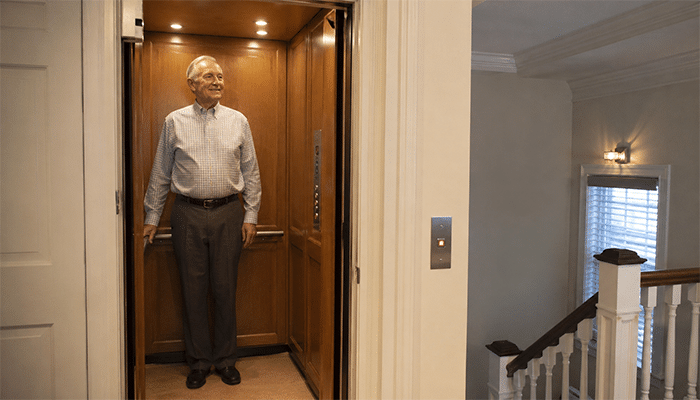
For families with elderly members or those who need mobility aids for home-based elderly care, this home elevator is a good option.
The elevator comes standard with non-slip flooring, sturdy handrails, anti-pinch doors, and precise leveling. In case of power failure or malfunction, it has emergency communication, emergency lighting, and manual escape device to ensure the safety of the elderly and reduce the risk of falls.
In addition, this home elevator is easy to operate, with large buttons, clear labels, and a low-positioned control panel, requiring no complicated learning process and allowing users to quickly become proficient in its use.
Wheelchair Accessible Home Elevators
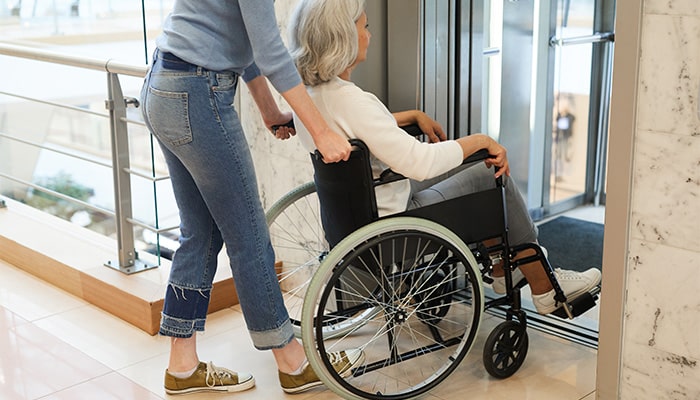
The car of this wheelchair-accessible home elevator has door openings designed according to standard wheelchair dimensions, allowing wheelchairs to enter and exit freely, and can be used with a caregiver without feeling cramped inside the car.
Meanwhile, the elevator uses a through door, allowing for straight entry and exit without turning. The bottom of the elevator can be flush with the ground, ensuring smooth and seamless wheelchair movement.
Based on House Types
Villa Elevators
This elevator is specifically designed for private detached, terraced, and stacked villas, featuring safety, comfort, space efficiency, and customization as its core advantages.
Safety: It is equipped with safety devices such as an overspeed governor, anti-fall safety gear, emergency power supply for outages, automatic floor leveling during power failures, anti-crush safety edges, and anti-pinch light curtains; its safety standards are on par with those of commercial elevators.
Comfortability: The interior of the villa elevator car is spacious; it operates without vibration and with extremely low noise. At the same time, the interior is open and airy, offering excellent natural light and a rich visual experience.
Space-friendly: Villa elevators offer flexible installation and take up minimal space. It does not require wall mounting—only a fixed anchor point—and can be installed anywhere, indoors or outdoors. Additionally, it can be installed in a space as small as one square meter.
Customization:Villa elevators are high-end, custom-made products. The visual style, as well as specific specifications such as materials and accessories, depend entirely on your choices—this elevator is truly yours and is one of a kind.
Duplex House Elevators
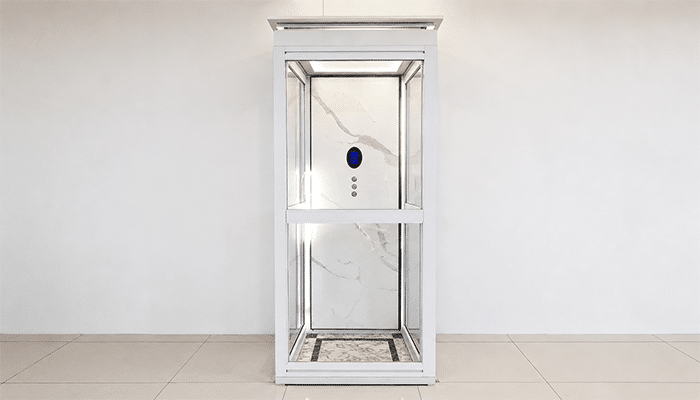
A duplex house elevator can solve the problem of time-consuming and strenuous stair-climbing in classic duplexes, split-level homes, and two-story residences.Home elevators for duplexes prioritize space efficiency, flexible installation, and seamless integration with the interior environment. Duplex home elevators are a perfect fit for compact spaces; they can be installed in areas such as walk-in closets or storage rooms. Featuring a concealed design, they offer flexible space utilization while seamlessly integrating with the home’s layout and style.
Townhouse Elevators
If both you and your neighbor are struggling with how to quickly get from the outdoors to the indoors, or if you own two adjacent homes, you might want to consider a townhouse elevator. Townhouse elevators are specifically designed for narrow, multi-story residential homes. The elevator itself is compact and refined, capable of accommodating one or two people.
In addition, installing an elevator in a townhouse is simpler; there is no need to construct an outdoor concrete shaft or excavate a deep pit, resulting in minimal civil engineering work and lower costs.
Multi-Story House Elevators
Elevators for multi-story residential buildings can accommodate the floor heights typical of common residential structures. It can be supplied with its own self-supporting frame or installed within a shaft, in the center of a staircase, or through floor openings, making it a highly flexible lifting device.
Beach House Elevators
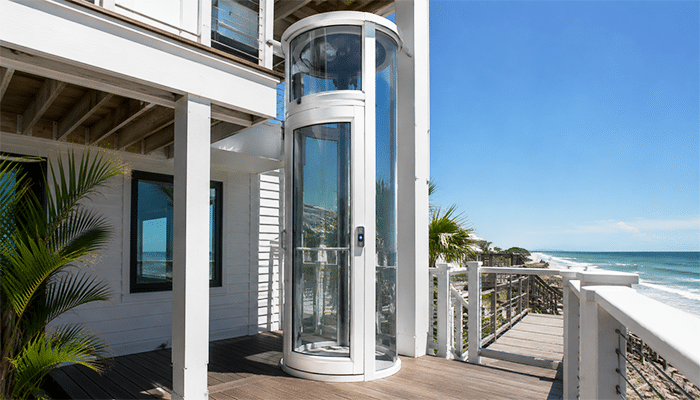
This elevator is installed in a seaside residence, and the car comes in two styles: enclosed and semi-enclosed. Beach house elevators installed outdoors feature a more robust structural frame and utilize corrosion-resistant materials to withstand the effects of sea air; the cabin and critical components undergo treatments to ensure resistance against salt spray, water, and UV radiation.
Mountain Cabin Elevators
It is an elevator designed specifically for mountain, forest, and lakeside vacation cabins. At the same time, the outdoor mountain cabin elevator installed at the hilltop villa also offers sightseeing capabilities, providing access to rich scenic views.
Self-built House Elevators
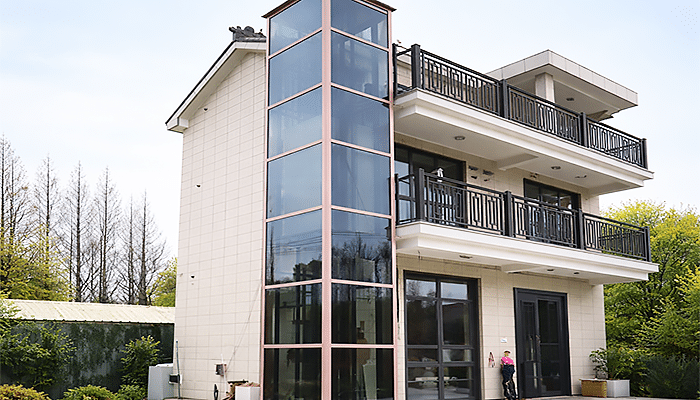
Install an elevator—either inside or outside—in a house built on land purchased by the owner or allocated by the government. It can connect 2 to 7 floors and enhance the independent mobility of the elderly or individuals with limited mobility.
The 20-to-25-year design lifespan of elevators for self-built homes can meet the long-term residential needs of homeowners. Moreover, the flexible nature of self-built housing also makes installation simpler and faster.
Based on Features
Smart Home Elevators
Smart home elevators feature an intelligent control system and offer a variety of modern functions.
Smart home elevators incorporate electronic control, the Internet of Things (IoT), sensors, and automation technologies, allowing for integration into smart home systems and enabling contactless control and monitoring.
In addition, smart home elevators feature call functions via mobile phone, voice commands, and touchscreens, as well as smart monitoring and automatic fault detection; these capabilities enhance your mobility and ensure safety in every respect.
Low Pit Home Elevators
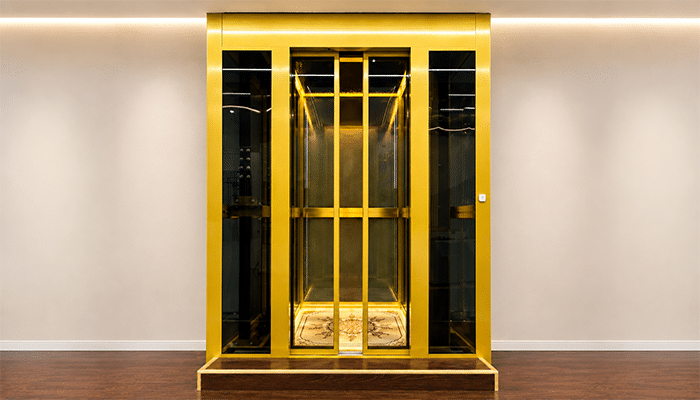
To ensure the bottom of a home elevator aligns flush with the residence’s floor, many installations require a suitably sized pit to be prepared. However, excavating a pit is time-consuming and labor-intensive, and it also damages the original floor structure. To solve this issue, home elevators have been improved to create a pitless model—meaning they can be installed and operated without the need for a pit.
Shaftless Home Elevator
Shaftless home elevators are self-supporting, eliminating the reliance on the building’s structure typical of traditional elevators. For homes where renovation is already complete, or where space is limited or there is a desire to avoid altering the building’s structure, a shaftless home elevator is an excellent choice.
Shaftless home elevators are also custom-made products; they eliminate the need for a dedicated shaft without compromising aesthetics, allowing them to blend perfectly with existing interior décor.
Quiet Home Elevators
This quiet home elevator employs advanced drive technology, a vibration-dampening design, and a noise-reduction system, ensuring low noise levels during operation at all times. Whether you are sleeping in the bedroom or reading or working in the study, the operation of the elevator will not disturb you.
Energy Efficient Home Elevators
Certified energy-efficient home elevators utilize a variable-frequency, variable-voltage drive system; the drive system can operate in either motoring or regenerative mode, resulting in low energy consumption.
At the same time, the elevator is equipped with a permanent magnet synchronous motor, which offers higher efficiency and does not require electricity to generate a magnetic field.
Moreover, it eliminates the gearbox design found in traditional motors, thereby reducing mechanical losses.
In addition, to save energy, the elevator uses LEDs for car lighting and features a lightweight design.
Safety-Focused Home Elevators
It prioritizes the safety of every user and is equipped with multiple internal safety protection devices.
Door Safety Device: Inductive light curtain, anti-pinch door, door lock, soft-close door
Car Safety: Buffer, overload protection, speed governor, safety gear
Drive and Control Safety: Emergency braking, emergency power cutoff, soft start/stop
Intelligent Monitoring: Emergency calls, fault alarms, remote monitoring.
Weather-Resistant Home Elevators
Weather-resistant home elevators minimize damage to the equipment caused by changing weather conditions and ensure smooth operation. It utilizes high-strength, corrosion-resistant materials and offers IP54–IP65 electrical protection, allowing for long-term outdoor use unaffected by high or low temperatures.
In addition, this elevator is resistant to water, moisture, dust, UV radiation, and wind; it is immune to frequent short-term malfunctions or a drastic reduction in service life caused by adverse weather conditions.
How to Choose The Home Elevator Type That Best Suits Your Needs?
After learning about the different types of home elevators, the following steps will help you choose the one that best suits your needs.
- Consider Your Needs
First, you need to understand your true needs for the elevator, such as its purpose, appearance, and function. You can start by listing your current needs and then imagine what your elevator would look like. Based on the previous description of elevator types, you should have a general understanding of which type is best for you.
- Gathering Information
After clarifying your needs, gather some key details, such as:
- Number of floors in your building
- Available shaft space
- Pit dimensions (if there is no pit, just record the space available for installation)
- Regardless of whether you book server room space
- Expected passenger or cargo capacity
- Find A Reliable home elevator company
If you have difficulty gathering the necessary information, finding a trustworthy home elevator company can be very helpful. A company that provides research, design, installation, and sales services is ideal. Such companies can provide a one-stop service from planning and customization to production and transportation, effectively saving you time and effort.
Conclusion
There are various types of home elevators on the market. If you want an efficient, beautiful, and durable one to match your project, please choose carefully.
If you have any questions or would like to know more, please feel free to contact Anter. We are available 24/7 to provide professional, free consultations and solutions tailored to your specific needs and circumstances.
FAQs
What is the small home elevator cost?
The average transaction price for small home elevators globally ranges from $25,000 to $40,000, including installation costs.
The price of a small home elevator depends on the drive system, number of stops, travel height, and various specifications.
which type of elevator is best for home?
There is no single answer to this. The best home elevator depends on your space, budget, design preferences, and accessibility needs. However, the best-selling type of home elevator on the market today is the traction elevator, accounting for 70% of the global market share.
What are the alternatives to home elevators?
A stair lift is an assistive device that serves as an alternative to using the stairs; it involves installing an electric seat on the existing staircase—without requiring structural modifications to the home—allowing it to travel up and down along the line of the stairs. Stair lifts feature a simple design and assist individuals with limited mobility in moving between floors; they remain an effective alternative to home elevators.
What are the most popular home elevator styles?
The most popular styles for home elevators include minimalism, modern industrial, classical Chinese, classical European, and modern luxury.
What specifications should I consider when choosing a home elevator?
When selecting a home elevator, it is essential to pay attention to its dimensions (length, width, and height) to ensure it fits precisely within the designated space.
Additionally, pay attention to the elevator’s load capacity and its own weight to ensure they remain within the floor slab’s load-bearing limits.
It is crucial to consider the speed and travel height of a home elevator to ensure it meets your needs for moving between all floors.

 English
  Arabic
  Vietnamese
  German
  Malay
Malay  Thai
Thai