Introduction
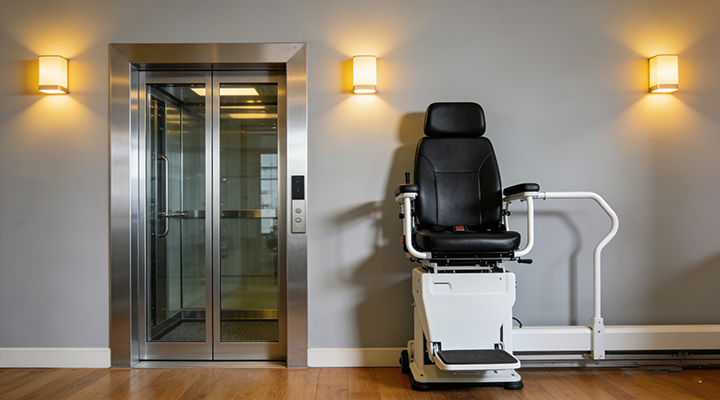
More and more families are choosing to live in detached houses, enjoying a more comfortable and quieter life. However, these detached houses are often more than one story, with some even equivalent to a small apartment. For the elderly and those with mobility issues, climbing stairs becomes a challenge. Therefore, you need an assistive device to help yourself or your family. Currently, you have many options; home elevators and stair lifts can both help. Home elevators combine practicality and aesthetics, helping any user save time and energy going up and down stairs, making them a wise choice for convenient living. Stair lifts can also help people with mobility issues, but their applicability and scope are limited.
To help you make the best choice, here is a comprehensive comparison guide for home elevators and stair lifts.
Understanding Home Elevators
Defination and Work Principle
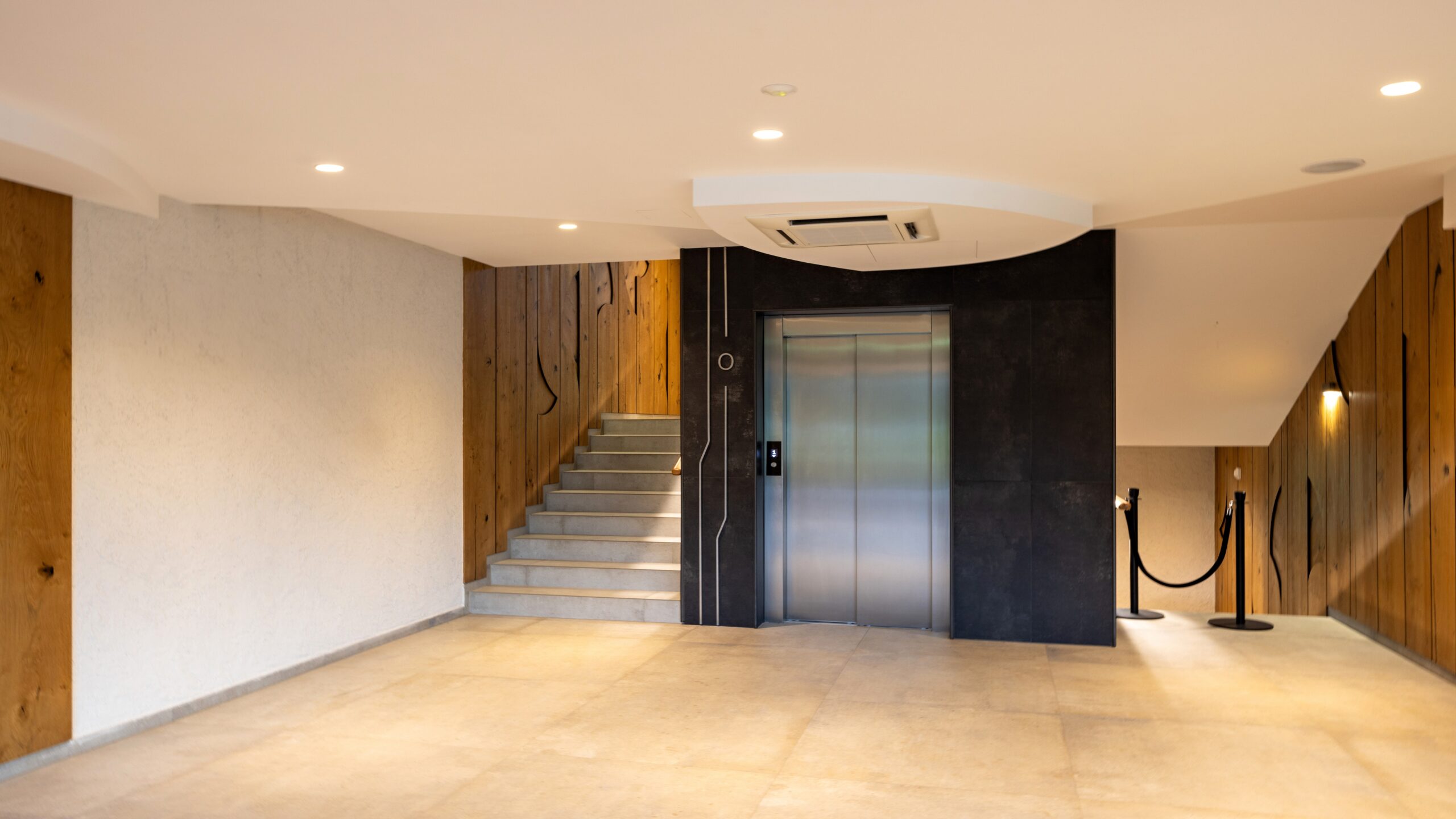
A home elevator is a compact, advanced lifting system designed for use in single-family, multi-story residential buildings. It is primarily used for transporting goods or carrying people between different floors. It is a very convenient mode of transportation; a single button press takes you to your desired floor, eliminating the hassle of climbing stairs.
Home elevators are mainly divided into two types based on their internal drive: hydraulic elevators and traction elevators. Their working principles are as follows:
Hydraulic elevator: A hydraulic elevator is a type of elevator that relies on hydraulic power. A hydraulic pump forces hydraulic oil into a hydraulic lever, generating pressure and converting it into the power source that moves the elevator car up and down.
Traction elevators: Traction elevators are primarily controlled by a traction system. The motor in the traction system drives the traction sheave and steel wire rope or wire strip to generate friction, thereby propelling the car up and down in a linear motion.
Applicable Scenarios
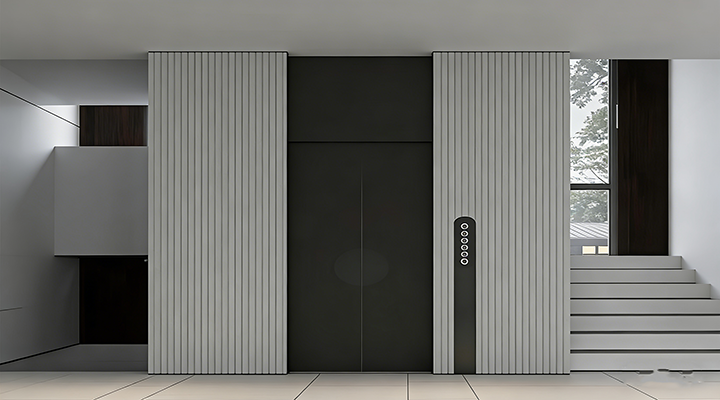
Home elevators have a wide range of applications. They can be installed in villas, duplexes, apartments, seaside residences, and more, with both indoor and outdoor installation options available. Furthermore, indoors, you can install them in any location, regardless of whether you have enough space to reserve a shaft and pit; there’s always a type of home elevator suitable for your installation location. Additionally, installation in basements and garages is also highly supported and can function effectively there.
Pros and Cons
Pros
Convenience and Comfort
Home elevators, as an important means of transportation, allow you to travel from the first floor to the seventh floor in under a minute, without any hesitation or bumps. Modern home elevators are equipped with noise reduction systems to prevent noise during startup and operation. Furthermore, the space inside the elevator car is customized to your needs, ensuring ample personal space even when carrying multiple passengers or for wheelchair users, making your movement convenient and comfortable.
Custom Design
Home elevators are customizable products, offering a wide range of choices. From shape and finish to lighting, everything can be selected. Beyond that, home elevators primarily cater to your home’s style, serving as an auxiliary tool while enhancing the aesthetics of your residence. If your home leans towards luxury, a home elevator is the perfect finishing touch, featuring a champagne-colored exterior with panoramic glass, luxurious sculpted details, and stylish lighting, ensuring an unparalleled visual experience every day at home.
Safe and Reliable
Home elevators, products that have stood the test of time for over a century, have been continuously improved and adapted to user needs, making them extremely safe and reliable. Currently, home elevators are typically equipped with multiple safety devices, including: overspeed limiters, fall arresters, emergency power supplies, automatic leveling systems during power outages, and anti-pinch safety touch panels. You can use them with peace of mind. Furthermore, using a home elevator can reduce the risk of bumps and collisions when climbing stairs, protecting your safety.
Value Appreciation
A home elevator isn’t just an expense; it can also bring you returns. Homes with elevators have advantages over those without, making them a popular choice. Furthermore, as a high-end, modern amenity, a home elevator can increase the overall value of a property. Therefore, a home elevator is a choice that both preserves and increases property value.
Cons
Home elevators do have some drawbacks, but the benefits they bring are acceptable.
Home elevators are relatively expensive, typically ranging from $4,000 to $80,000, depending on the floor of your house and the customization options you choose.
Installing a home elevator may involve modifications to the house, such as drilling into the floor or walls, which may generate noise, and the construction and installation process takes about a week.
Home elevators incur ongoing maintenance costs. Maintenance is typically performed annually, primarily for user safety. However, some regions have laws mandating maintenance every six months.
Understanding Stair Lift
Defination and Work Principle
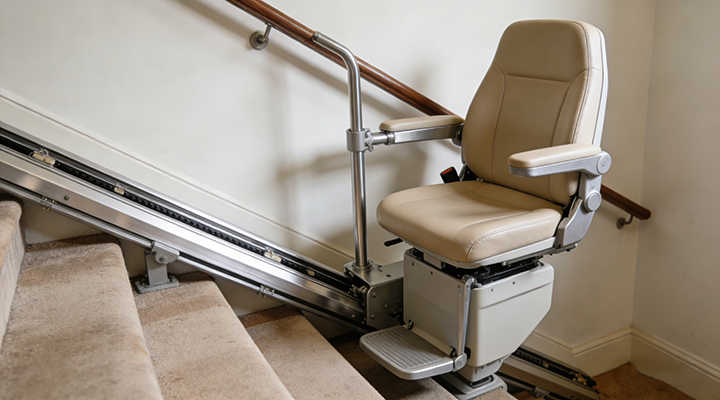
A stairlift is an electric seat with tracks installed on the handrail of a staircase. It is primarily used to transport people with mobility impairments up and down stairs, and also serves as a convenient assistive device. Stairlift tracks come in straight and curved versions to accommodate different staircase designs.
The working principle of a stair lift is that a motor drives a gear, which then meshes with a rack on the track, causing the electric seat on the stair handrail to move. The electric brake locks the stair lift, controlling its slow movement.
Applicable Scenarios
The application scenarios for stair lifts are relatively limited. Residential buildings using stair lifts must have a staircase. Most stair lifts have requirements regarding the shape of the staircase, usually straight or S-shaped; they may not be suitable for staircases with multiple curves. Furthermore, stair lifts are only suitable for single-story stairwells. For residential buildings with 3-7 floors, using a stair lift is not only inconvenient but also poses safety hazards. The installation location for a stair lift should be spacious; otherwise, it will affect the normal use of the staircase.
Pros and Cons
Pros
Stair lifts are indeed an economical option, ranging from $2,000 to $15,000. Straight-rail lifts are the cheapest, but if the staircase has a unique shape, custom rails are required, and the price may be comparable to a home elevator.
Stair lifts are a good option for two-story homes, as they can help elderly people with mobility issues to easily go up and down stairs while sitting in a chair.
Installation is simple. Stair lifts have a simple structure, are easy to install, can be completed in a day, require no house modifications, and require minimal space.
Cons
Low Convenience and Independence
The convenience of stairlifts is relative. Since stairlifts can only be used on single floors, installing them in a 3-7 story building requires transferring on each floor, which is time-consuming, labor-intensive, and cannot be done independently. Furthermore, wheelchair users cannot use them independently and require assistance to get on and off the electric chair.
Low Comfort
Installing a chairlift in a residence with long staircases results in very low comfort. There will be a bumpy ride and a feeling of weightlessness. Furthermore, as the chairlift ascends, it may cause dizziness due to the height, making the experience very unpleasant.
Limited Design Options
Staircase lifts typically offer limited options and have a rather basic appearance. Furthermore, the installation of some wheelchair lifts may require removing stair railings or drilling holes in walls, thus disrupting the existing home décor.
Space Occupancy
Although stair lifts take up relatively little space overall, they can occupy too much stair space when the original design of a house has a narrow staircase, making it impossible for others to use the stairs normally and causing congestion for multi-member families going up and down the stairs.
Low Load Capacity
A stair lift can only carry one person at a time. Furthermore, the load capacity for that one person is limited, typically between 120-160 kg.
Key Differences Between Home Elevators and Stair Lifts
Application: Home elevators are suitable for wheelchairs, the elderly, and for assisting in moving heavy objects. Stair lifts are only suitable for single-person use and those with mild mobility impairments, and cannot be used for wheelchairs.
In terms of floor coverage: Home elevators can connect multiple floors, while stair lifts are only suitable for a single flight of stairs.
Load capacity: Home elevators can carry heavy objects and can accommodate wheelchairs, while stair lifts are only suitable for light items.
In terms of comfort: Home elevators are more comfortable and do not sway, while stair lifts will bump and sway.
Installation: Home elevators are complex to install and take a long time, usually 1-2 weeks, while stair lifts are simple to install and can usually be completed in 1-2 days.
Cost: Home elevators are expensive, typically costing around $30,000 for a standard two-story building, while stair lifts are cheaper, generally costing around $3,000.
Customization and Aesthetics: Home elevators offer high customization and aesthetic appeal, while stair lifts generally offer less customization and are less aesthetically pleasing.
Enhancing Property Value: Home elevators can increase property value, while stair lifts generally cannot.
Maintenance: Residential elevators are more complex and costly to maintain, requiring maintenance 1-2 times a year. Stair lifts are simpler and less costly to maintain.
Noise: Home elevators generally operate without noise, while stair lifts do produce noise.
Flexibility: Home elevators can be installed anywhere indoors or outdoors. Stair lifts, on the other hand, must be attached to a staircase, with the starting and ending points being the same points, offering no choice.
Which One Is Right for Your Home?
First, if your budget allows, a residential elevator is the preferred choice, offering more advantages and a one-time solution. If your budget is limited and your home’s staircase is standard and doesn’t require custom tracks, a stair lift is a better option.
Second, if your home has 3-7 floors, or needs to connect to a basement or garage, a home elevator is more recommended; for a two-story home, a stair lift will suffice.
Furthermore, if you need to accommodate multiple people, or require wheelchair or stroller use, or for moving furniture, a home elevator is an excellent tool. However, if it’s only for one person, a stair lift will suffice.
Finally, if your home doesn’t have enough space for a home elevator, a stair lift can meet your needs for convenience, but if you prioritize aesthetics and privacy, a home elevator is the best choice.
Conclusion
Choosing an auxiliary tool for your family is crucial, as it can make your life more comfortable and convenient. Furthermore, this tool should provide a better riding experience and offer multiple functions. The home elevators and stair lifts mentioned above each have their own advantages and disadvantages, making it essential to choose the most suitable one. However, if your budget allows and you prioritize long-term comfort, we highly recommend a home elevator, which can carry multiple people at once and provide instant access to designated floors with a single touch. Moreover, the numerous benefits of installing a home elevator can offset the initial investment.
If you are interested in home elevators, you should contact a reliable home elevator manufacturer to learn more details. Anter, a 15-year veteran elevator manufacturer, boasts extensive experience, a large-scale factory, a high-end showroom, advanced equipment, and a professional team, and is seeking partners worldwide. Please contact us; Anter will provide you with the most sincere service and the finest products.
FAQ
What can seniors do instead of stair lifts?
In addition, there are wheelchair lifts, home elevators, and various barrier-free home renovations.
Who should not use a stair lift?
People whose height and weight exceed the rated load of the stair lift (110-160 kg), people who cannot sit steadily on the seat, and people with cognitive impairment.
What is a cheap alternative to stair lifts?
Affordable alternatives to stair lifts include wheelchair lifts and similar options.
Does medicare cover the cost of stairlifts or home elevators?
Medical insurance does not cover the cost of stair lifts and home elevators because they are considered furniture modifications, not medical devices.
Can a stairlift increase the value of a house?
Stairlifts are generally not considered to increase property value because they can be quickly dismantled.
Which one is better for long‑term mobility needs?
For wheelchair users with limited mobility, home elevators are more suitable for long-term daily use. For those who can move around independently, stair lifts are sufficient.