
Glass home elevators are a perfect combination of convenient and practical functions with a light luxury aesthetic appearance, and are also a high-end representative category of modern home elevators.
When you take on a glass home elevator project, our primary task is to have a clear understanding of each cost component.
A well-planned project with comprehensive cost management can efficiently negotiate with suppliers, secure more profit margins, and reduce unexpected expenses.
The price of a glass home elevator is not influenced by a single factor, but rather includes a variety of complex costs.
This guide will delve into the pricing of glass home elevators and the factors that influence it, and provide you with methods to reduce costs to ensure your project is completed perfectly.
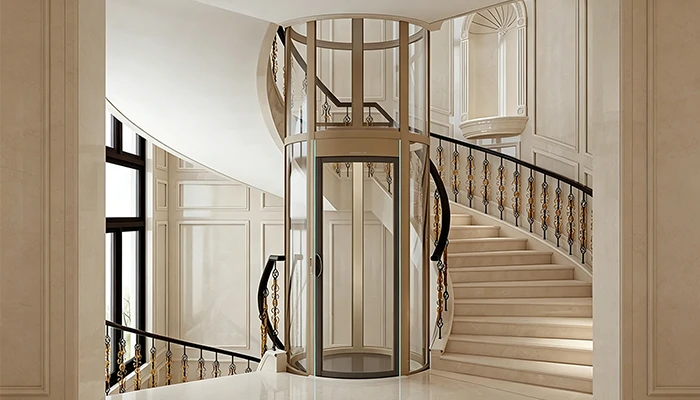
Benefits of Glass Home Elevators
Architectural integration
Glass home elevator cars or shafts feature transparent or semi-transparent designs to improve natural lighting and create a bright and airy interior space, making them suitable for high-end projects such as detached villas, stacked villas, penthouse duplexes, and urban courtyard houses.
Glass home elevators are transparent inside, offering a scenic view and a sense of lightness. The glass itself is a neutral and versatile material, so it won’t look out of place in any style of house.
Space-Saving Solution
Glass home elevators have a small footprint and high space utilization. The core components are all placed in the shaft/frame, eliminating the need for a machine room or pit. Some models even come with a glass/stainless steel frame, so there is no need to build a separate shaft.
Whether it’s an existing house or a newly built house, a glass home elevator can be installed inside.
Customization flexibility
Glass home elevators are divided into standard modular prefabricated models and fully non-standard customized models. Customization typically includes size, load-bearing capacity, shape, materials, finishes, lighting, frames, doors, functions, etc., suitable for a wide variety of projects.
Enhanced Market Appeal
Glass home elevators possess both practical and aesthetic attributes. Glass home elevators have broadened the target market, extending the traditional elevator market to customers with functional needs, and reaching users who value spatial aesthetics and a high-end lifestyle experience.
With its modern exterior design, suitability for high-end residences, and extremely convenient travel experience, it can quickly penetrate the market for high-end villas, duplexes, and designer residences.
Average Cost of Glass Home Elevator
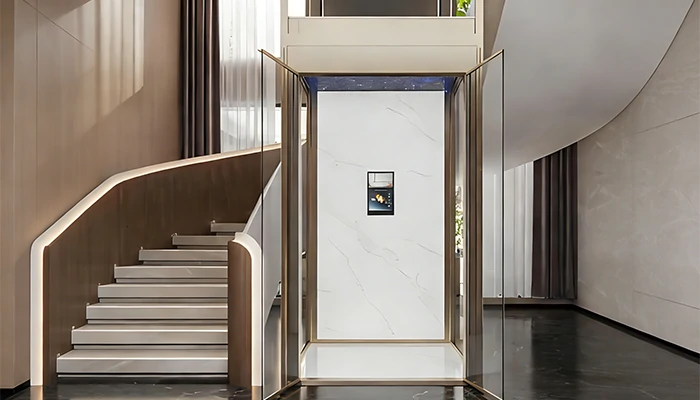
Device Cost
The equipment cost for a hydraulically driven home glass elevator is between $15,000 and $25,000. The equipment cost for a traction-driven home glass elevator is $15,000-$40,000. The equipment cost for a vacuum-driven home elevator is $25,000-$60,000.
Shipping & Import Costs
The transportation cost of a home glass elevator is approximately $2,000-$6,000, but the exact cost depends on the following factors:
Distance between exporting country and destination
Elevator dimensions and package volume (CBM)
Weight
Is it a complete export (car, guide rails, control cabinet, glass components, etc.)?
Shipping method (FCL / LCL)
Destination port charges and customs clearance fees
Buyers without customs clearance capabilities are advised to find their own customs clearance agents, as this will reduce costs.
Installation Support Cost
For sites with favorable conditions, the installation cost of a residential glass elevator is between $5,000 and $10,000.
However, for high-end residences that require the construction of shafts and the demolition of wall structures, the installation cost can exceed $20,000.
Maintenance Cost
Glass home elevators require regular maintenance, which usually necessitates signing an agreement with a maintenance company. The annual maintenance cost for an elevator is $300-$800. If more frequent inspections and replacement of parts are required, the price may reach $1,500 per year.
Total Project Cost
| Item | Average Cost Range |
| Devices | $20000-$50000 |
| Shipping & Import | $2000-$6000 |
| Installation | $5000-$20000 |
| Maintenance | $300-$1500 |
| Total Project Cost | $35000-$80000 |
Factors Influencing Home Glass Elevator Cost
Types of Glass Home Elevators
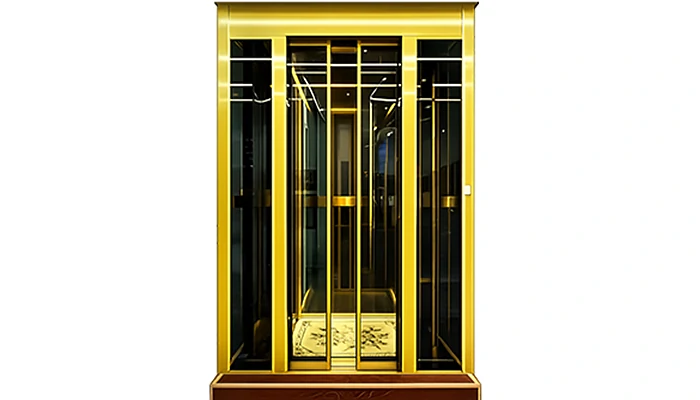
Traction/Cable-Driven (with Glass Cab/Hoistway)
Traction-driven home glass elevators are the mainstream choice in the home elevator market. They rely on the frictional force between the traction sheave and the steel wire rope for movement. The overall cost of this type of home elevator is in the mid-to-high range.
Pros
Traction elevators have extremely low noise levels, typically between 40 and 50 decibels, making them suitable for families with elderly members or children.
Traction-driven glass home elevators offer high safety, high speed, and strong load-bearing capacity.
Traction drives reduce load through counterweight balancing and consume little power.
They are flexible in design, can be highly customized, and are suitable for 2-7 story residential buildings.
Cons
Traction-driven home glass elevators have complex mechanical structures, high requirements for civil engineering, and require a pit and sufficient overhead space.
In addition, the installation period for traction home glass elevators is long, requiring one month for civil engineering and installation.
Best for
Suitable for multi-story villas and mid-to-high-end residences.
High-end residential renovation projects
New residential construction projects
Pneumatic /Vacuum Elevators
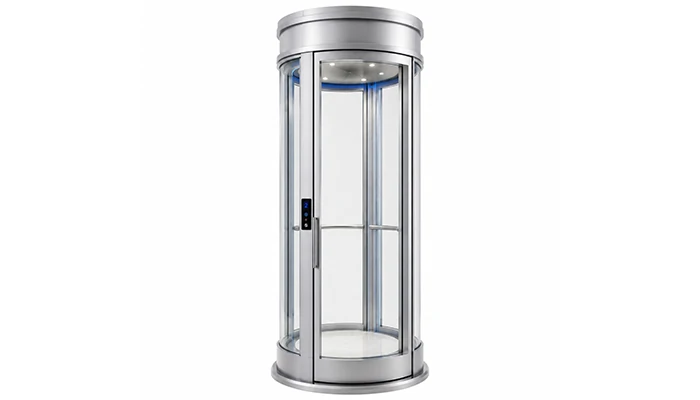
Vacuum elevators are the newest type of home elevator, having only begun to be used in residential applications in the last decade or so. Vacuum elevators operate by utilizing the pressure difference between the upper and lower parts of the car within a sealed cylinder.
Vacuum elevator technology is monopolized by a few companies in Europe, making them more expensive, and the costs of subsequent maintenance, parts replacement, and other services are also higher.
Pros
The civil engineering work required for vacuum elevators is almost zero.
The installation cycle for vacuum elevators is short, typically completed in 1-3 days.
Vacuum elevators have a small footprint.
Vacuum elevators are durable and environmentally friendly.
Cons
Vacuum glass home elevators have a very small capacity due to their structure, usually only enough for one person. Furthermore, the elevator is slow and provides a poor user experience. Additionally, the cylindrical design with round glass may limit interior customization options.
It is only suitable for installation on floors 2-4. The higher the floor, the more noticeable the noise and the slower the speed.
Best for
Suitable for installation in existing 2-4 story buildings.
Hydraulic (with Glass Cab/Hoistway)
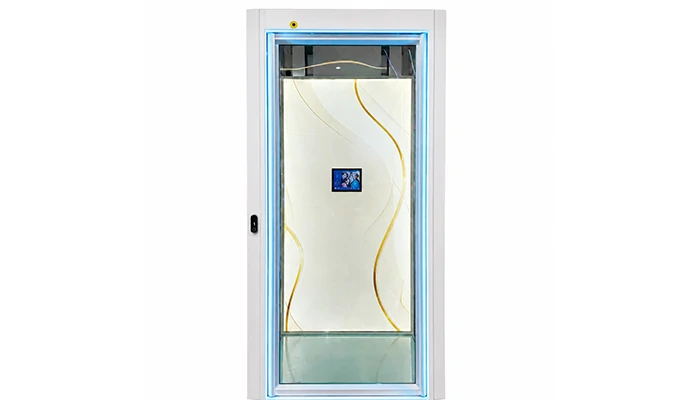
Hydraulic drive is the most economical solution for home glass elevators. Hydraulic elevators utilize Pascal’s principle, using a piston and a hydraulic pump to drive the car’s movement.
Pros
First, the biggest advantage of hydraulic home glass elevators is their low price.
Second, hydraulically driven elevators have a large load capacity.
Third, hydraulic home glass elevators operate smoothly and quietly.
Fourth, they are the perfect match for 2-4 story residences.
Fifth, they offer flexible installation.
Cons
Hydraulic drives consume more energy than traction drive systems, and the hydraulic oil needs to be changed and inspected regularly to prevent leaks.
Best for
Luxury villas, private residences
New housing and renovation projects
Installation Requirements
New construction projects
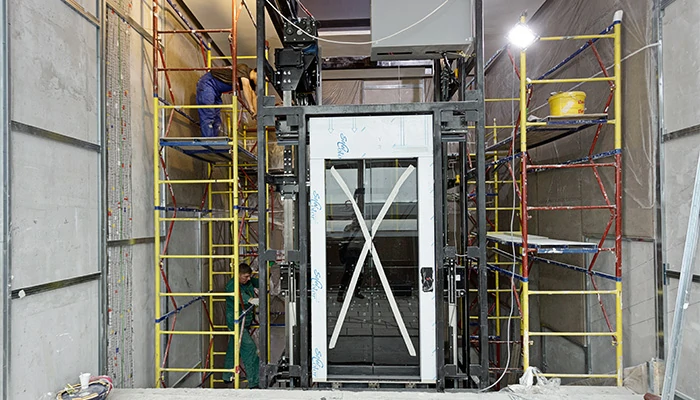
For newly built residential buildings, homeowners can plan the shaft and installation space in advance, without having to demolish walls, modify the building structure, or re-lay pipes or HVAC systems, which can save costs.
Existing home renovation
Most of the houses that have been built do not have reserved wells and pits, or sufficient installation space, so it may be necessary to remove the floor slabs, reinforce the walls, reconnect the wiring, etc. The total cost of installing a home glass elevator in an already built house is 2-5 times that of a newly built house.
Structural preparation
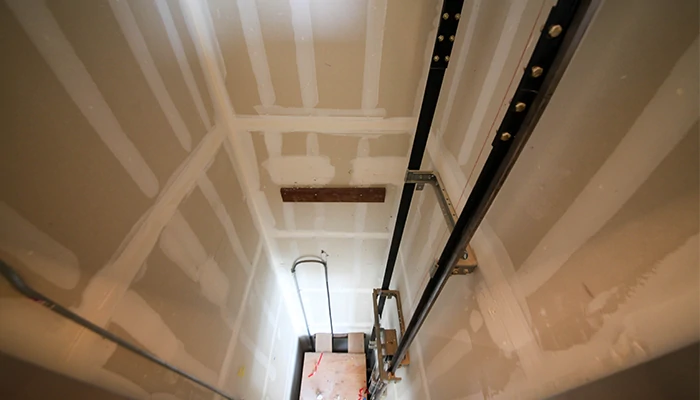
The installation costs differ for construction sites that already have standard shafts or spaces compared to sites where civil construction has not yet begun. Furthermore, the more complex the construction site conditions, the higher the labor and material costs. The cost for workers to prepare the shaft and other civil engineering work ranges from $2,000 to $10,000.
Local regulations
In some countries and regions, the installation of home elevators requires approval and a license, which may incur expenses ranging from tens to hundreds of dollars.
They also require that the equipment be inspected after installation, which may cost $200-$500.
Number of Stops/Travel Distance
For each additional floor, an additional set of landing doors is needed in the elevator components. Each additional stroke places higher demands on the home elevator’s drive system, guide rails, and structure, requiring more energy and materials. For each additional floor, with a travel distance of approximately 3-4 meters, the cost of a home elevator will increase by $3,000-$8,000.
Customization and Surface Treatment Upgrades
Car interior finishes and materials: Glass finishes include transparent tempered glass, laminated glass, frosted glass, gradient glass, colored glass, and back-painted glass. Materials can be selected from marble flooring, stainless steel ceilings, high-grade wood, metal finishes, etc. The price will increase by $500-$6,000 compared to the standard model.
Doors: Manual doors are standard and an economical choice. If you are looking for a more convenient and luxurious experience, fully automatic sliding glass doors are a good option, but the price will increase by $500-$3,000.
Size and capacity: The larger the size and the larger the capacity, the higher the requirements for elevator components, and the more materials are needed, which will increase the price.
Functions: Emergency communications, custom lighting systems, remote monitoring, advanced controls (such as touchscreen panels), and special safety features can all be customized for installation in home glass elevators, requiring an additional $500-$5,000.
Manufacturer/Service Factors
Due to differences in manufacturing processes, production standards, service systems, and the brands and quality of core components used, different manufacturers price home glass elevators differently. Some well-known high-end brands also have a brand premium of 30%-50%.
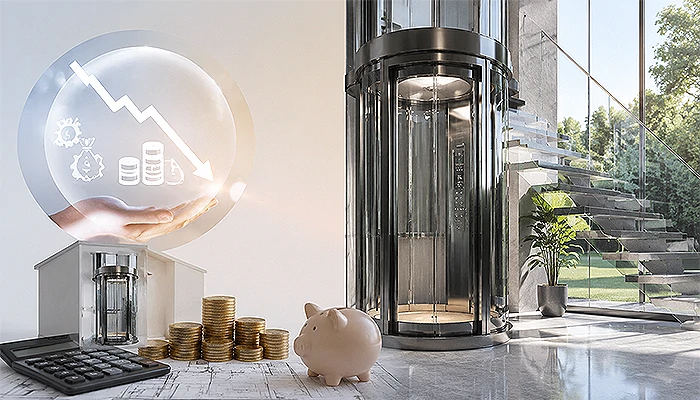
Cost Optimization Tips for Glass Home Elevator Project
Determine the elevator plan in advance
Before signing a contract with the supplier, we confirmed the specifications (type, load capacity, travel, size, structure, appearance) and on-site installation conditions of the home glass elevator with the customer multiple times to ensure that the shaft space is suitable for the elevator size, the pit and top floor space are sufficient, and the door opening size is appropriate.
Choose The Appropriate Configuration
For ordinary residential projects, standard tempered glass with a standard aluminum alloy frame and basic aluminum alloy lighting can be used, with a focus on practicality and including basic functions.
For high-end villa projects, choose ultra-clear laminated glass and champagne gold/black heavy-duty aluminum frames, as well as custom interiors (etched, starry sky ceiling, marble flooring). In terms of functionality, users can choose intelligent features such as voice broadcast, remote control, and privacy protection.
Standardized Elevators Are Preferred
When working with clients on projects, we prioritize recommending standardized elevators, as they have lower equipment and installation costs and faster delivery times. Furthermore, it is easier to find replacement parts and professional maintenance personnel during subsequent maintenance.
Choose Manufacturers With A Complete Supply Chain
When choosing a supplier, you should choose one with its own factory, as this will allow you to obtain home elevator products at prices lower than the market average.
Furthermore, the supplier should have the capability to complete the entire process from design, procurement, production, assembly, testing to after-sales support—ensuring control over each stage and guaranteeing product quality.
Optimize Transportation And Packaging Costs
Manufacturers are required to adopt modular designs to reduce transportation volume and to rationally plan and stack the various parts of the elevator to improve the container loading rate.
In addition, professional packing methods such as using foam shock-absorbing materials and securing with wooden crates are employed when packing glass to prevent damage.
It is best to choose a manufacturer with extensive export experience.
Conclusion
Home glass elevators have become an important part of modern multi-story residential buildings, perfectly combining aesthetics, luxury, convenience, and comfort. The global average price of a residential glass elevator is between $30,000 and $80,000. You can break down the project details step by step, select each part of the elevator one by one, match them together, and finally make an informed choice.
What to Look for in a Glass Home Elevator Manufacturer
A professional glass home elevator manufacturer should have complete design and production capabilities, a stable supply chain system, and extensive customization capabilities. Furthermore, it should have a strict quality control system during the production process and conduct complete testing before shipment. In addition, manufacturers need to have certifications that meet the requirements of different target markets to facilitate smooth export.
Extensive export experience and project experience are also important factors in evaluating manufacturers.

Why Anter Are the Top Choice for Glass Home Elevator
Located in China, Anter possesses all the necessary compliance qualifications and comprehensive service capabilities to be a professional supplier of glass home elevators. We have the capability to deeply customize to meet the needs of different projects, and possess relevant certifications and extensive export experience in various countries and regions. We also understand the import rules and procedures of each country and region.
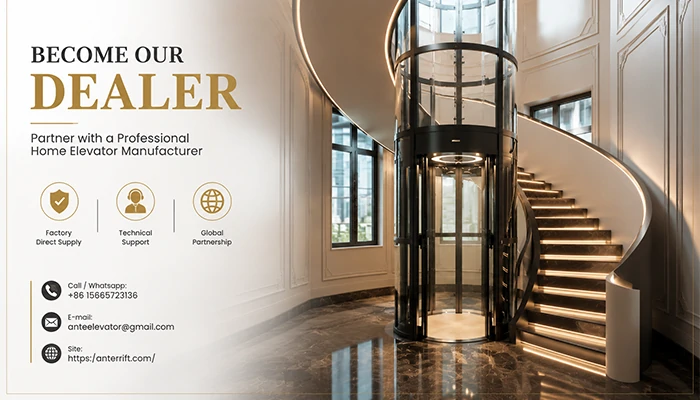
We sincerely seek agency partners around the world to achieve win-win cooperation with the continuously growing home elevator market in the coming years.
By becoming our partner, we offer:
Factory direct sales offer agents prices far below market rates, allowing for substantial profit margins.
CE/ISO9001 certified home lifts – featuring a compact, pit-free MRL design, perfectly suited for all types of homes.
A proven track record of export success – we have achieved global exports and can reliably transport goods to your designated region.
Quick installation – installation time for most models is within two days.
We provide installation guides, 24/7 remote support, and training for your team.
We include spare parts with every shipment, eliminating the need to wait months for parts.
Built-in battery backup function – the lift can still operate normally during power outages.
Agent slots are available in each region on a first-come, first-served basis. Contact us now for more details!
FAQs
Glass Home Elevator vs Other Home Elevators?
| Item | Glass Home Elevator | Other Home Elevator |
| Design and Appearance | Transparent panoramic view | High privacy |
| Main Material | Tempered/laminated glass | Steel/Stainless Steel/Aluminum |
| Space Requirements | Medium | Medium-Large |
| Custom Design | Excellent | Good |
| Cost | Higher | Lower |
| Luxury Appeal | High | Medium |
Are home glass elevators always more expensive than traditional elevators?
Not necessarily. The price of both products depends on the configuration chosen by the buyer and the installation location.
Can a home glass elevator accommodate a wheelchair?
In addition to vacuum-driven glass home elevators, traction-driven and hydraulic-driven elevators can also accommodate wheelchairs, and the size of the elevators can be customized to fit the wheelchair.
Are glass home elevators safe?
Glass home elevators are very safe. Compliant home glass elevators are equipped with a variety of safety devices, including overspeed limiters, fall arrestors, emergency power supplies, automatic leveling systems during power outages, anti-pinch safety touch panels, and anti-pinch light curtain sensors. Anter’s home glass elevators also feature all of these safety devices.
Does a glass elevator require a pit or a machine room?
Anter’s glass home elevators require no machine room, pit, or shaft. Furthermore, they can be installed on already finished floors, requiring minimal civil engineering work and causing minimal damage to the building.
How long does it take to install a glass elevator in a villa?
Excluding construction time, the installation time for a home glass elevator is 7-10 days, but the exact time depends on the number of floors, the drive system, and the complexity of the configuration. If civil engineering is included, such as building wells, digging pits, and upgrading electrical circuits, the time may exceed one month.
What is the load capacity of a home glass elevator?
Home glass elevators have a load capacity of 200-500kg and can carry 2-8 people at the same time.
 English
  Arabic
  Thai
Thai  Vietnamese
  German