Introduction
When there are elderly people, disabled people, or family members who are recovering from illness, the stairs that we usually find easy can become a huge challenge. To solve this problem, many people might think of traditional lifting tools—stair lifts. Indeed, it is a very good accessibility solution, but it is not the only solution and it has limitations. Therefore, we have to think about what other ways there are to help you solve the trouble of not being able to go up and down stairs when there is no stair lift, or when a stair lift cannot meet your needs?
Here, we have already listed the most detailed solutions for helping you.
The Way to Get Upstairs Without A Stair Lift
Temporary Ways
Manual Assistance
Two-person Assist Methods
Two caregivers helped her go up and down the stairs. When the person is completely unable to move, they can be carried to the desired floor by a caregiver while sitting in a wheelchair or chair, either from the left or right, or from the front or back. Alternatively, they can be carried on their back or in their arms.
Mastering Techniques for Climbing Stair
When someone hasn’t completely lost their mobility, here are some simple techniques to help them climb stairs more easily.
First, when going upstairs, keep your body upright and lean slightly forward, which helps stabilize your center of gravity.
Secondly, step forward with the stronger leg while gripping the handrail tightly, so that both hands and feet work together.
Additionally, when climbing stairs alone, you can wear non-slip, soft-soled shoes.
Finally, maintain a steady pace while climbing the stairs and make sure each step lands firmly on the ground.
Equipment Assistance
Stair Climbing Chairs
A stair-climbing chair is a mobile assistive device designed specifically for people with mobility impairments to go up and down stairs. Unlike stair lifts, it has its own tracks, requires no fixing, and can be easily carried anywhere, making it suitable for indoor transfers and outdoor use. However, using this device requires a person to accompany it and move it when going up or down stairs. Meanwhile, this requires physical exertion, is inefficient, and carries the risk of falling.
Transfer Boards
A transfer board is a simple auxiliary tool for movement up in short distance. That is, to achieve short-distance movement using a smooth board. It is suitable as a transitional device for wheelchair users and for navigating low, single-level steps.
Evacuation Chairs
Evacuation chairs and stair-climbing chairs have similar structures; they are foldable, lightweight seats that can be moved freely. However, it is not for everyday use; it is mainly used for the evacuation of people with mobility impairments during earthquakes or fires. When using this device, someone must be present to assist in its use.
Long-Term Ways
Equipment Assistance
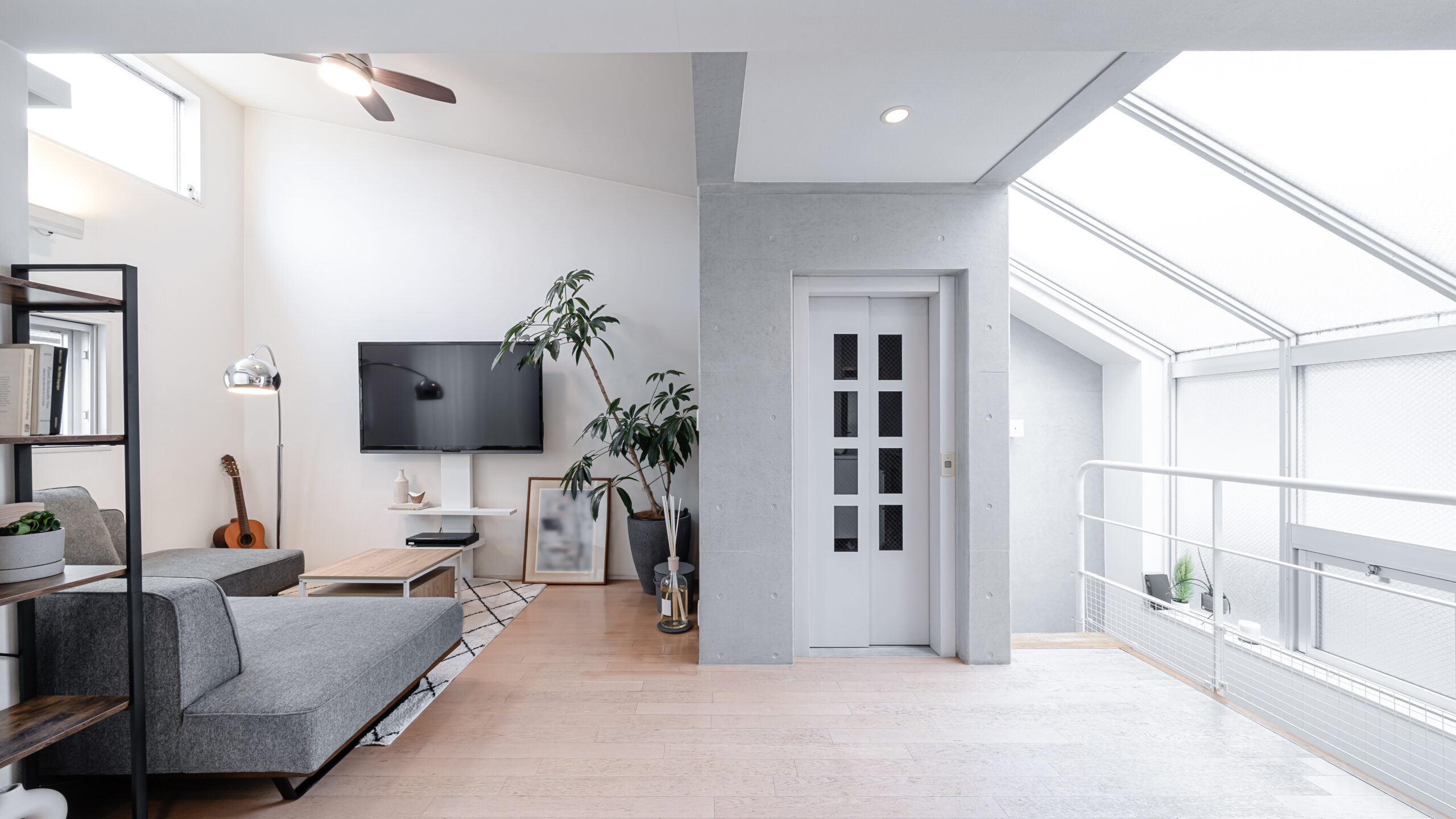
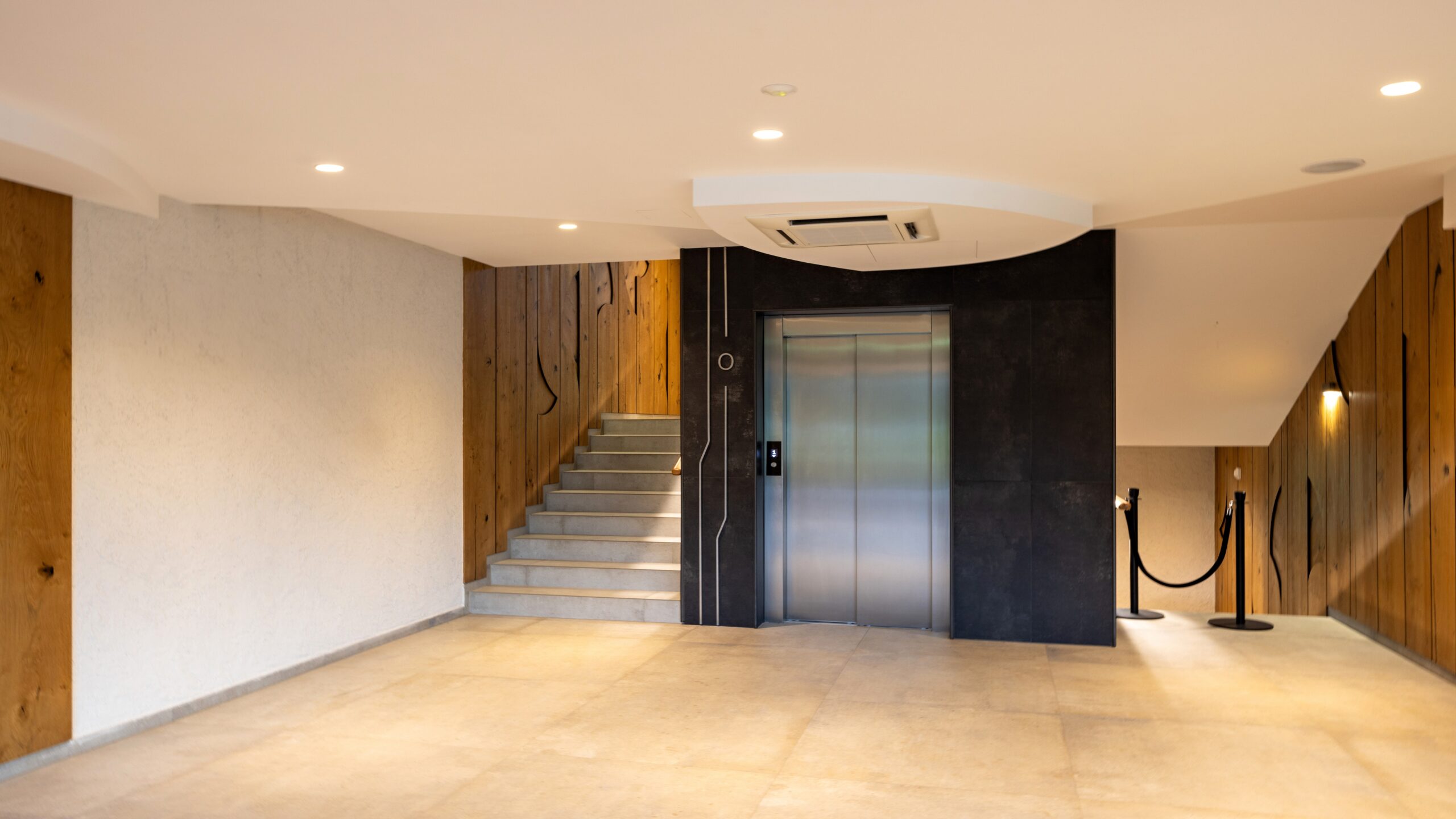
Home elevators are the most effective long-term alternative to stair lifts for accessibility. It is a convenient tool of transportation designed specifically for single-family homes, used for traveling between floors. The features include: compact structure, customizable to fit the house, simple and easy to operate, spacious interior, and one-click access. For people with mobility impairments, home elevators can solve the problem of safely going up and down stairs. Moreover, this equipment has a longer service life than stair lifts and is more convenient.
Vertical platform lift and home elevators work the same way to go up and down floors, and are also known as “small elevators”. It can also reach a designated floor with one click, making it a good alternative to stair lifts for going up and down stairs. The vertical platform lift has a non-fully enclosed appearance and features a platform with guardrails for transporting people or goods up and down.
House Renovation
Proper renovations to your house can help family members move up and down stairs more easily in the long term. For members who need to use wheelchairs, lower stairs can be replaced with ramps. For members who have not yet completely lost their mobility, install handrails on both sides of the building’s staircase. Anti-slip materials were applied to the ground and lighting was installed. If the stairwell environment is poor, the stairwell needs to be modified, such as widening it appropriately and reducing the height of each step. Although these modifications are rather complicated, they can be used for a long time.
How to Assess Which Way Is Right for You?
Physical Condition
The health condition of family members is a very important assessment factor. When family members are mobile but feel tired when climbing stairs, they can choose to install handrails and use easy stair-climbing techniques. When a family member is completely incapacitated or physically unable to climb stairs alone, assistive devices can be used. If this situation is only temporary and someone is accompanying you, choosing a stair climbing chair is a very good option, or you can move directly with the help of a caregiver.
Environment
The environment of the staircase directly affects the method you use to go up and down the stairs. If the stairwell is narrow or steep, auxiliary tools should be used instead. We recommend stair climbing chairs, home elevators, and vertical platform lifts. If the building has many floors and staircases, home elevators and vertical lifts are the preferred options.
Budget
If you want a cheaper option, you can choose to install handrails, use a movable board, or use tricks to go up and down stairs, but these methods are not suitable for people with extremely limited mobility. If your budget is moderate, you can choose to use a vertical platform lift or stair climbing chair. If the budget is higher, a home elevator or caregiver are good options, and for new houses, large-scale construction can be carried out to design the house into a structure suitable for going up and down stairs.
Conclusion
For multi-story residential buildings, there is no single solution for going up and down stairs. Different actual situations require different solutions. You can choose the solutions listed above based on your needs. If you would like to learn more about long-term alternatives to stairlifts, you can read Stairlift Alternatives for Your Home.
If you think a home elevator can solve your problem, then I recommend a highly professional home elevator manufacturer that has been in the business for over 15 years – Anter. Anter offers a full range of customized options, along with free consultations and solutions, providing you with the highest quality products and the most sincere service, allowing you to enjoy comfort and convenience while owning a high-end residence. Come on, fill out the form on the right to get more information.
FAQ
Is it safe to carry someone upstairs without any equipment?
No. It’s unsafe. Especially for the elderly and disabled. When they climb the stairs on their own, they are prone to falling due to weak legs or missteps. When others help them up or down the stairs, they are prone to falling at the same time. If the way you help someone is incorrect, it can also cause physical harm to the elderly.
What is the easiest way to move an elderly person upstairs?
I believe it’s a home elevator. Here are my reasons:
First, home elevators are comfortable inside, equipped with handrails, and can accommodate wheelchairs.
Secondly, home elevators allow you to reach your desired floor with just a simple press of a button, and the travel time is shorter, eliminating the need for transfers.
Third, home elevators are not only practical but also aesthetically pleasing.
Fourth, home elevators are the only auxiliary tool mentioned above that can increase the value of a house.
What is the safest alternative to a stair lift?
First, there are home elevators. Home elevators are equipped with more than a dozen safety devices that can protect your safety in all aspects and eliminate the risk of being trapped. According to statistics, the global accident rate for home elevators is less than 0.5%.
Second, it’s actually a vertical platform elevator, designed for wheelchair users. Users must remain in their wheelchairs, and the device is equipped with safety railings and an automatic control system to ensure their safety.
Finally, there are stair climbing chairs. Stair climbers require professionally trained personnel to operate, making them relatively safe.
Who should not be manually carried upstairs?
The following types of people are not allowed to go up or down stairs alone.
People with poor balance, who walk unsteadily, and who cannot sustain leg strength.
People with dizziness and poor cardiopulmonary function
People with poor eyesight and slow reaction time
People who have taken medications that cause dizziness, or those who have fractured bones or are recovering from surgery.