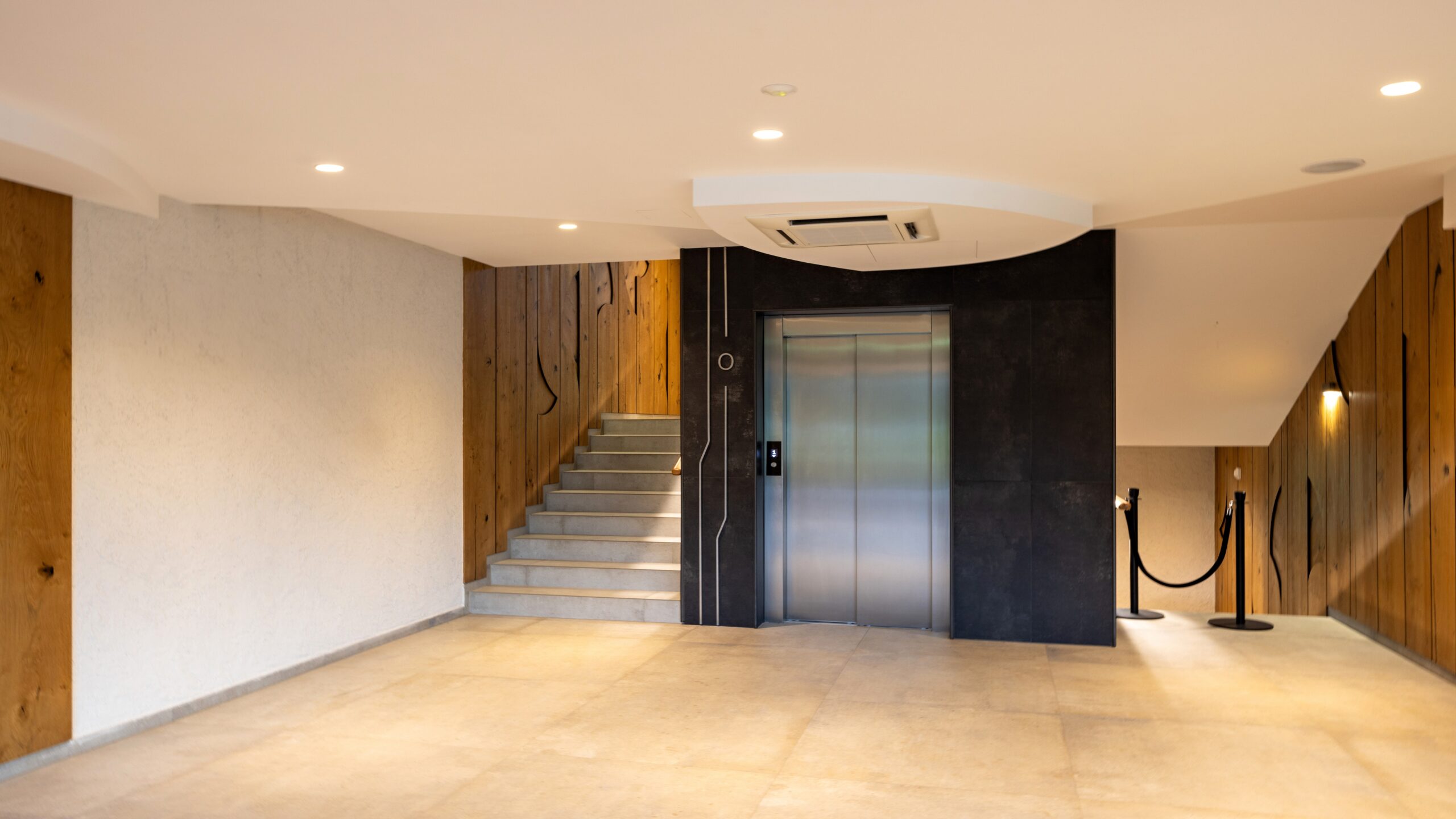
Currently, more and more families are living in villas or duplex with attics. However, the difficulty of going up and down stairs in multi-story homes is starting to trouble you and your family. To solve this problem, you should definitely consider installing a home elevator in 2026 for a more convenient life for you and your family. Before installing a home elevator, whether you know nothing or are very familiar with home elevators, we hope you will read this article, which will give you a clearer understanding of home elevators.
What Is A Home Elevator ?
The Definition of Home Elevator
A home elevator is a small, convenient device typically installed in villas, duplexes, and low-rise houses, designed to transport passengers and goods between different floors. It is often used in single-family homes and has a private nature. Additionally, this type of elevator is equipped with the same safety features as other elevator types, making it the ideal choice for wheelchair users and elderly individuals with limited mobility.
The History of Home Elevator
The world’s first home elevator dates back to the late 19th century. when Elisha Graves Otis invented the first safety elevator. This invention made the development of home elevators possible. However, with the rise of the Industrial Revolution, elevators were primarily used in commercial and high-rise buildings, and home elevators were not used. It wasn’t until the 1940s and 1950s, when elevator technology began to mature and the focus on quality of life increased, that some wealthy families started to install elevators in their homes.
By the 1960s, as home elevator technology became more advanced, they gained popularity in Europe and North America. It has become a standard feature in luxury homes. But from the late 20th century to the present, the cost of home elevators has significantly reduced, and their designs and functions have become more diversified,so home elevators have become accessible to more middle-class families.
Benefits of Home Elevator
The benefits of installing a home elevator are numerous. Below are the introductions about the main advantages, which we hope will give you a better understanding.
Multiple Safety Feature
Home elevators are equipped with a variety of safety features, including: overspeed governors, anti-fall safety clamps, emergency power supplies for power outages, automatic leveling in case of power failure, anti-crushing safety touch plates, safety light curtain sensors for door pinch protection, counterweights, and door lock safety devices.
Boosting Mobility and Accessibility
Home elevators are great assistants in improving mobility and accessibility. They help individuals with limited mobility reach floors that are otherwise difficult to access, simplifying movement and reducing physical exertion, thereby increasing independence.
Add Value to Your Home
After installing a home elevator, you not only gain the convenience of moving between floors, saving time and energy, but also increase the value of your property. According to experts, the added value from installing a home elevator can range from 5% to 15%. Therefore, installing a home elevator is a dual investment in both your lifestyle and property.
Customization Is Available
Completely upgraded and fully customizable. From the elevator shape to the finishes, every detail can be customized to your needs, offering high flexibility and enhancing the overall aesthetics of your home with you at the center of the design.
High Space Utilization
Home elevators come in small size and mini size, which can be installed in narrow spaces. The smallest models require only 80 cm of floor space and do not need a pit, shaft, or machine room, allowing you to make the most of limited space.
Let You Age in Place
Aging in place remains the mainstream choice for many people, as living in a familiar environment is filled with past memories. However, with the passage of time and the decline in physical functions, mobility becomes less flexible. As a result, navigating multi-story stairs becomes difficult and unsafe. Installing a home elevator can perfectly eliminate mobility issues and prevent accidents like falling on stairs, making it an excellent tool for aging in place.
Improving Home Architecture Appeal
Home elevators have now become a standard feature in high-quality homes. With their diverse designs and the luxurious symbolism they carry, they can enhance the overall aesthetic of your building and elevate your quality of life.
The Main Types of Home Elevators And Their Pros/Cons
Currently, the most common types of home elevators on the market include hydraulic elevators, traction elevators, and vertical platform elevators. You can choose the elevator type that best suits your specific circumstances and needs.
Traction Elevator
A traction elevator is a type of elevator where the car moves up and down through a traction system driven by an electric motor. Our traction elevators come in two types: the gantry style and the back-pack style. The gantry style features a frame structure with double side columns and a top crossbeam, while the back-pack style consolidates the traction machine, guide rails, and counterweights all on one side of the car.
Pros:
- Smooth operation, high speed
- High safety
- Suitable for buildings with 5 or more floors
- Unaffected by temperature changes
- Efficient, low energy consumption
- Compact size, low noise
- Long service life
- Highly customizable
Cons:
- The cost is relatively high.
- Maintenance and upkeep are relatively complex.
Hydraulic Elevator
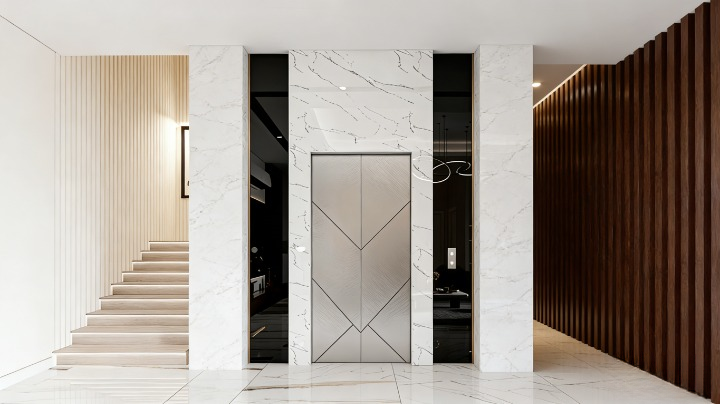
A hydraulic elevator is a type of elevator driven by hydraulic power, which indirectly moves the car through steel ropes or steel belts. Our hydraulic elevators are also available in both back-pack and gantry styles. The main difference, aside from the drive mechanism, is that everything else is equivalent to the traction back-pack and traction gantry styles.
Pros:
- Affordable price
- Low noise, quiet operation
- Simple structure, easy installation
- Stable and highly safe
- Highly customizable
- Requires minimal building space
Cons:
- Suitable only for lower floors
- High energy consumption
- Cannot be used at low temperatures
Vertical Platform Lifts
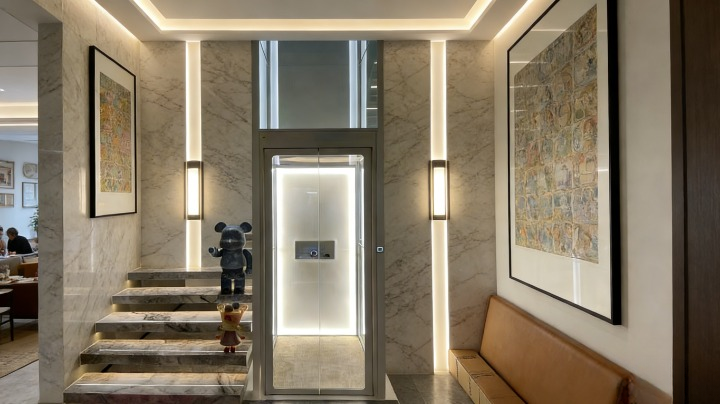
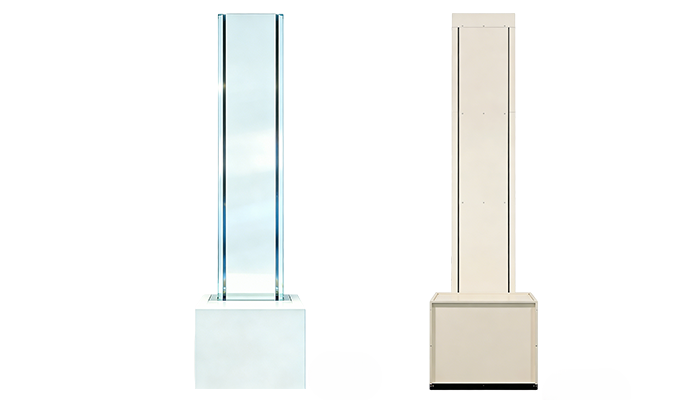
A vertical lifting platform is a simple, non-enclosed lifting device, representing a more economical accessibility solution. It mainly consists of a platform, lifting mechanism, support structure, and power system.
Pros:
- Lowest price
- Simple structure, easy installation
- Low energy consumption and easy maintenance
- Suitable for barrier-free access
Cons:
- Slow speed
- Limited customization options
- Limited carrying capacity
The Comparison of Home Elevators
Traction Elevator Vs Hydraulic Elevator
Traction elevators operate by a motor-driven traction wheel, while hydraulic elevators rely primarily on a hydraulic system. The two have different drive mechanisms. Traction elevators are more suitable for mid-to-high-rise buildings compared to hydraulic elevators. They can be installed in buildings with 2 to 7 floors, have a longer service life, and require fewer operating conditions. Traction technology is also highly developed and is the most popular type on the market, although it is more expensive than hydraulic elevators. Hydraulic elevators, on the other hand, are more cost-effective, provide smoother speeds, and occupy slightly less space than traction elevators. However, their lifting height is limited, and it’s best not to exceed 12 meters. For low-rise homes, hydraulic elevators can also be a good choice.
Home Elevator Vs Stairlift
A stair lift is an electric chair installed along the edge of the stairs that moves along the direction of the stairs, helping individuals with limited mobility to go up and down the stairs. Compared to home elevators, stair lifts are relatively cheaper and do not require any major modifications for installation. However, there are several drawbacks when compared to home elevators. A stair lift cannot carry multiple people at once like a home elevator, and it only operates between single floors. It is still inconvenient for people who need to use a wheelchair or have severe mobility issues. Additionally, the competition in the home elevator market is intense, and cost control has become highly efficient, making the cost of a home elevator increasingly close to that of a stair lift. Therefore, a home elevator might be a better choice for you.
How Home Elevators Work
Hydraulic Elevator
When the elevator ascends, the hydraulic pump station provides the necessary pressure difference for the upward movement. The flow of hydraulic oil is controlled by the valve group on the hydraulic pump station, which pushes the hydraulic cylinder’s plunger upwards, causing the elevator to move upward.
When the elevator descends, the valve group is opened, and the pressure difference created by the weight of the car (and the passengers) allows the hydraulic oil to flow back into the hydraulic oil tank, enabling the elevator to descend. The speed of descent is controlled by the valve group.
Traction Elevator
A traction elevator is essentially powered by a motor driving a traction sheave, and its operation consists of eight interconnected systems. The traction system provides power, enabling the elevator to run normally. Simultaneously, the guiding system restricts the movement of the car and counterweight during traction, ensuring they can only move along guide rails. The car door system forms the main body of the elevator. Weight balancing and safety protection systems work together to prevent elevator malfunctions. Finally, the electrical control system and electric drive system maintain the elevator’s various electrical functions.
Application of The Home Elevator
Who Needs A Home Elevator?
Seniors Aging in Place
As people age, many elderly individuals experience mobility issues due to the decline in physical function. According to the latest data from the World Health Organization, 20-35% of people over 60 suffer from limited mobility. Therefore, installing a home elevator for elderly is a great option to enhance convenience for the majority of elderly individuals.
Wheelchair Users
If you or a family member uses a wheelchair, installing a home elevator for wheelchairs is an excellent choice. Home elevators can be customized to fit the dimensions of your wheelchair and equip a ramp, ensuring smooth boarding and exit. The interior is spacious and comfortable, making it an essential and useful tool for the home.
Multi-Story Homeowners
Home elevators are suitable for installation in houses with 2 to 7 floors, reaching a maximum height of 21 meters. They allow users to quickly and easily travel between floors. Furthermore, when you need to move heavy objects up or down the stairs, a home elevator is incredibly convenient, freeing your hands and allowing you to accomplish the task quickly.
Luxury Home Owners
Home elevators have now become a symbol of modern high-end homes, reflecting the homeowner’s pursuit of quality of life. Additionally, as home elevators become more personalized, they have become increasingly diverse. They can now be fully customized, adding a touch of luxury to your home.
Where Can A Home Elevator Be Applied?
Home elevators can be used in villas, duplexes, apartments, residential buildings, vacation hotels, beachfront homes, and other mid-to-low-rise residences. Additionally, home elevators are highly versatile and can be installed both indoors and outdoors. We can install them in any indoor location, such as basements, stairwell gaps, between cabinets, corners of the house, balconies, and more.
Home Elevator Design &Custom
After determining the type of home elevator, the next step is to understand its design.
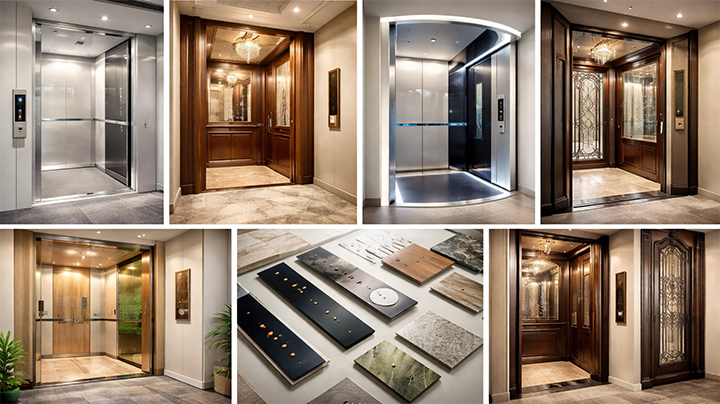
The market for home elevators today is highly diverse, with customized elevators gradually replacing standardized ones as a new trend of style. The most popular and trending home elevator designs currently include: modern minimalist, minimalist, classic luxury, classic vintage, natural ambiance, and futuristic styles.
Furthermore, an increasing number of elevator manufacturers are focusing on creating unique, personalized elevators for their customers. More and more parts of the elevator, such as shape, size, color, control panels, decorations, flooring, and features, can be tailored to suit individual preferences. This trend toward customization allows customers to have a more engaging experience when purchasing an elevator, ultimately resulting in the ideal product that meets their needs and tastes.
Cost of Home Elevator
Currently, the cost of home elevators on the global market starts at over $3,500, with standard models typically priced up to $10,000. Luxury home elevators can cost as much as $60,000. However, the exact price is influenced by various factors such as the number of floors, elevator configuration, design, materials, shape, and size. Therefore, the prices mentioned above are for reference only.
It’s important to note that these costs do not include other potential expenses arising from the installation of an elevator (non-installation costs), such as home renovation, permit fees, and design fees. The average market price for these additional costs ranges between $3,200 and $16,500, but the final amount depends on local regulations and the specific conditions of the property.
Specification of Home Elevator
The following are the main specifications for home elevators.Using globally accepted data.
| Car Dimensions | Width: Approx. 80 cm – 110 cm Depth: Approx. 90 cm – 140 cm Height: Approx. 200 cm – 250 cm |
| Shaft Dimensions | Width: Approx. 120 cm – 160 cm Depth: Approx. 140 cm – 170 cm Height: Determined by building floor height |
| Load Capacity | 250kg-450kg |
| Operating Height | 20m-21m |
| Operating Speed | 0.2-0.4m/s |
| Noise Level | Below 55 dB |
| Average Power Consumption | 1.5KW-3KW |
| Machine Room | Most home elevators do not require a machine room |
Doors of Home Elevator
There are currently seven common types of home elevator doors on the market.
Manual door: Similar to the doors found in typical rooms.
Automatic door: A door that opens automatically when the elevator senses a person.
Semi-automatic door: A door that can be opened both automatically (via sensor) and manually.
Influencer-style doors: Two doors that open from the middle outwards.
Center-opening sliding doors: two panels slide outward from the center
Side-opening door: A door consisting of two panels that slide and fold to one side.
Folding door: A door consisting of four panels that fold open from the center to the sides.
Main Component of Home Elevator
Whether hydraulic or traction-type home elevators, they generally consist of the following main components:
Elevator car: The passenger compartment, including the floor, walls, ceiling, lighting, control panel buttons, and handrails.Drive system: The power source for elevator operation, divided into hydraulic drive systems and traction drive systems.
Control system: Controls the elevator’s starting, stopping, and movement up and down to reach the designated floor.
Guide rails: The tracks along which the elevator moves up and down.
Door system: Includes the elevator car door or landing door, responsible for opening and closing the doors and monitoring their status.
Safety protection system: Responsible for passenger safety, it is divided into mechanical safety protection systems and electrical safety systems.Guidance system: Ensures the elevator car moves along the guide rails.
Installation of Home Elevator
The Installation Process
1.Conduct on-site testing, prepare the site, and inventory the installation tools and materials.
2.Install and adjust the guide rail brackets and guide rails.
3.For hydraulic home elevators, the hydraulic system components such as the pump station, cylinders, and piping are installed, followed by the assembly of the elevator car and the installation of the door system.
4.For a traction-type home elevator, the process involves first assembling the car frame and installing the counterweight frame, followed by the installation of the traction machine and the steel ropes.
5.Next is the installation and wiring of the electrical system.
6.Install the safety devices and perform testing and commissioning.
7.After the complete installation of the home elevator, the entire system is debugged and then test runs are conducted.
8.After the home elevator is fully tested and confirmed to be operating correctly, it is delivered to the customer.
How Long Does It Take to Install A Home Elevator?
The installation time for a home elevator depends on the elevator’s height and the number of installers. Currently, most home elevator companies have a professional installation team of two people. Installing a standard two-story home elevator typically takes 3-5 business days. For each additional floor, an extra 1-2 business days are required. Non-standard home elevators take even longer to install.
Relative Precautions
First and foremost, the installation location must be suitable. The walls and ceiling near the installation location must be able to support the weight of the elevator, and the location should be convenient for drilling. If the elevator needs to pass through the ceiling, a hole large enough to accommodate the elevator must be cut, and the area around the opening must be cleaned. If a pit is required, the pit must be constructed and waterproofed.
Secondly, inspect and count the tools and elevator components needed for installation, and prepare appropriate storage locations for them.
Third, a single-phase 220V or three-phase 380V power supply must be provided.
Fourth, during the installation of the elevator, unauthorized personnel should not remain on site, and installation personnel must wear personal protective equipment.
Fifth, after the installation is complete, the home elevator must undergo testing and commissioning to ensure it operates correctly before it can be used.
The Installation Cost
In developed regions such as the United States and Europe, the labor cost for installing a standard two-story home elevator typically ranges from $3,000 to $7,000. This cost refers to the labor fees for the professional installation team to assemble, test, and adjust the home elevator on-site after all components and materials have arrived at the construction site. It does not include the elevator equipment itself, government permits, civil engineering work, or large-scale electrical modifications.
If modifications are required on-site, such as changes to the shaft, excavation of the pit, ceiling cutting, or upgrades to the electrical system, the cost is expected to increase beyond the aforementioned range.
Maintenance And Repair of Home Elevator
Regular inspection and maintenance of home elevators are essential to ensure safe operation and extend the lifespan of the elevator.
Routine maintenance that users can perform, as follows:
Routinely check the car doors, indicator lights, and buttons to ensure the elevator is operating normally.
Perform daily cleaning of the elevator car, remove dust from the door tracks, and lubricate the guide rails.
Maintenance should be performed by professional repair personnel. As follows:
Repair of electrical control cabinets, motors, and electrical systems.
Maintenance of the hydraulic system includes adding hydraulic fluid.
Adjustment of the wire rope tension in the traction system, testing and replacement of safety devices.
The elevator is out of service, making unusual noises, and experiencing malfunctions.
Common Home Elevator Problems & Solutions
If your home elevator doors cannot open or close, it’s usually because debris has fallen into the door track. In this case, check the door track and remove any obstructions.
When a home elevator fails to start, it’s usually due to a power outage, a malfunction in the control system, or the doors not closing properly. First, check for a power outage, restart the control system, and then check if the doors are closed correctly.
If a home elevator vibrates during operation, it’s usually due to dust accumulation on the guide rails, insufficient lubrication, or low hydraulic oil levels. In this case, clean the guide rails, add lubricating oil, check the hydraulic system, and add hydraulic oil.
If your home elevator is beeping, it usually means the door isn’t closed properly, or it’s overloaded. It could also be that the emergency button has been accidentally pressed. In this case, check if the elevator door is closed properly, or have one person get off, and check if the emergency button has returned to its normal position.
If your home elevator is making unusual noises or sounds, it’s usually due to a lack of lubrication on the guide rails or loose parts. In this case, simply lubricate the guide rails. Regular inspections and maintenance are also recommended.
Regular maintenance can effectively reduce elevator malfunctions. For issues involving safety devices, control systems, and electrical systems, please contact professional elevator maintenance personnel.
How to Get The Perfect Home Elevator for Your Needs
Determine The Location And Clarify All Relevant Data
First, determine the installation location (any indoor or outdoor space is acceptable) and reserve space for the elevator installation. Collect data on the hoistway, pit, etc., so that you can provide this information to the elevator company later.
Determine Your Budget
Based on the average elevator prices in the current market and your specific circumstances, assess your acceptable price range so that professionals can recommend the elevator that best meets your expectations.
Determining The Type
You can determine the type of home elevator you want based on the information provided above, or you can contact us. We have professionals who can recommend a suitable option based on your specific needs.
Clearly Define Your Customization Requirements
Most home elevators offer customization options, but the scope of customization varies. Taking our company as an example, we offer hundreds of options, from shape to finishes. You can start by imagining what kind of elevator you want, and then we can make it a reality for you.
Choose a Trustworthy Home Elevator Company
Choosing a reliable home elevator company is crucial. You can evaluate potential companies based on the following criteria:
- Market Reputation:Look for customer reviews on social media platforms and online forums to gauge the company’s reputation. Also, ask friends or family members who have purchased home elevators about their experiences with different brands.
- Product Offering:Identify companies that offer products that meet your specific needs. Make sure the company provides the type of elevator you’re looking for, whether it’s a standard model or a custom design.
- Customer Service: Engage with the company’s sales representatives to assess their level of professionalism and customer service. Review the materials they provide, and check if they offer complete after-sales services and support.
- Factory Direct Sales:Choose companies that own their own factories. This can help reduce costs, as well as make it easier to resolve technical issues related to installation, maintenance, and repairs. It also ensures better product quality and customer service.
- Experience: An experienced elevator company will better understand your needs and be able to offer the most suitable and professional solutions. They will also be capable of handling any specific project requirements you have.
2026 Home Elevator Trend
With the continuous development of information and automation technologies, home elevators are no longer just simple floor lifts. Their functions and design are evolving towards more intelligent, energy-efficient, and stylish solutions. Technologies such as smartphone connectivity, voice services, and remote Bluetooth monitoring are now widely integrated into home elevators. The home elevator market is also constantly developing new technologies to benefit users, and driving the future growth of home elevators through smart innovations.
Anter Elevators Bring Home Elevators within Your Reach
Home elevators are no longer exclusive to the super-rich; they have become very affordable and accessible. If you desire one, it’s now within reach. If you’ve read this far and are interested in learning more or purchasing a home elevator, feel free to contact us. With fifteen years of rich experience and a professional design and technical team, we have provided high-quality, safe elevators to thousands of families, exporting to over thirty countries. Additionally, we have a factory covering over 10,000 square meters and a showroom of 3,000 square meters. We warmly welcome you to visit us.
We hope to collaborate with you in creating a more comfortable and convenient life.
Home Elevator Faqs
1.Can home elevators be installed outdoors?
Yes, this is called an outdoor home elevator. In regions without harsh winters, hydraulic home elevators can be installed outdoors. However, in cold regions, hydraulic elevators are not recommended for outdoor installation.
2.How much space is typically required for a home elevator?
The minimum area required for a home elevator is 1 m x 1 m, or 1㎡.
3.How long can a home elevator be used?
With regular inspections and maintenance, home elevators can have a lifespan of up to 25 years.
4.Are home elevators expensive to use?
Home elevators have low energy consumption. In daily use, the average daily power consumption of a traction elevator is about the same as that of a household washing machine, and its energy consumption is far lower than that of a household water heater. Hydraulic elevators consume twice as much power as traction elevators, but still far less than the power consumption of an air conditioner.
5.How long does it take for Anter Elevator Company to install a home elevator?
Currently, Anter Elevator’s estimated installation time for home elevators is as follows: For installation by two people, home elevators within two floors are generally installed and tested in 4 days, with two days added for each additional floor; For installation by one person, home elevators within two floors are generally installed in 8 days, with the installation speed doubling for each additional person. The specific installation time depends on the actual number of days required for installation on site.
6.How much is the cost of home elevator installation?
The elevator installation cost here does not include the cost of the elevator equipment, electrical power system modifications, cutting of floor slabs or digging of pits, other civil engineering work, local government approval and permits, or restoration work. It only covers the labor cost of installation.
After purchasing a home elevator from us, you can choose between two service plans.
Plan 1: No on-site installation service is required from us. We can provide free remote installation guidance, or you can find a local professional installation team. Please refer to the local market rates for any fees incurred.
Plan 2: On-site installation service is required from us. You will need to cover the transportation costs for the installation team’s round-trip, visa fees, insurance fees, local transportation costs, meals, and accommodation expenses. Our installation fee is $100 per person per day, with the installation duration based on the previously mentioned timeline. Additionally, since many tools cannot be brought on the plane, you will need to provide the necessary tools for on-site installation. If these are unavailable locally, you can either purchase them yourself or contact us to buy them, and we will ship them along with the elevator.
7.What kind of customization options do you offer?
We offer several customization options; please see below for detailed information.
Cabin Shape
Elevator car shapes include square, round, capsule, and tubular designs. Among these, round and capsule shapes are more aesthetically pleasing and are better suited for use as scenic elevators.
Material
Elevator materials are divided into internal materials and exterior materials. The internal materials include galvanized steel pipes or galvanized steel sheets, available in heavy-duty and light-duty classifications. The exterior materials are primarily stainless steel or glass. The glass used is tempered glass that meets national standards, while the stainless steel comes in two types: 304 and 201.
Finishes
The elevator car finishes offer more than twenty standard options, including styles such as light luxury elegance, carved beams and columns, and modern technology. The interior of the car also features etching techniques, allowing you to have custom designs carved according to your needs, giving you a unique elevator car finish.
Colour of Framework
The frame is available in a variety of colors, including white, black, champagne gold, rose gold, iridescent silver, and mahogany wood grain.
Lighting Options
Home elevators are equipped with LED strip lights and illuminated back panels, both of which can be freely combined. Our standard illuminated back panel options include styles like ‘Golden Years,’ ‘Fresh and Elegant,’ and ‘Vibrant Colors.’ We can also customize other designs based on your preferences.
Flooring Choices
The flooring options include marble and PVC, with marble available for inlaid pattern designs. Additionally, we offer complimentary floor mats, with a variety of over a hundred styles for you to choose from .
Control Panel Design
The control panels come in two types: basic and smart. The basic model features button-style controls on both the inside and outside of the elevator, while the smart model has a touch-screen, digital display control panel located inside the elevator, offering a more upscale and convenient experience.
8.How much do your home elevators cost?
The price of a home elevator can vary depending on factors such as the number of floors, drive mechanism, configuration choices, customization options, and other factors. Therefore, we need to provide a price based on your specific requirements. However, here are some price ranges for reference: A two-floor home elevator (indoor and outdoor prices are the same) has an average price range of $4,280–$5,715, a three-floor elevator is priced between $5,700 and $7,150, and a seven-floor elevator ranges from $11,400 to $15,000. Elevators made of glass and stainless steel are priced higher, but the difference is not significant. The most expensive high-end luxury elevators range between $28,500 and $57,150.
Note: The above prices do not include taxes, shipping, and installation fees. However, these additional costs are not high and will not become a burden for you.
For more information on our specific prices, please call +86 15665723136 or fill out the form on our website, and we will provide service as soon as possible.