
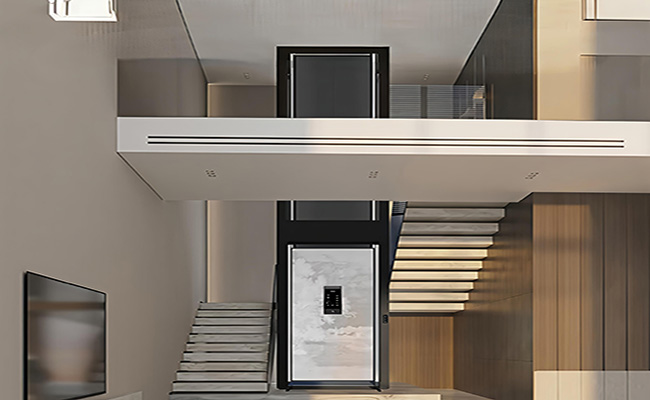
This article provides an objective and comprehensive discussion of the home elevator installation process from both theoretical and practical perspectives, giving you a clear understanding and plan for the specific steps involved in installing a home elevator. This will allow you to prepare in advance and coordinate with your schedule when planning your current or next project.
What is Home Elevator
A home elevator is a convenient tool installed in a residence to allow people to travel between different floors. Its features include a compact structure, flexible installation requirements, design specifically for single-family homes, strong private ownership, and comprehensive customization options. A home elevator can make your life simpler, saving both physical effort and time. Additionally, it’s an excellent assistive device for family members with mobility issues, increasing their independence. Compared to other equipment, it can also add value to your home, making it a very good investment.
Main Home Elevator Type
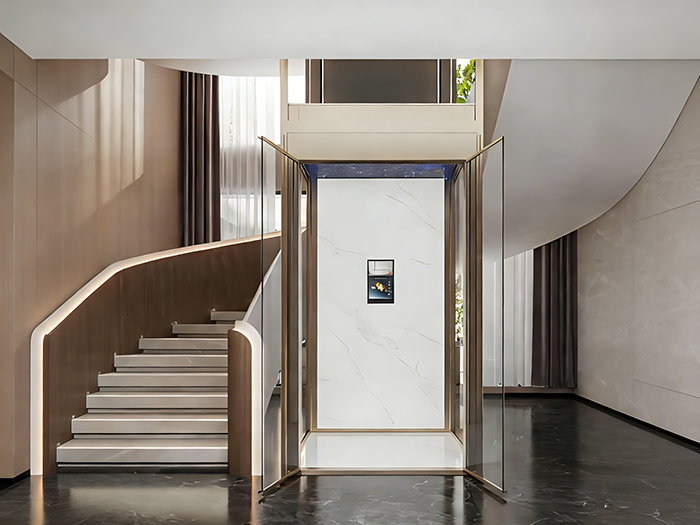
Currently, the most popular types of home elevators on the market are hydraulic elevators and traction elevators, which together account for approximately 70% of the overall market share. From design to performance, these two types of elevators can meet all your needs. Therefore, this article mainly describes the installation process of hydraulic and traction elevators.
The Installation process of Home Elevator
The following details the installation process for the main types of home elevators: hydraulic elevators and traction elevators.
Hydraulic Elevator
Step 1: On-site preparation, technical briefing, and material inventory
Before installing a home elevator, site preparation is necessary. The site must be clean and tidy, free of debris. The walls, floor, and ceiling at the installation location must be able to support the weight of the home elevator when fully loaded. If the supporting capacity is insufficient, reinforcement will be required.
Conduct an on-site survey, measure the installation height and the conditions of each floor. If there is a hoistway, survey its dimensions and load-bearing capacity. If a pit is required, prepare the pit dimensions, ensure the pit excavation is completed, and prepare for and carry out waterproofing. If the home elevator needs to pass through the ceiling, the ceiling must be cut to create a suitably sized opening for the elevator to move up and down. The area around the opening should be kept clean. If the elevator needs to reach and pass through the top floor, check if there is sufficient space on the top floor.
Determine the orientation of the elevator door at the installation site, the direction in which the elevator door opens, the availability of a stable 220V or 380V power supply for on-site construction, and the storage location for installation tools and all elevator components.
The skills required for elevator installation include basic electrical knowledge for wiring, the ability to read installation drawings, material welding and cutting, wall drilling, testing of safety devices, complete system testing after elevator installation, adjustment of safety devices, precision adjustment of guide rails, and tension adjustment of steel ropes.
The materials should be checked and inventoried. First, verify that all the elevator components are complete. Then, check that all the installation tools and auxiliary materials needed for the installation process are available. The necessary drawings, instruction manuals, and electrical configuration diagrams should also be checked.
Step 2: Shaft layout marking and guide rail bracket installation
If a hoistway is present, the hoistway must be marked out and surveyed. Tools are used to determine the elevator’s centerline, which helps determine the installation position of the guide rails, the locations where bolts are needed to fix the guide rail brackets, and the installation height and stopping points on each floor. After drilling the holes for the guide rail bracket fixing points, the guide rail brackets can then be installed.
Step 3: Guide rail installation and adjustment
After the guide rail brackets are installed, the guide rails can be installed. Generally, one guide rail is installed first, followed by the other. It is important to ensure that the installation height is consistent, the spacing is appropriate, and the rails are securely fixed.
Step 4: Hydraulic system installation (pump station, cylinders, and piping)
For installations requiring a pit, the hydraulic cylinder is installed in the pit beneath the elevator car, with the cylinder axis perpendicular to the horizontal ground and fixed in the pit. For installations without a pit, the hydraulic cylinder is typically integrated into the elevator car chassis, with the cylinder rod connected to the car, and the cylinder parallel to the guide rails. Then, the pump station is installed. If there is a hoistway, it can be installed next to the hoistway; if there is no hoistway, it is usually integrated with the hydraulic cylinder into the bottom or top frame of the elevator car. After installing the pump station and hydraulic cylinder, connect the pump station and cylinder with piping, connect the pump station’s electrical circuits, and then fill with oil and test the hydraulic system.
Step 5: Car assembly and door system installation
Install the base plate horizontally above the guide rails and hydraulic cylinders. Then, install and secure the side and rear panels of the elevator car onto the base plate. Next, install the top plate and ceiling, including lighting and ventilation. Then, install the control cabinet and the elevator car control panel. After that, install the landing doors and car doors, followed by interlocking system debugging and opening/closing tests of the doors. Finally, perform a load test of the hydraulic system with the elevator car.
Step 6: Electrical system installation and wiring
If there is a machine room or a suitable location for the main control box in the hoistway, the control system is installed there. For systems without a machine room or hoistway, it is integrated into the bottom of the elevator car. Then, the power supply lines, control signal lines, pump control lines, and lighting and ventilation lines are wired according to the elevator’s wiring diagram, including grounding. Finally, testing is performed, including testing the elevator’s ascent and descent, door opening and closing, lighting and ventilation, and simulating emergency stops during power failure.
Step 7: Safety device installation and commissioning
Install door lock safety switches, perform safety tests on the car doors and landing doors to ensure that the doors cannot be opened during elevator operation and that the elevator doors open and close normally. Install safety brakes or buffers and test the safety brake triggering speed to prevent the elevator car from descending too quickly. Install hydraulic system protection devices and simulate abnormal oil pressure to ensure the elevator stops normally. Install overload protection devices, simulate overloading to trigger an alarm and stop operation, ensuring the elevator operates with a reasonable load.
Step 8: Overall system debugging and trial run
The overall commissioning of the home hydraulic elevator must be carried out after all the above installation steps are completed. During testing, non-installation personnel should not be present on site. Before the overall test, a thorough inspection should be performed to check the guide rails and elevator car, ensure all fasteners are tightened, verify that the cylinder’s dust seals are intact, the hydraulic oil is at the standard level, the pipe connections are secure, there are no oil leaks or kinks in the pipes, the power supply phase sequence is correct, and the emergency stop, door locks, safety brakes, and limit switches are all connected to the safety circuit and properly grounded.
Then, the hydraulic system is tested and adjusted. The cylinder is slowly raised, stopped, and then raised again, repeating this process several times to purge air from the pipelines. The relief valve is adjusted to set the hydraulic system pressure to the appropriate level: the elevator should rise smoothly under its rated load. The lowering throttle valve is adjusted to ensure a smooth descent speed and no impact during stopping.
Adjust the control cabinet parameters, determine the number of floors, the height of each floor, the positions of the upper and lower limit switches, and the speed parameters. Manually test each emergency stop button, door lock, upper and lower limit switches, and maintenance switch to ensure that the elevator stops running if any of them are disconnected. Then perform leveling adjustments, testing multiple times to ensure that the elevator car floor and the outside floor are stably at the same level when the home hydraulic elevator stops at each floor.
The elevator’s overall operation is tested and adjusted. Multiple tests are conducted with the elevator empty throughout its full travel range to ensure smooth operation without abnormal noises, vibrations, or shaking, and to confirm there are no oil leaks. Simulated load tests are also performed multiple times to ensure effortless starting, stable upward travel speed, and that the hydraulic oil temperature remains within the normal range.
Emergency power outage tests are required to ensure that the elevator operates smoothly to the nearest floor and opens its doors during a power failure. Manual hydraulic oil release tests are also necessary to ensure that in the event of a power outage, system failure, or solenoid valve malfunction, the elevator can be manually lowered to the nearest floor and the doors opened. Emergency alarm and one-touch emergency call systems will be simulated and tested to ensure that passengers trapped inside the elevator can contact external personnel.
Step 9: Acceptance and handover
Once the above installation and commissioning are complete, and the elevator is running smoothly, the door system is functioning correctly, all safety devices are effective, and there are no oil leaks or noticeable noise, the elevator can be accepted. The electrical schematic diagram, the hydraulic schematic diagram of the hydraulic system, the overall user manual, the maintenance and service schedule, and other relevant materials should be handed over to the customer.
Traction Elevator
Step 1: Site preparation, sample frame erection, and baseline marking
The preliminary preparation work for installing a traction elevator (from site selection to limit marking) and the precautions are the same as for hydraulic elevators, therefore they will not be discussed in detail here.
Step2: Shaft layout marking and Installation of the column/frame system
Similarly, if a traction elevator is chosen for installation in a shaft, it is necessary to mark and lay out the shaft in advance, reconfirming the shaft dimensions and location to avoid rework due to discrepancies. Additionally, the elevator height and the stopping positions on each floor must be determined, allowing for the marking of the rail support and elevator component installation locations within the shaft, facilitating subsequent work.
If there is no elevator shaft, then marking and laying out the shaft is unnecessary, but additional columns or a frame system must be installed to replace the load-bearing function of a traditional elevator shaft. Sufficient safety measures must be taken, and after installation, the verticality of the frame or columns must be carefully checked.
Step 3: Guide rail bracket installation, guide rail installation and adjustment
Install the guide rail supports and guide rails according to the positions determined in the previous step, and use a laser or plumb line to calibrate their positions to ensure there are no deviations. Additionally, use high-strength bolts to secure the guide rail joints, ensuring only millimeter-level deviations. Finally, check that the guide rail supports and guide rails are securely fastened.
Step 4: Car frame assembly, counterweight frame installation
The traction machine is hoisted onto the top frame of the elevator car, and the centerline of the traction sheave is aligned with the centerline of the elevator car. Then, the steel ropes are threaded and connected in sequence to the elevator car, the traction sheave, the counterweight or tensioning sheave, and the rope end plate. The steel ropes are then fixed and adjusted. The ropes should be threaded one by one, ensuring that they are not twisted, do not jump out of the grooves, and do not touch the frame during installation. When the brake is applied and manually released, the elevator car should move slowly. After resetting, the brake should immediately engage. For installations without a pit, a side counterweight needs to be installed, and the top frame should not contact the guide rails during installation.
Step 5: Machine room traction machine installation, wire rope installation
For elevators with a machine room, the control cabinet is installed in the machine room. For elevators without a machine room, the electrical control cabinet should be placed in a safe location on the ground floor or near the elevator car, and securely fastened.The electrical control cabinet housing should be properly grounded. Then, wiring is performed. After installation, the power lines are connected to the main controller in the control box, the traction machine is wired to the inverter inside the control box, and the motor brake wires are connected in parallel to the control circuit. A fuse or circuit breaker is added at the power input terminal, and the emergency stop button is connected in series with the main circuit. Wiring for the car buttons and call buttons, door operator and door lock wiring, limit switches, sensors, and control board wiring are then completed.
Step 6: Electrical and control system installation and wiring
Next are the control system and power system. First, install the control cabinet, placing it in the equipment room or hoistway. Then, install the variable frequency drive system to be used inside the control cabinet and complete the wiring. Secondly, simultaneously install the electrical control system, leveling device, selector, control panel, and floor indicator lights. Connect their power and control lines according to electrical specifications to ensure proper operation.
Step 7: Safety device installation and commissioning
The safety devices of a traction elevator include emergency power supply, buffers, overload protection and electrical safety devices, limit switches, safety light curtains, automatic leveling in case of power failure, safety brakes, and door lock systems. These are installed at the top and bottom of the elevator shaft and in the elevator car’s operating area. After installation, wiring is performed to connect them to the control system and safety circuit, allowing them to operate together according to instructions during elevator operation.
Step 8: Overall system commissioning and trial run
After the entire installation is complete, a testing phase is required. This includes both partial testing and overall system testing.
Local testing: This primarily tests whether the electrical system, safety devices, door system, ventilation, and lighting are correctly connected and functioning properly, and whether the steel cables, belts, and frame are undamaged and securely fixed. It ensures that the electrical components in the electrical system, as well as the speed control, leveling system, control panel, and call buttons, are responsive, and that the main power supply voltage is maintained within the range of 380V ± 7%. In addition, functional, structural, and interlock tests of the safety devices are required.
Overall testing: Overall testing includes both no-load and load conditions. No-load testing: This tests the elevator’s smooth operation, noise level, and vibration. Load testing: This determines the elevator’s performance under both rated load and overload conditions, ensuring the platform accuracy is within the acceptable error range (±5mm).
Step 9: Acceptance and handover
The final step is acceptance and handover. The buyer will provide you with a product certificate of conformity, product instruction manual, etc. If the buyer is also the installer, they will provide the construction certificate and inspection report. After you confirm that everything is in order and the handover is complete, the buyer or installer will inform you of the elevator’s precautions and maintenance procedures.
The Installation Cost of Home Elevator
The installation cost of a home elevator mainly includes two aspects: civil engineering costs and installation fees. Civil engineering costs depend on whether the chosen elevator requires a shaft, machine room, or pit; if not, the cost will be lower.Installation costs are influenced by the elevator’s structure; the more complex the structure, the higher the cost. Between hydraulic and traction elevators, hydraulic elevators have a more complex structure, therefore their installation costs are generally 20%-40% higher.
Additionally, installation costs are also affected by the installation location and the number of floors. Installing a home elevator is a job that requires professional knowledge and skills, and there may be differences depending on the country and region. Therefore, if you want to know the specific installation costs, it is recommended to choose a professional elevator company that can provide you with a detailed price list.
The following are the estimated home elevator installation costs for 2023-2026, based on global average data, and are provided for reference.
| 2023 | 2024 | 2025 | 2026 | |
| Low-end/Basic | $5000-15000 | $5000-15000 | $7000-20000 | $8000-18000 |
| Intermediate/Moderately complex | $10000-25000 | $10000-30000 | $15000-30000 | $15000-30000 |
| Complex renovation | $25000+ | $30000 | $30000 | $30000-40000 |
If you want to know the price of home elevator equipment, you can read How Much Does a Home Elevator Cost in 2026?
Conclusion
Installing a home elevator is the ideal accessibility solution, increasing convenience while adding value to your home and perfectly enhancing your lifestyle.
If you’d like to learn more about home elevator installation details, we highly recommend Anter Home Elevator Company. They offer free consultations and on-site services, providing a one-stop solution from site selection to complete installation. Additionally, Anter has a dedicated showroom where you can personally experience their sample elevators. Anter is committed to comprehensively assisting in the large-scale improvement of accessibility for people with mobility impairments.
FAQ
How long does it take to install a home elevator
The theoretical average time to install an elevator is 1-8 weeks, but the actual installation time may be only a few days, depending mainly on the site preparation and the type of elevator chosen.
What factors do I need to consider when installing a home elevator?
Installing a home elevator requires considering numerous factors: First, consider the purpose: Is it for the convenience of elderly family members, people using wheelchairs, or to add a touch of luxury to the home? Second, consider the installation location and space: Is it indoors or outdoors, next to the stairs, in the basement, living room, bedroom, etc.? Third, determine if the house structure can be modified, such as excavating a pit or altering the floor structure. Fourth, determine the type of home elevator needed; you can refer to the article on types of home elevators for specific options. Fifth, confirm that the installation conditions comply with local laws and regulations.
If you would like to learn more about the factors to consider when installing a home elevator, you can read the article below:
5 Factors to Consider When Adding a Home Elevator
How to find a home elevator installation companies?
You can find a suitable home elevator installation company through the following methods:
(1) Online search: Search on websites such as Google and Alibaba.
(2) Recommendations: Get recommendations from friends or elevator companies you’ve previously used, or ask your home developer or interior designer.
(3) Trade shows and industry events: Attend elevator exhibitions and events organized by the elevator industry.
How to do the home elevator maintenance?
After installing a home elevator, its maintenance is crucial. Home elevator maintenance includes two aspects: daily maintenance and professional maintenance.
Daily maintenance can be performed by the homeowner themselves and includes checking for obstacles at the elevator entrance, inspecting visible parts for damage, performing routine cleaning, and avoiding exceeding the rated load capacity.
Professional maintenance, ideally performed annually, should be carried out by a local professional maintenance company or the elevator manufacturer. This includes cleaning, lubrication, checking safety devices, and software upgrades. Additionally, after purchasing the elevator, the manufacturer will provide you with a detailed maintenance manual and reports, which you can use as a guide.
What are the installation dimensions for this home elevator?
The table below shows common installation dimensions for home elevators. For specific dimensions, please consult with professionals and companies.
| Car Dimensions | Width: Approx. 80 cm – 110 cm Depth: Approx. 90 cm – 140 cm Height: Approx. 200 cm – 250 cm |
| Shaft Dimensions | Width: Approx. 120 cm – 160 cm Depth: Approx. 140 cm – 170 cm Height: Determined by building floor height |
Where can residential elevators be installed?
The installation location can be near indoor stairs, outdoors, in a closet, on a balcony, in a garage, in the basement, in a room corner, in a bedroom, in the living room, near the bathroom, in the middle of a room, or any other suitable location.
What are the regulations for installing elevators in residential buildings in the US?
First, the elevator must comply with the ASME A17.1/CSAB44 standards for elevators, and where applicable, with the relevant provisions of the American ADA. However, if installed in a private residence, a state-issued operating permit and compliance with related administrative regulations are not required.
Are home elevators suitable for all types of houses?
No, most home elevators are suitable for buildings with 2 to 7 floors, provided there is sufficient installation space and the building structure can support the elevator’s weight.

 English
  Arabic
  Vietnamese
  German
  Malay
Malay  Thai
Thai