
Introduction
When you’re looking to add accessibility features to your home, you might think of a stairlift. But you’re not alone in this thought; most people would probably think of a stairlift first, considering it a convenient and inexpensive option. Undeniably, it’s an ideal accessibility device that can help you, but it’s not the only option, nor is it suitable for all situations. This article will guide you when you can’t use a stair lift. Here, we’ve detailed all the alternatives currently available to stair lifts so you can make the most suitable choice.
Why Don’t Recommend to Use The Stairlift?
Low Load Capacity
Stair lifts can only be used by one person at a time and cannot be used to move items. There are limitations on the weight capacity of a single person, generally between 150KG and 200KG, which is not friendly to larger family members. Furthermore, the electric seat, a key component of the stair lift, has width limitations, which can cause a feeling of compression for the user during ascent and descent, resulting in low comfort and a poor user experience.
Occupy Much Space
A stair lift consists of a track and seat installed along the edge of the stairs, with the seat moving up and down along the track via a motor. Stair lifts occupy space in the stairwell. In homes with narrow staircases, using a stair lift can render the stairs unusable, affecting the movement of other family members.
Low Efficiency
While stair lifts can help people with mobility issues avoid climbing stairs, they don’t offer complete convenience. Wheelchair lifts can only move between single floors and cannot reach the third floor or higher in one go. Even if stair lifts are installed along the edge of every staircase in a home, the need to transfer midway is still unavoidable, resulting in low efficiency and high cost. Furthermore, stair lifts are completely unsuitable for people who cannot walk independently and cannot be used independently.
Difficult to Disassemble
Stair lifts are not simply placed on stairs; they require fixing with metal brackets and bolts. For safety, multiple permanent anchor points are used during guide rail installation, making removal difficult. Even if removed, holes are left, disrupting the original staircase design and reducing aesthetics. Furthermore, many stair lifts require on-site surveys for customization and feature unique installation styles to fit the layout, thus lacking a standard dismantling procedure.
Low Scope of Application
Stair lifts are most commonly used for straight staircases. For spiral, curved, or other irregular staircase designs, customization is required. This customization increases the cost of the stair lift and, in special cases, may necessitate modifications to the staircase or walls, disrupting the original home layout. Therefore, stair lifts are not a widely applicable product.
High Failure Rate
Stairlifts rely on batteries and motors for power, and prolonged use can lead to mechanical failures and battery depletion. Therefore, regular replacement of the elevators is necessary, which is cumbersome, and the long repair time affects daily usability.
The Stairlift Alternatives
Home elevator
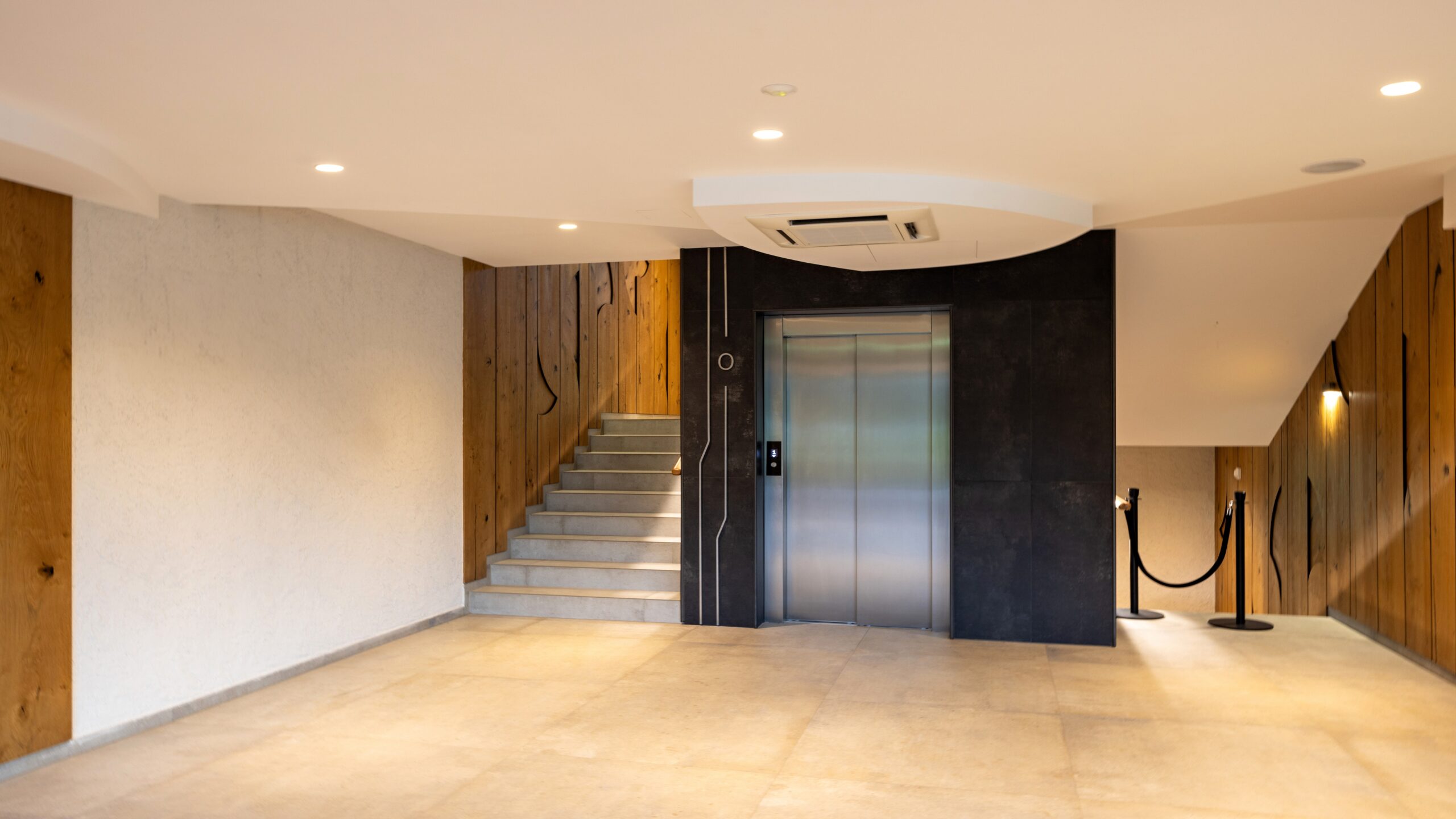
Home elevators are convenient facilities designed specifically for accessibility within a home. They are typically compact and space-saving, designed for single-family homes, allowing family members to move freely between different floors.
Advantages: Home elevators offer high safety and comfort, and allow for quick and smooth travel to the desired floor without transfers or bumps. Furthermore, home elevators are customizable products, with options for everything from shape to cabin finishes. Choosing a home elevator will not only complement your existing home style but also enhance the aesthetics of your residence due to its customizable features.
Home elevators are also an excellent tool for aging in place, assisting seniors with going up and down stairs while also helping them transport household items such as vacuum cleaners, chairs, and washing machines, thus enhancing their independence. The elevator also prevents falls and injuries that can occur when elderly people use stairs, improving overall safety in the home.
Currently, there are various types of home elevators available on the market, such as hydraulic elevators, traction elevators, and vacuum elevators. Each type can be customized to meet your specific needs.
Application scenarios: Home elevators are suitable for multi-story residences such as villas and duplexes, typically ranging from 2 to 7 floors. They are suitable for both new and existing buildings.
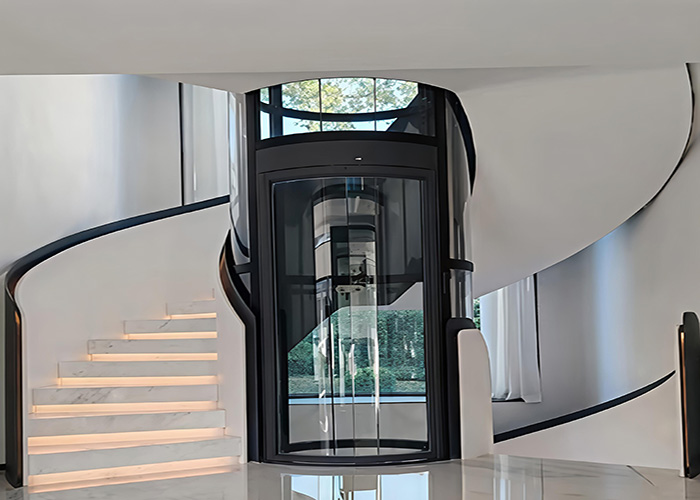 Home elevator
Stair Handrail
Stair railings are safety devices installed on one or both sides of a staircase to support people going up and down the stairs, increasing safety and preventing slips and falls. They are typically made of stainless steel and solid wood.
Advantages: Stair railings can improve stair safety, reducing the risk of falls and injuries for the elderly, children, and people with mobility issues when going up and down stairs. Additionally, stair railings also serve as decorative accessories, available in various colors and shapes, adding aesthetic appeal to a home.
Disadvantages: Stair railings are merely an aid for going up and down stairs and do not solve the difficulties faced by people with mobility issues or those who require wheelchairs. Furthermore, defective or aging stair railings are often difficult to detect and can cause injuries to users. In some special building conditions, it is impossible to permanently fix the stair railings, thus posing a significant potential risk.
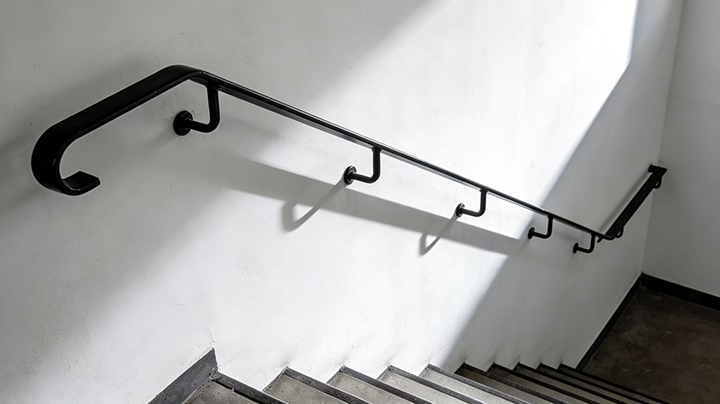
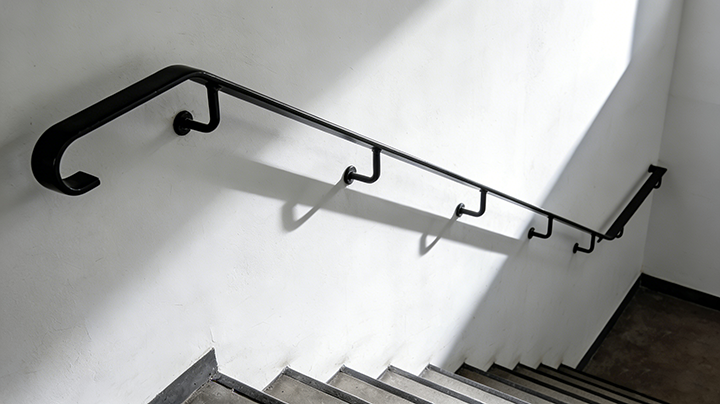 Stair Handrail
Applicable scenarios: Suitable for all types of buildings, including indoor and outdoor spaces, and especially ideal for families with elderly people and children.
Platform Lifts
Inclined Platform Lifts
An inclined platform lift is an assistive device installed on the side of a staircase, resembling a “flying carpet” with foldable sides. Unlike vertical platforms, inclined platforms travel along the direction of the stairs, rather than moving vertically up and down. Inclined platform lifts are similar to stairlifts, but while stairlifts have users sitting on a motorized seat, inclined platforms have no fixed seat and can accommodate wheelchair users or those standing on the platform.
Advantages: Suitable for families with wheelchair users who have a limited budget. Highly adaptable and can be installed on straight staircases, folding staircases, and spiral staircases.
Disadvantages: It takes up space on the staircase, which can affect the usability of smaller staircases. The riding experience is poor; the semi-enclosed space may cause fear and dizziness in elderly people and children during use.
Applicable scenarios: Renovations of older houses with straight staircases, requiring a functional, mid-range budget solution for accessible mobility via a ramp.
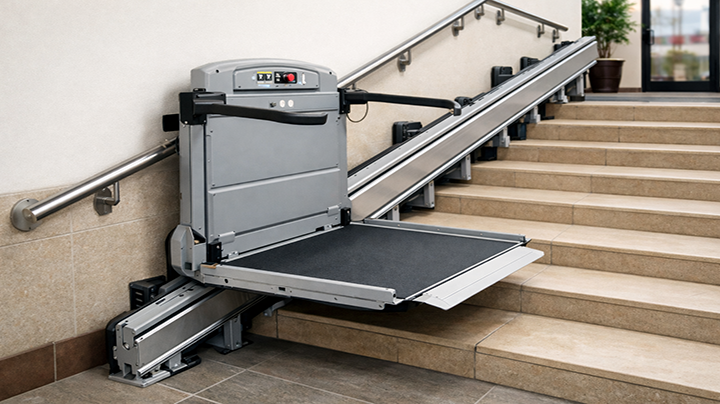 Inclined Platform Lifts
Vertical Platform Lifts
A vertical platform lift is a small electric lifting device in which the platform moves up and down along a vertical track. It is commonly used to transport wheelchairs and elderly people with mobility issues and can be installed indoors or outdoors.
Advantages: Allows wheelchair users to move up and down easily and independently without assistance from others, occupies minimal space, suitable for narrow homes, quick installation, short construction period, no need for complex civil engineering modifications, and low cost, generally lower than home elevators.
Disadvantages: Slow operating speed, the riding experience is generally not as good as a home elevator, the design is industrial and not aesthetically pleasing, and there is some mechanical noise during operation.
Suitable scenarios: Families with limited budgets who still require vertical access, temporary use, short-term use, and situations where older homes cannot be renovated to install a home lift.
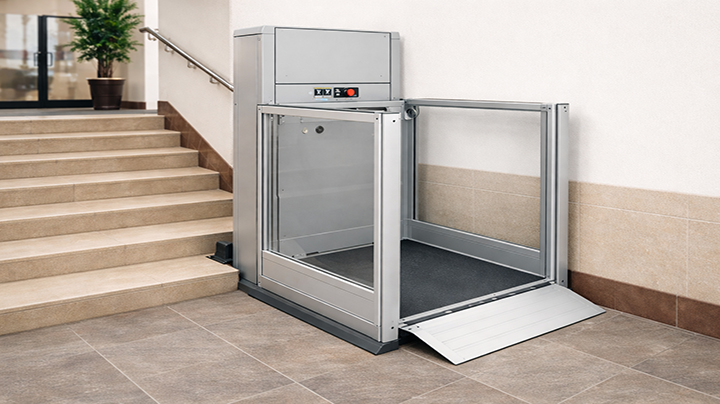 Vertical Platform Lifts
Ramps
A ramp is an inclined plane that facilitates passage for wheelchairs and walkers. Ramps are typically used for short inclines, both indoors and outdoors.
Advantages: Simple to construct, does not require electrical equipment, uses durable materials, has low maintenance costs, and is suitable for individuals with mild mobility limitations.
Disadvantages: It requires a large amount of space and a sufficiently long slope to ensure a safe gradient. It can only solve problems involving small elevation changes and is not suitable for higher floors or long staircases.
Applicable scenarios: Suitable for small steps of 1 to 2 levels, outdoor use with low spans, temporary use, and short-term, low-budget applications.
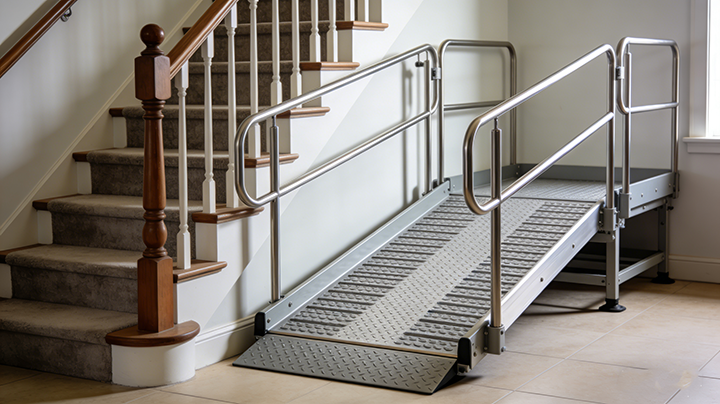
 Ramps
RampsPortable Stairlifts
A portable stairlift is a mobile, electrically powered device for transporting people, which requires manual operation with assistance from a caregiver to help elderly individuals go up and down stairs.
Advantages: Low price, low initial investment, low cost, no need to modify the stairs, can be used anytime, can be folded away when not in use, highly flexible, suitable for rental properties and short-term use.
Disadvantages: It cannot be used independently by the elderly, its safety depends on the operator, it requires someone to operate it, it is not suitable for long-term use, and the ride experience is generally poor due to noticeable vibrations.
Suitable scenarios: Short-term and temporary care use, for renters, and for those who do not plan to modify their home staircases.
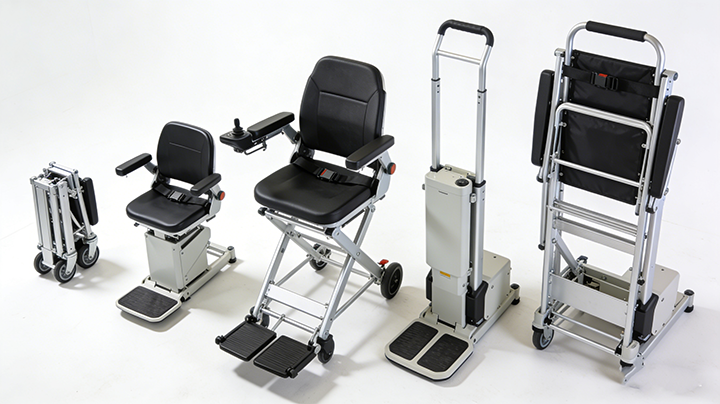
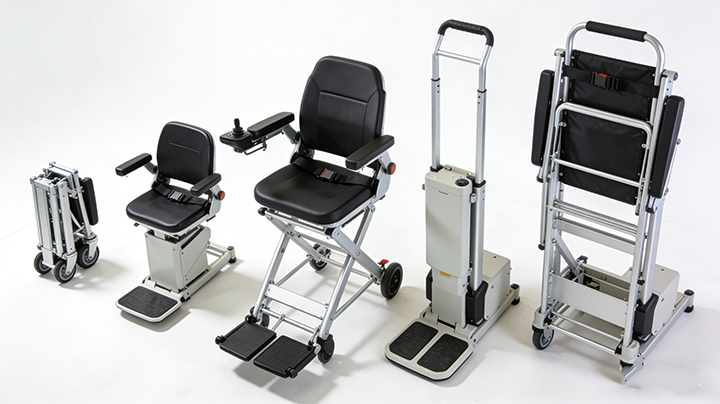 Portable Stairlifts
Key Factors to Choosing a Stairlift Alternative
First, consider the user’s mobility: whether they need a wheelchair, whether they rely on walking aids, and whether they require assistance when going up or down stairs. If the user is completely dependent on a wheelchair, a solution that supports wheelchair use is necessary. If the user has good mobility, a smaller, more flexible device can be chosen.
Whether it’s for short-term needs or long-term elderly care, short-term overuse may favor the use of easily detachable and simple-to-install equipment solutions. For long-term use, however, the durability, maintenance costs, and stability of the equipment must be considered to ensure it remains usable for many years to come.
Budget and long-term maintenance costs are key considerations. Economic factors are crucial in the selection process; the initial purchase cost is only one part of the equation. Long-term maintenance costs must also be considered. While short-term equipment may be cheaper initially, its repair costs can be high, so a comprehensive cost analysis is essential.
The requirements include both safety and comfort. Safety encompasses equipment stability, emergency braking, anti-slip features, and safety protection measures for emergency situations such as power outages. Comfort considerations include whether the equipment’s seating is ergonomically designed, whether the equipment operates smoothly and quietly, whether it is easy and convenient to operate, and whether users feel uncomfortable or frightened during use.
Is the installation space suitable? The size of the installation space is also a factor affecting whether the equipment can be installed. This includes the width, length, and angle of the staircase, the space at the bottom, the slope and load-bearing capacity of the stairs, the structure of the staircase, and the load-bearing capacity of the walls, ceiling, and floor near the installation location.
Conclusion
Compared to other alternatives to stairlifts, we highly recommend choosing a home elevator, which offers a perfect combination of practicality and aesthetics. Installing a home elevator is a way to plan ahead for the future, increasing independence for elderly residents and demonstrating your care and concern for your family. It’s also a wise investment that can increase the value of your home.
To help you quickly find a suitable home elevator, we recommend Anter Elevator Company, a leading home elevator manufacturer from China, which can provide you with professional and customized services. Anter also has independent showrooms in China, and if you happen to be planning a trip to China, you are very welcome to visit and experience their products.
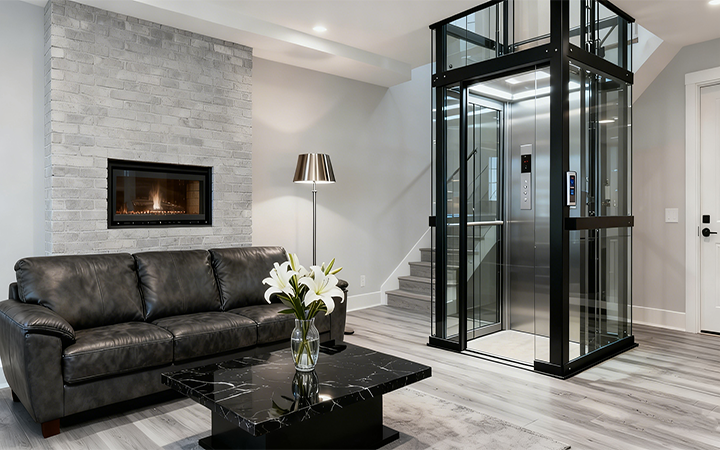
 Home eleavtor
Finally, whether you choose a home elevator or another solution, we hope the above information will be helpful to you.
FAQ
Will Medicare pay for a stair lift in a home?
Medical insurance does not cover the cost of stairlifts, as stairlifts are considered a type of home modification and not a medical device.
What are the best alternatives to a stairlift?
In terms of long-term safety and comfort, the best alternative to a stairlift is a home elevator.
In terms of short-term practicality and affordability, the best alternative to a stairlift is a vertical lifting platform.
Can a stair lift be used by wheelchair users?
Wheelchair users cannot use the stairlift independently; they require assistance from another person to transfer onto it.
Can a stair lift be installed on curved stairs?
Stairlifts can be installed on curved staircases, but it’s not recommended. Custom-made stairlifts for curved stairs are expensive, complex to install, and prone to malfunctions. Their cost-effectiveness is far lower than that of a home elevator.
Are stair lifts suitable for seniors with dementia or cognitive decline?
Stairlifts are not very suitable for elderly people with cognitive impairments; if they are to be used, more time and additional safety measures will be required.
 English
  Arabic
  Vietnamese
  German
  Malay
Malay  Thai
Thai