
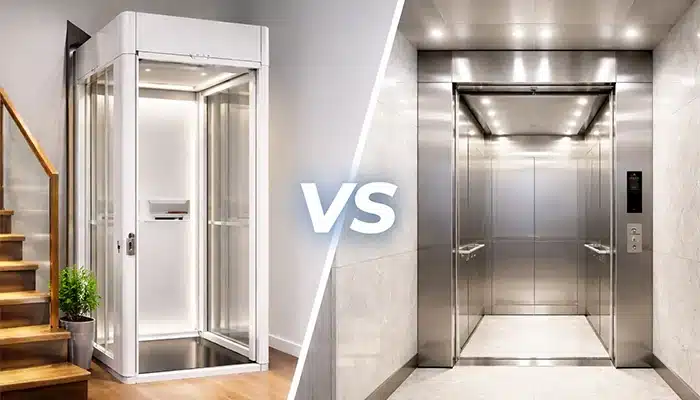
When communicating with overseas architects and contractors, a common point of confusion arises: residential and commercial elevators look very similar, so can they be used interchangeably?
Drawing on my practical experience managing various projects, this article clarifies the key differences between residential and commercial elevators, helping you select the right solution at the initial project stage and avoid potential compliance or operational pitfalls. Whether for private residential renovations or small-scale commercial space planning, these can serve as references for product selection.
Core Positioning and Use Cases
Many people immediately compare payload and speed, but positioning and use cases are the root cause of all the differences.
Home Elevator
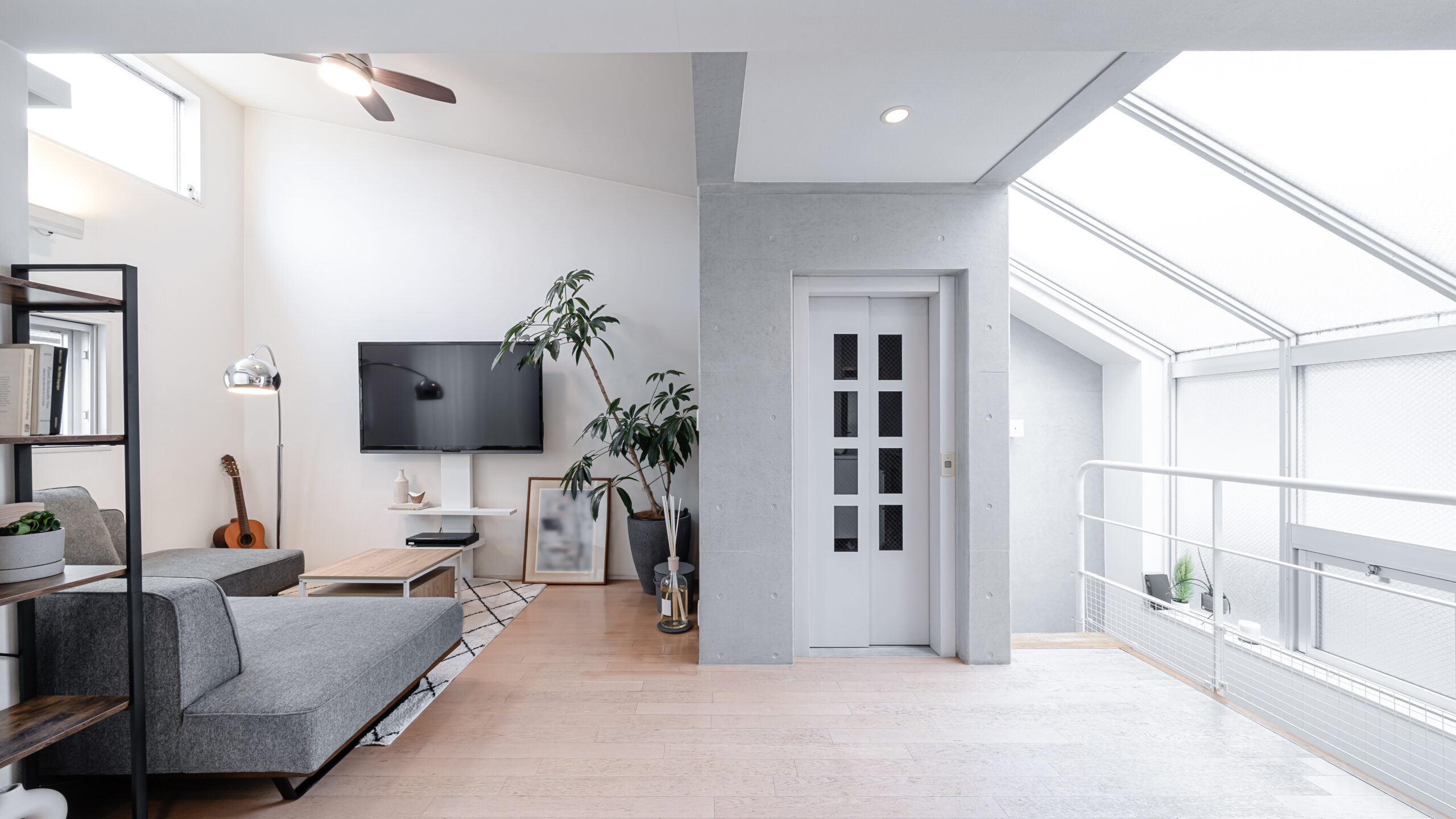
Home lifts are designed exclusively for use within high-end private residences. It serves single family members and a small number of visitors, with low frequency of use; it serves only this private property and is not open to the general public. Examples of such scenarios include detached villas, self-built duplex homes, and private vacation houses. Inside & Outside Home elevators typically serve 2 to 6 floors, though a small number of models can reach up to 8 floors.
Furthermore, the corresponding safe system, testing, and certification standards are also formulated based on private, low-frequency usage.
Commercial Elevator
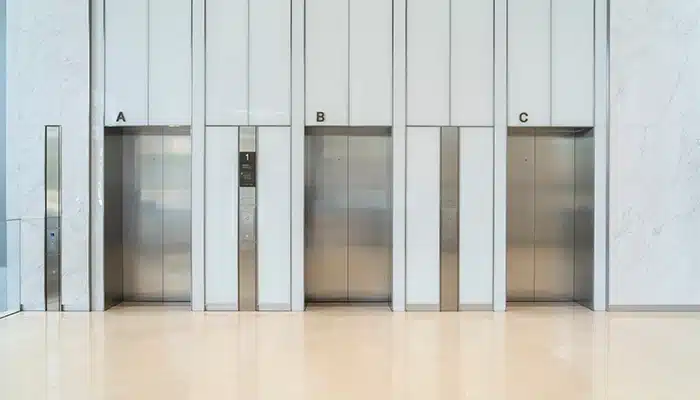
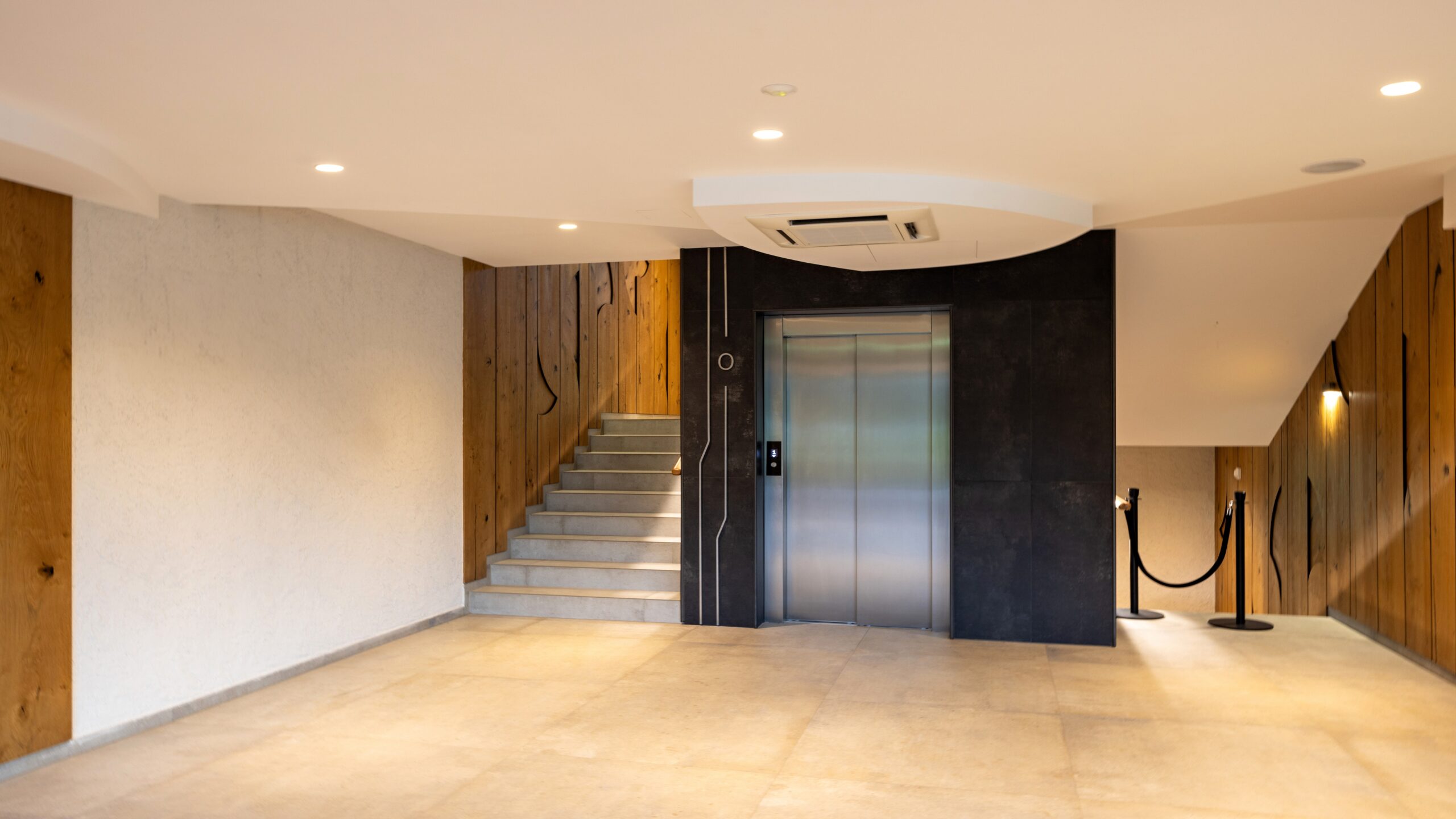
Commercial elevators are intended for use by the general public or large numbers of transient people. Shopping malls, office buildings, hotels, commercial guesthouses, and public buildings experience high foot traffic and frequent start-stop cycles, with users drawn from the general public. Consequently, the equipment must be designed to withstand continuous operation characterized by high frequency and heavy usage.
There are real-world examples of clients installing standard residential elevators in homestays open to the public. Once put into operation, the equipment was used by large numbers of passengers daily, causing it to wear out far more rapidly than originally anticipated. At the same time, it failed to pass local safety inspections; ultimately, the equipment had to be replaced entirely, causing both the budget and the project timeline to spiral out of control.
Comparison Table of Key Dimensions
| Comparison Dimensions | Home Elevator | Commercial Elevator |
| Target Use Cases | Private villas, self-built homes, and private vacation residences; not open to the public. | Hotels, retail shops, office buildings, public buildings, and commercial guesthouses/homestays. |
| Design usage frequency | Low-to-medium usage frequency; occasional daily family trips. | High-frequency operation; supports repeated start-stop cycles for large volumes of foot traffic throughout the day. |
| Load specifications | 250-30kg(one person to eight person) | Typically over 800 kg; for large-scale applications, it can reach 1,000–1,600 kg. |
| Running speed | 0.150.4m/s | It offers a wider speed range, starting at 0.5 m/s, with higher speeds for high-rise commercial buildings. |
| Safety certification standards | Standards specific to residential elevators (such as EN 81-41) | General commercial standards such as EN 8120 |
| Car interior configuration | Focuses on seamless integration with home décor, with a style that complements the interior design. | Wear-resistant and durable, designed for high-intensity public use. |
| Maintenance Cycles and Requirements | For household use with low frequency, maintenance should be performed on a quarterly or semi-annual basis. | Regulations mandate frequent, scheduled maintenance, and oversight is stricter. |
| Civil Engineering Requirements for the Shaft and Machine Room | Various customized home solutions are available, including options without a shaft or with a shallow pit. | The hoistway, pit, and machine room comply with mandatory commercial standards, leaving little room for modification. |
Note: This serves as a general industry reference; final compliance is subject to local project regulations and the manufacturer’s actual specifications.
Safety Standards and Compliance
This is the area where you are most likely to run into pitfalls. Residential elevators and commercial elevators are governed by two completely different sets of safety standards. Standards such as EN81-41 for electric home lifts are premised on the condition that they are restricted to private residences and not open to the public. Once the premises are converted for commercial use, these standards no longer apply.
Additionally, do not simply assume that components are interchangeable just because they all feature speed governors, safety gears, and power-failure rescue devices.
When handling export projects, I repeatedly remind my clients to confirm the property type—whether it is a private residence or a commercial space—at the very beginning. This directly determines the type of equipment to be procured; discovering this issue only after construction is complete results in extremely high rectification costs.
Usage Intensity, Wear and Tear, and Maintenance
Commercial elevators are designed to handle hundreds or even thousands of start-stop cycles daily. Domestic elevators are designed merely to meet the daily mobility needs of a household, so their mechanical components have lower fatigue redundancy. If a residential elevator is installed in a high-frequency commercial setting, even if the load capacity appears sufficient, components such as gears, steel belts, and brakes will age prematurely, and the likelihood of malfunction will increase significantly.
Conversely, installing commercial elevators in private villas is also quite common; however, the boundaries need to be clearly understood: it is certainly possible, but it entails additional costs. Commercial-grade elevator units and their associated civil engineering requirements are more demanding, leading to significantly higher costs for procurement, installation, and ongoing maintenance; furthermore, the structural conditions of many private residences may not meet the strict shaft and pit specifications required for commercial elevators.
Car Exterior and Hardware Configuration
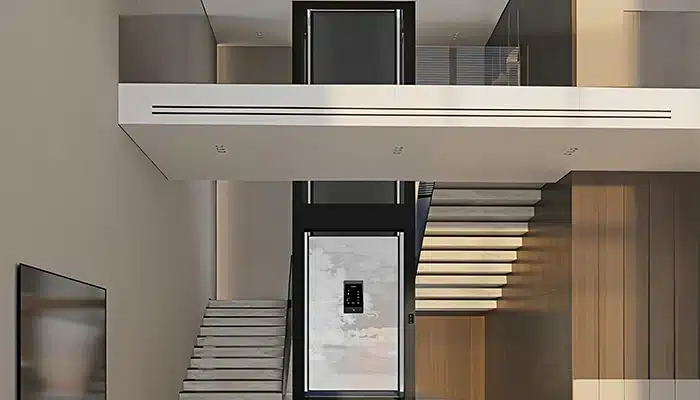
The design of home elevators prioritizes seamless integration with the home’s interior décor.
It offers extensive customization—such as glass cabins, various finishes, and ambient lighting—prioritizing residential aesthetics. In contrast, commercial elevators prioritize resistance to wear, scratches, and accidental impacts; their interior materials are robust and durable, with relatively limited options for decorative customization.
Differences in Civil Engineering Conditions
For commercial elevators, there are strict mandatory standards regarding shaft dimensions, pit depth, top-floor height, and machine room location, leaving little room for on-site modification.
Home elevator solutions now offer greater versatility, enabling configurations such as shallow pits, backpack-style frames, and installations that pass through floor openings without requiring a traditional hoistway—making them particularly well-suited for the renovation of existing villas and homes.
Residential Elevators vs. Commercial Elevators: Suitability for Different Projects
✅ Suitable for home elevators:
- Strictly private villas, self-built homes, or private vacation homes not open to the general public;
- Usage limited to family members and a small number of visiting relatives or friends;
- Sites with structural constraints require solutions that utilize a shallow pit and do not need a traditional elevator shaft.
✅ Suitable for Commercial Elevators
- Hotels, retail stores, office buildings, and commercial guesthouses/homestays that serve the general public;
- Situations where the equipment must withstand frequent, repeated start-stop cycles daily;
- Projects located in jurisdictions where local regulations explicitly mandate compliance with commercial elevator safety standards.
Important Note: While hosting a small number of visitors in a private villa falls within the permissible scope for home elevators, a home elevator can no longer be used once the property is converted into a commercial venue open to the public.
Some Tips for You After Building a Home Elevator
- The first step upon receiving a project is to determine the nature of the site—whether it is a private residence or a commercial space—as this dictates equipment selection and the applicable certification standards.
- Do not assume equipment is interchangeable based solely on load capacity and speed specifications; prioritize verifying the applicable standards required by local regulations.
- Before selecting the model, request the complete specifications and corresponding certification documents from the manufacturer for use in the project drawing submission and approval process.
- For modernization projects, it is essential to conduct on-site surveys of the hoistway, pit, and top-floor height, as commercial elevators impose much stricter constraints on civil works.
- Clearly explain the trade-offs to the owner in advance: Commercial-grade equipment offers superior performance but entails higher costs for civil works, procurement, and maintenance; furthermore, some older buildings cannot meet the structural requirements for commercial elevators.
Conclusion
After working on numerous projects, I have realized that the primary difference between residential and commercial elevators lies not in their physical size or appearance, but in their intended usage scenarios, operational intensity, and the mandatory safety regulations governing them.
Residential elevators are tailored for private, low-frequency home use, offering flexible installation options that complement interior aesthetics; in contrast, commercial elevators are designed for high-frequency public use, featuring greater safety redundancy but also demanding more extensive structural work and higher costs.
Do not assume equipment is interchangeable based solely on a comparison of superficial specifications. Confirming site characteristics during the project’s initial phase and matching them with the appropriate equipment can help avoid extensive rework and compliance risks later on.
Anter is a one-stop service supplier of home elevators. If you are unsure which type of equipment to select for your project, please contact us, and our engineers can conduct a preliminary project assessment for you.
FAQ
What Are the Different Types of Residential Elevators?
Based on the drive mechanism, there are currently four types of home elevators on the market: traction home elevators, hydraulic home elevators, screw-driven home elevators, and vacuum home elevators.
Based on materials, they can be divided into: glass home elevators and stainless steel home elevators.
Based on application, they can be divided into: villa home elevators, beach home elevators, outdoor home elevators, wheelchair home elevators, and home elevators for the elderly.
What Are the Power Requirements for a Residential Elevator?
Home elevators typically use 220V single-phase or 380V three-phase power, but the specific power requirements depend on the drive method and specific configuration.
How much electricity does a home elevator use?
The power consumption of a home elevator depends on the drive system, the number of trips, and the usage time. Our home traction elevator consumes approximately 1 kWh per hour, while a hydraulic home elevator consumes approximately 2 kWh per hour.
What is the average cost range for installing a home elevator versus a commercial elevator?
According to the latest data from 2026, the average price of installing a home elevator is approximately $20,000-$80,000, including equipment costs. Installing a commercial elevator is more expensive, costing approximately $80,000-$250,000.
Can I install a commercial elevator directly in my private villa?
It is technically feasible. However, you must verify whether your home’s structural conditions meet the strict requirements for a commercial elevator—specifically regarding the hoistway, pit, and machine room. Additionally, costs for procurement, installation, and ongoing maintenance would rise significantly, making such an upgrade unnecessary for most standard villa renovations.
Can a home elevator be used directly in a homestay?
A: It depends on local regulations. Since a homestay serving guests is considered a commercial establishment, the vast majority of countries do not permit the use of residential-grade elevators; doing so would raise compliance and safety issues. It is recommended to prioritize evaluating commercial-grade models.
How can I quickly determine whether a project requires a residential or a commercial elevator?
Two key factors take precedence over load capacity and speed specifications: first, whether the premises are open to the public; and second, which set of elevator safety standards is mandated by local regulations.
For export projects, can the certification obtained for a home elevator be used directly for a small-scale commercial project?
In the vast majority of countries, this is not permitted. Certifications for home elevators are strictly limited to private residential settings; commercial projects require certification under the relevant commercial standards.
How should the situation be handled if an older building lacks the necessary structural capacity but requires a commercial elevator?
A structural assessment is required first; in all likelihood, structural modifications to the shaft, pit, and top floor will be necessary. If the conditions for such retrofitting cannot be met, the overall plan will need to be re-evaluated.
 English
  Arabic
  Vietnamese
  German
  Malay
Malay  Thai
Thai