
Owning a home elevator has become an increasingly popular choice for families. It not only reduces the burden of going up and down stairs and makes your life more convenient, but also makes your home more beautiful and increases its value. In addition, home elevators are also a convenient auxiliary tool for elderly care at home in the future.
However, before purchasing a home elevator, we must first determine the installation location of the home elevator. Although the installation of home elevators is now very flexible, careful planning is still needed when choosing a suitable location.
This article describes the factors to consider before installing a home elevator and recommends several suitable installation locations, hoping to make your life more convenient.
Key Factors to Consider When Choosing a Location
Available Space
Confirm whether there is sufficient space inside the residence to install an elevator. Based on the smallest elevator, at least a 1m x 1m space needs to be prepared in advance, and the surrounding area must be free of obstacles to facilitate construction.
Request a professional to check if there is a suitable location within the residence for a well.
Structural Feasibility
If the elevator needs to be installed against a wall, please avoid critical locations such as load-bearing walls, load-bearing beams, and columns. Confirm the load-bearing capacity of the floor slab at the suitable installation location. If the load-bearing capacity is insufficient, reinforcement must be carried out before installation to avoid danger during subsequent operation.
The following is a table of load-bearing requirements for common types of home elevators, for your reference.
| Type | Floor Load |
| Traction Elevator | 300-500kg/㎡ |
| Hydraulic Elevator | 400-600kg/㎡ |
| Screw Elevator | 250-400kg/㎡ |
| Vacuum Elevator | 150-300kg/㎡ |
Accessibility & Convenience
Ensure the chosen installation location is convenient for daily travel. Especially when there are people with mobility impairments in the home, elevators should be installed in places that are easily accessible to them, so that they can easily reach the core living areas of the home, such as bedrooms, bathrooms, kitchens, etc.
Budget Impact
Budget is a very important consideration before choosing the installation location for a home elevator. If your budget allows, the elevator can be installed in any location, and we can customize it with concrete shafts, panoramic glass shafts, and high-end interior finishes. If your budget is moderate, prioritize locations that require minimal construction work, such as the middle of a staircase or a corner, where major demolition and alterations are unnecessary. If the budget is low, the amount of construction needs to be further reduced, and “zero modification” should be achieved as much as possible. The first choice is a location that does not require digging a pit, demolishing a wall, or moving pipelines.
Aesthetic Integration
When choosing the location for a home elevator, its harmony with the interior layout of the house should be considered. Installing a home elevator should enhance your home’s aesthetics, not diminish its original style.
Best Installation Locations
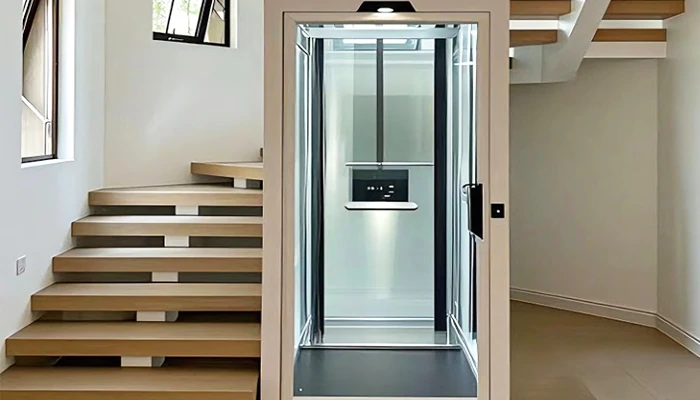
Interior Stairwell
Indoor stairwells are one of the most common installation locations for home elevators. Installing elevators in indoor stairwells has several advantages.
First, the indoor stairwell is an unused space, so choosing this location will not take up any additional space that has already been planned for the interior.
Secondly, the layout of this location is the most reasonable, with the stairs and elevator running parallel to each other, and the doors on the upper and lower floors aligned.
Third, it is easy to use. It is easily accessible to the elderly and children, and can be used by switching between stairs and elevators. Moreover, in the event of a fire or other safety incident, one can quickly evacuate via the stairs, making it a safe location.
Fourth, the structure at the staircase is strong. This location, close to beams and columns, distributes the pressure from the elevator to the main structure of the building, thereby reducing the stress on the floor slabs.
Fifth, installing it in an indoor stairwell is an aesthetically pleasing and high-end choice. It is recommended to make a glass shaft, which can make the elevator more transparent and allow natural light to pass through.
 Interior Stairwell
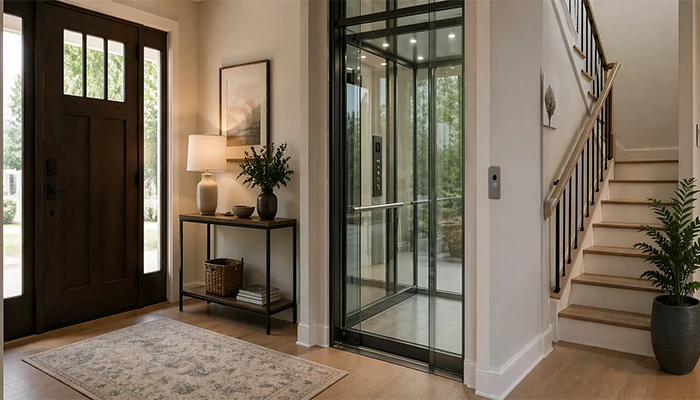
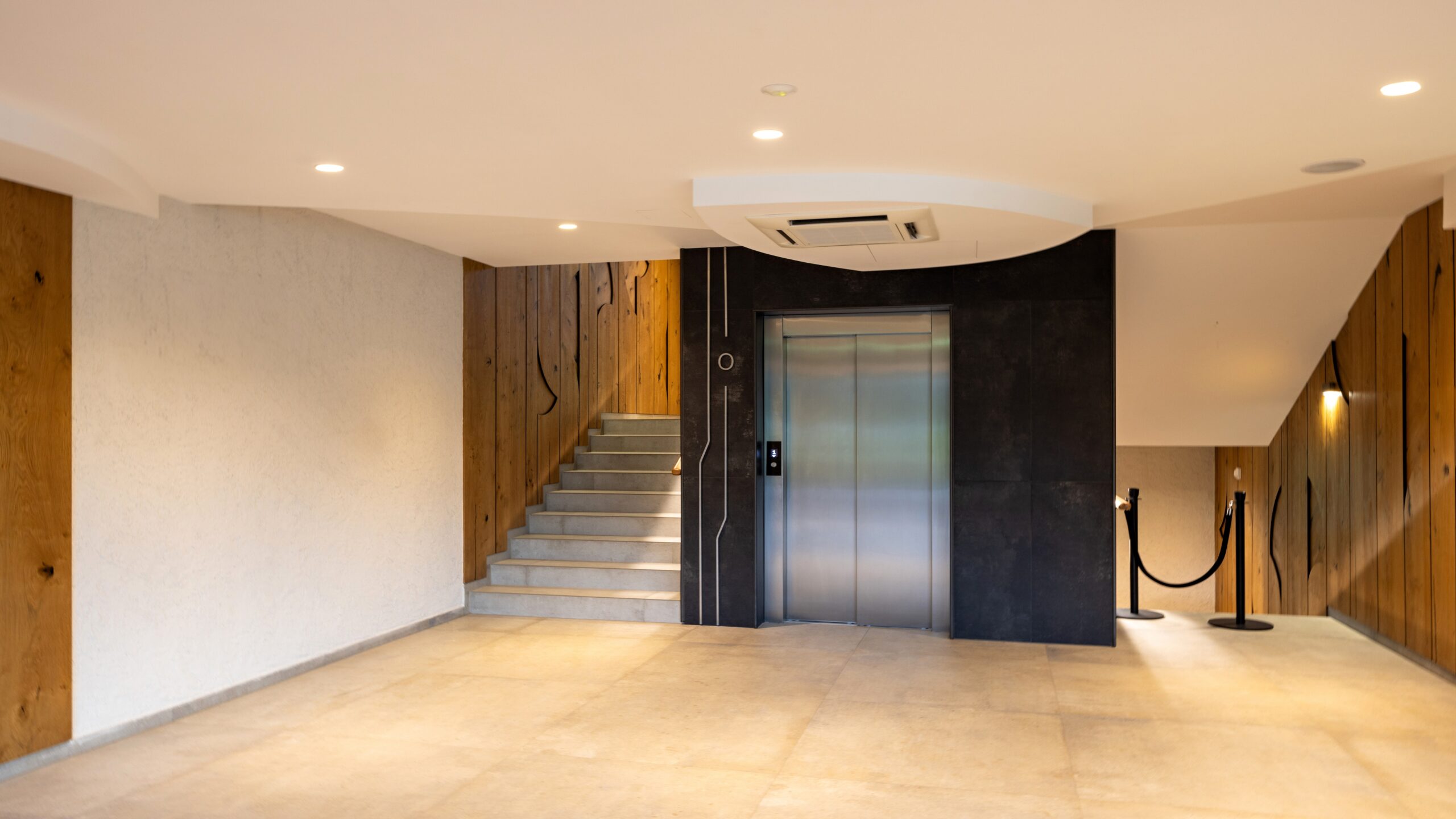
Near the Entryway
Installing an elevator near the entrance is an excellent choice when there are elderly people or children in the household. This location allows homeowners to easily return home or leave, and move items and strollers inside and outside the house.
Secondly, installing an elevator at the entryway of the villa can prevent guests from entering your private area when they visit, and it can also give guests a first impression of a high-end residence.
Finally, it does not affect the layout of the house. The entrance to a house is usually a transitional area with minimal furnishings, and installing furniture here will not affect the functionality or aesthetics of other living areas.
 Near the Entryway
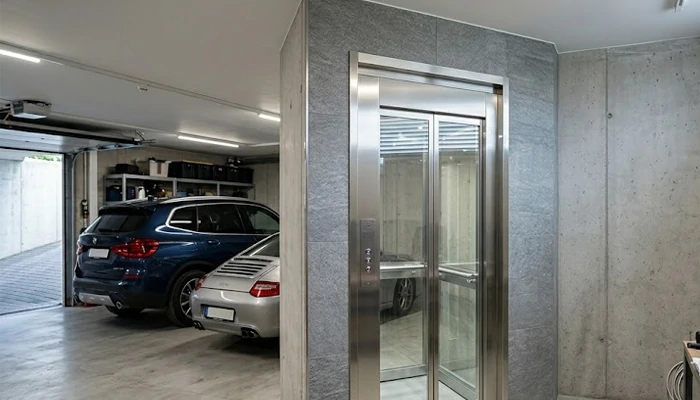
Garage Area
Install an elevator in the garage that connects directly to the interior of the house. Installed in this location, it eliminates the need to take a detour when driving home and you won’t get wet when it rains. It is a more suitable installation location for traveling with elderly people and children. In addition, installing an elevator in the garage is a symbol of high-end villas, which is both practical and luxurious, and is an added bonus to the house.
 Garage Area
Exterior Wall or Balcony
When indoor space is insufficient, it can be installed on an outdoor wall or balcony. Installed outdoors, the option of a sightseeing elevator allows for panoramic views of the garden and courtyard from the air. In addition, installation in this location requires minimal construction work, eliminating the need for demolishing walls, drilling holes, or maneuvering, making it ideal for installation in older houses and self-built homes.
 Exterior Wall or Balcony
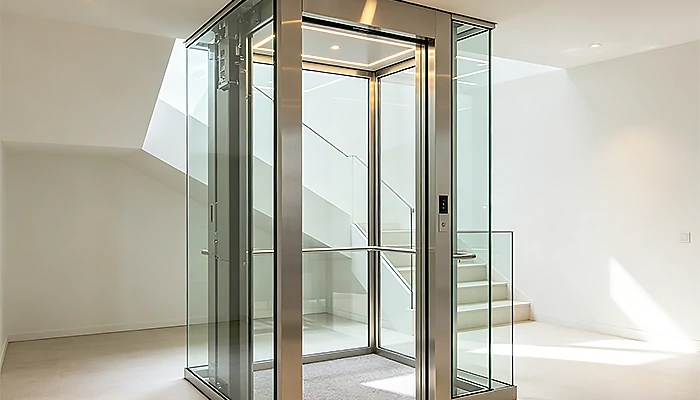
Basement
Installing an elevator in the basement to connect all floors of the house makes it much easier to move unused items to the basement. Basements are typically very sturdy structures, designed to withstand the pressure of elevator movement. The basement has ample ceiling height, making it suitable as the starting point for an elevator shaft.
 Basement
Inside a Closet
If you have a large cabinet in your home, congratulations! You have a space to install an elevator that won’t take up extra space and is very discreet. A home elevator can be designed to match the style of your cabinets and be completely hidden behind them, without affecting your decorating style.
The elevator inside the cabinet is like adding an extra physical sound insulation layer, which can isolate the noise of the equipment during operation. It also serves as a physical protective layer, preventing dust, dirt, and impacts.
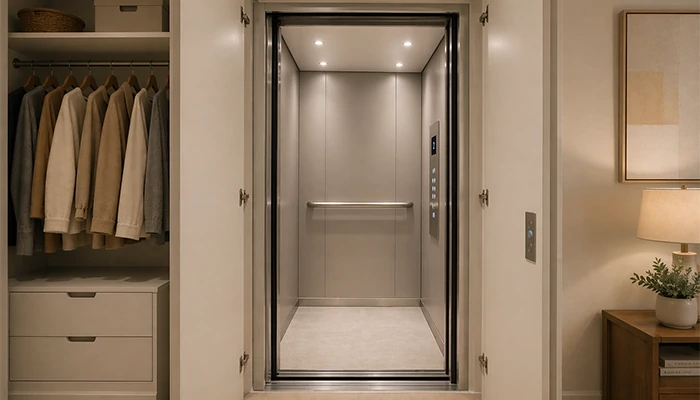 Inside a Closet
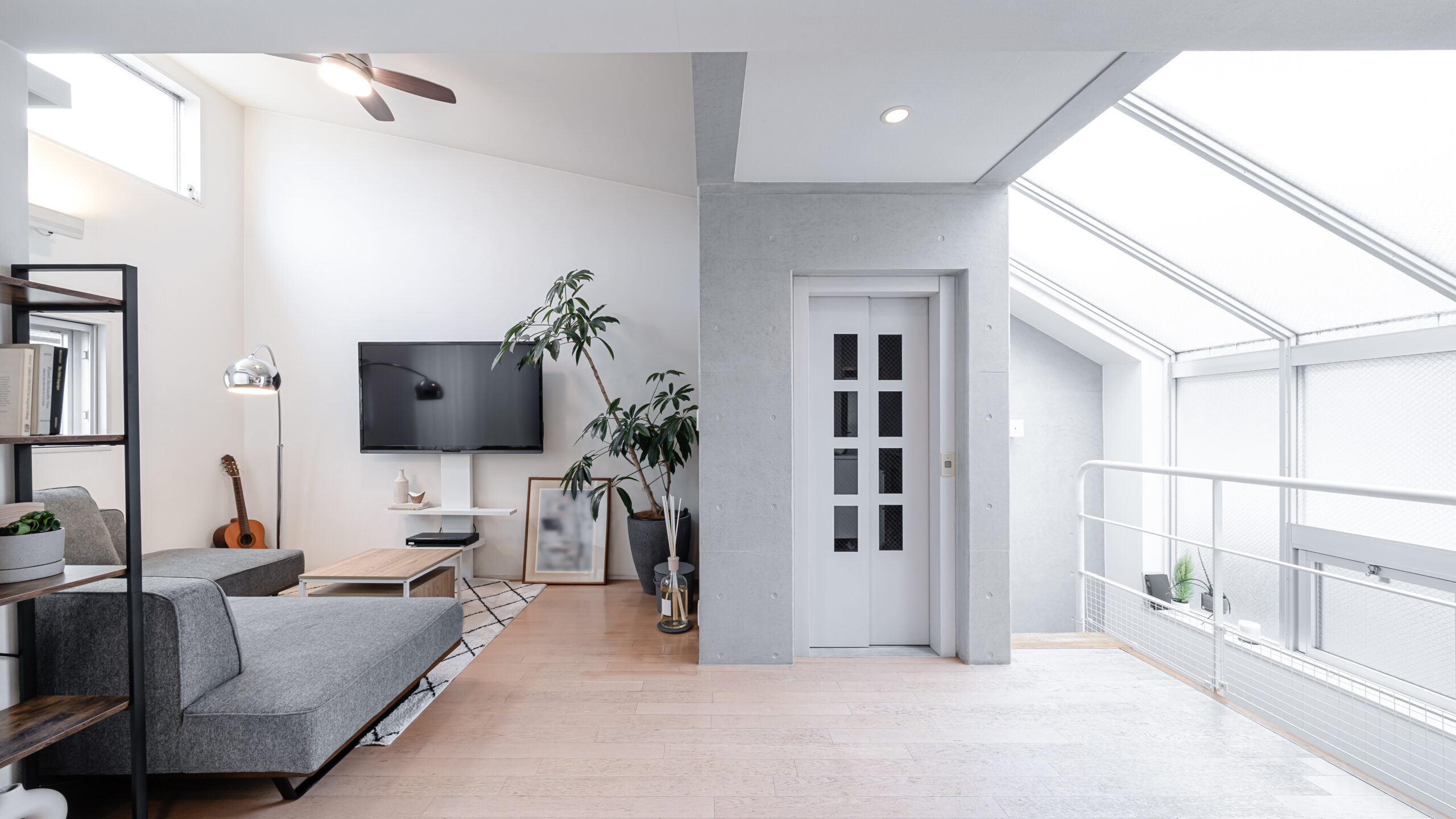
 Living Room Corner
Installed in a corner of the bedroom, it won’t take up the core activity area and is suitable for all types of homes. Furthermore, this location is very convenient for using the equipment, making it ideal for wheelchair users and elderly people with mobility issues. In addition, since the elevator is installed in the corner against two walls, only maintenance is required on the two shafts, which can save on construction costs.
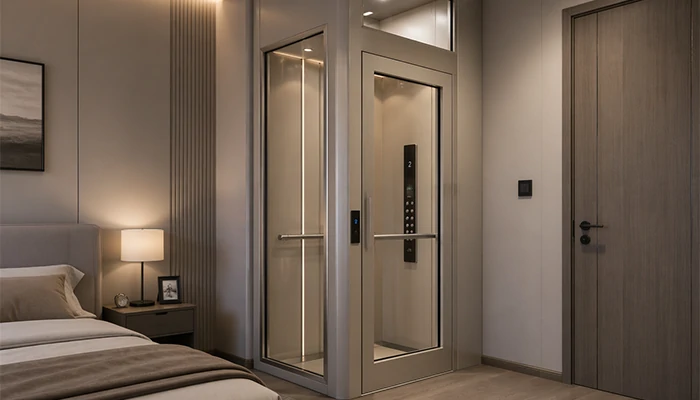 Inside a Closet
 Atrium
Installing an elevator in the atrium is also a great location. The location has good natural light, which makes the elevator interior more open and prevents a feeling of confinement when riding it. This location makes the elevator the focal point of the house, enhancing the aesthetics and design of the space.
In addition, the atrium is the central location of the residence, and installing it here can better connect the various areas of the residence and make the distance from each space to the elevator similar.
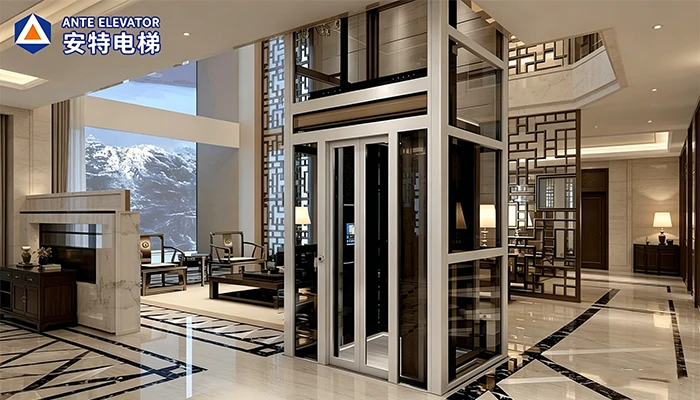 Atrium
Common Mistakes to Avoid
First, only aesthetics are considered, while practicality is ignored. When choosing the installation location for a home elevator, if reasonable traffic flow is not considered, the elevator may be located far from the main living area, affecting the daily travel of the residents. Furthermore, they did not consider the needs of family members with mobility issues, installing the elevator in a poorly lit hallway, or near a threshold or piles of clutter.
Secondly, the specific structure of the house is unclear.
Some people install elevators in load-bearing walls without knowing the situation, which can cause the walls to break during construction or when the elevator is in use, creating a danger.
In addition, during installation between floor slabs, the load-bearing capacity of the floor slabs and whether holes need to be drilled are not considered, which may result in the elevator being unable to be installed or the floor slabs collapsing after the preparation work is completed.
Third, insufficient space was not reserved, and the size of the purchased elevator equipment was larger than the size prepared for construction, making it impossible to install the elevator.
Fourth, the demand for elevators was not fully considered. The space where the elevator is installed is too small to be suitable for wheelchair access. The location is too remote and unsuitable for people with mobility issues; it also fails to consider future elderly care needs. In addition, the elevators do not cover enough floors, so their convenience cannot be fully realized when the main living areas change.
Fifth, there was a lack of communication with professionals. When installing an elevator, it is essential to communicate effectively with the elevator manufacturer, construction personnel, and installers. Listen carefully to the other party’s professional advice, and do not make decisions based on your own experience and interests.
Conculsion
Each of the above installation locations has its own unique advantages, bringing you one step closer to enjoying a convenient and comfortable life with a home elevator. When determining the specific installation location for a home elevator and proceeding with construction or renovation, it is essential to seek advice from professionals as early as possible. They can help you determine the best installation location and save you unnecessary trouble and costs.
About Anter
Anter provides high-quality, high-safety home elevators and offers a range of services including free consultation, custom design, after-sales service, installation, and transportation. Besides, video evaluation and on-site measurement are also supported. Experienced technicians will also help you determine the most suitable installation location.
We are a professional home elevator manufacturer, covering all types of elevators currently available for residential buildings, including hydraulic elevators, traction elevators, and panoramic elevators etc.. We also provide highly customized services to meet your specific needs.
Our elevators feature a flexible and compact design, allowing them to be installed in any location. Furthermore, it is not subject to the requirement that one side must be against a wall; a fixed point is sufficient.
No matter your residential structure or usage needs, we can find the most suitable elevator solution for you. The sooner you plan your home elevator, the sooner you will enjoy a comfortable life.
Contact us now! You can get answers to any questions here.
FAQ
What is a home elevator system?
A home elevator system essentially refers to a complete home elevator, which is a lifting device installed in a private residence for vertical transportation between different floors. Home elevator systems prioritize comfort, compactness, and aesthetics. They are easy to install and do not require traditional shafts, machine rooms, or pits.
Where is the best place to install a home elevator?
The locations listed above are all very suitable for installing elevators. However, the specific location needs to be determined based on your house structure and spatial layout. If you’d like to know the most suitable elevator installation location for your home, leave your contact information and our professionals will answer you quickly.
Can a home elevator be installed in an existing house?
Certainly. Our elevators do not require a pit or a hoistway; they feature a self-supporting frame and do not need a machine room. As long as there are secure anchor points, they can be installed in any location. Furthermore, our elevators feature a compact structure and can be installed in an area as small as 960 x 1250 mm.
What is the most space-saving home elevator option?
We recommend that you choose a shaftless elevator, a mini home elevator, or a small residential lift—all of which can help you save space. If you have specific size requirements, Ante can also customize them for you.
Will installing a home elevator increase my property value?
Yes. One of the advantages of a home elevator is that it increases the value of the house. In the public perception, home elevators are typically regarded as a high-end feature, and many buyers are willing to pay a premium for them. Besides, installing a home elevator can broaden the potential pool of buyers, attracting those with household members who have mobility issues, as well as buyers preparing for aging in place.
 English
  Arabic
  Vietnamese
  German
  Malay
Malay  Thai
Thai