
With the increasing aging of the global population and people’s pursuit of quality of home life, home elevators have now transformed from a luxury item into a necessity. The overall market maintains an average annual growth rate of over 15%, with target regions covering the entire globe.
Home elevators cover the residential accessibility market, the high-end residential and luxury home market, the residential renovation market, and the home-based elderly care market, with a wide target customer base and ample profit margins.
If you are looking to expand your home elevator business and are looking for a reliable manufacturer partner, here are some key factors to consider before taking action to help you get strong support and get your business up and running quickly.
Identify Your Target Market and Application Requirements
First, clarify your target customer group. Your target customers include high-end residential developers, renovation companies, architectural design studios, as well as residents of newly built/renovated high-end villas and residences, senior citizen families, wheelchair-accessible families, and operators of bed and breakfasts and resorts.
Secondly, clarify the target market. This analysis examines the market saturation, demand strength, and market maturity of home elevators in different regions worldwide. For example, there is a high demand for home elevators in North America, Europe, Australia, New Zealand, and the Middle East, while the home elevator market has great potential in South Africa and Southeast Asia.
Third, we need to gain a thorough understanding of the area’s architectural features and styles, the spending power of our target customers, and their demand for home elevators. For example, Australia has many 2-3 story houses, and the decoration style is predominantly beachfront and modern. Furthermore, the local population has a high proportion of high-income earners who are typically willing to pay between 4,000 and 100,000+ Australian dollars for a home elevator.
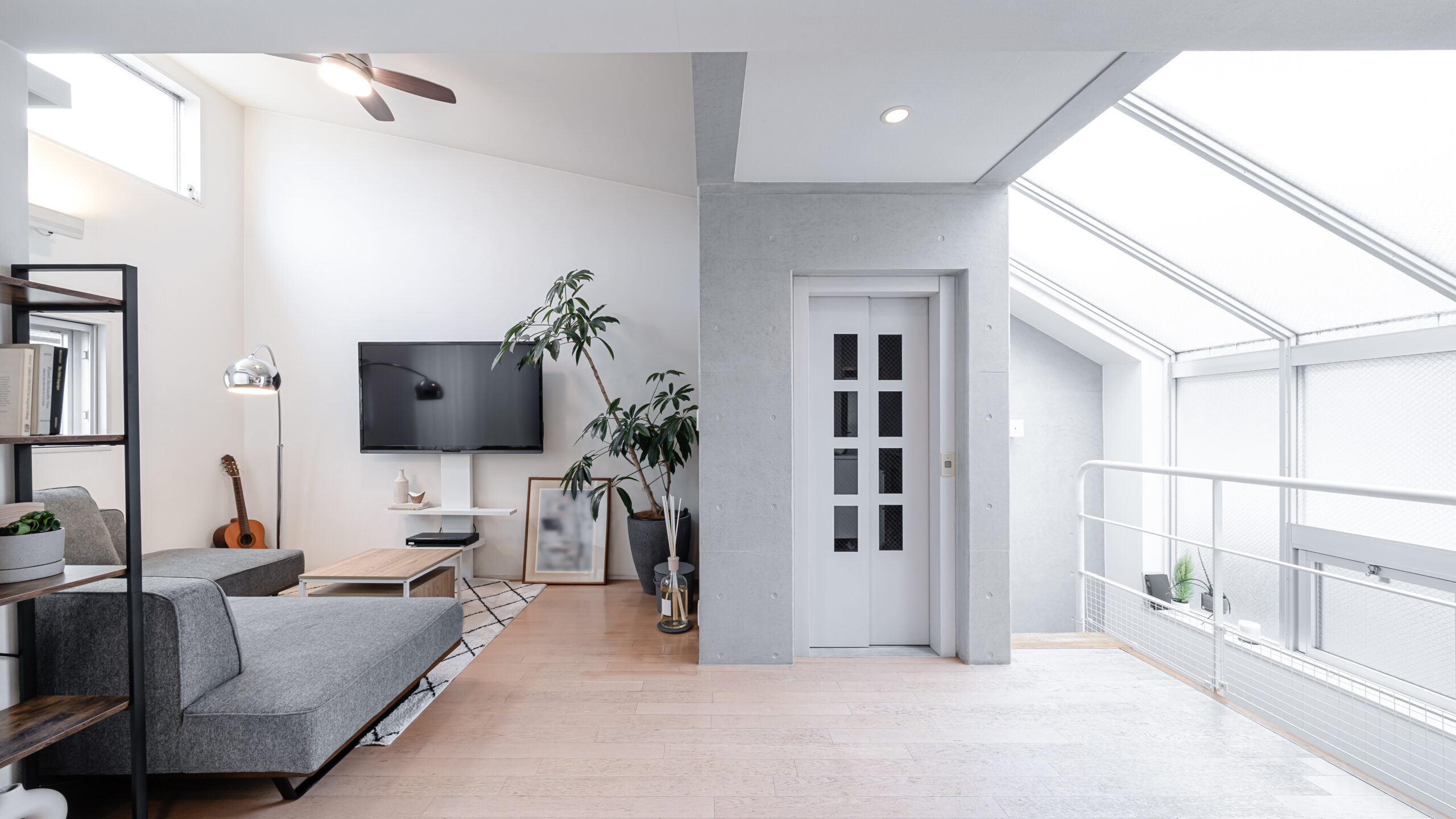
Finally, it was determined which type of home elevator should be used to advance the project under different circumstances. For high-end villas, panoramic glass elevators are suitable; for existing residences, shaftless home elevators are recommended; for wheelchair-accessible buildings, vertical platform lifts are recommended; and for outdoor installations, outdoor elevators with more robust structures and multiple surface treatments are recommended.
Evaluate Installation Conditions and Project Requirements
You should assess the installation status and project requirements of home elevators in order to make a clear judgment: whether the project can be done, whether it is worthwhile, and how to reduce installation risks and increase the success rate after the deal is closed.
First, determine whether it is a newly built house or an existing house. Existing houses have a relatively fixed layout and limited space, resulting in higher construction costs, greater installation difficulties, and longer construction periods.
Secondly, confirm whether a shaft and pit have been reserved. If the owner does not have the conditions to build a shaft and pit, they can choose a shaftless elevator or a pitless elevator.
Third, confirm the power supply with the customer. Home elevators can operate stably under 220V/380V voltage. However, if the area experiences persistent voltage instability, recommendations for circuit modifications and voltage regulator installation can be made in the provided solution.
Fourth, confirm whether the home elevator needs to meet the accessibility needs of the elderly and wheelchair users. If so, clearly explain the requirement for a large space and the provision of handrails to the client in the solution.
Fifth, confirm with the customer whether local regulations require an inspection after the home elevator is installed.
Assess The Manufacturer’s Compliance Qualifications
The advantages of selecting home elevator manufacturers with compliant qualifications include: helping you sell smoothly, exporting to target markets, reducing legal risks, enhancing market competitiveness, and participating in bidding for large-scale engineering projects.
Different markets have different qualification requirements for home elevators.
The European market focuses on CE, EN81 series standards, ISO9001, and technical documentation.
The North American market focuses on compliance with ASME standards and the availability of project case studies.
The Middle East focuses on CE and ISO9001 certifications; for large projects, complete technical documentation is also required.
South Africa focuses more on whether the home elevator meets local building requirements and whether the manufacturer possesses international certifications.
Consider Manufacturer Customization Capability
No two home elevators are exactly alike. Different residential renovation projects have different conditions and requirements, so a customized home elevator solution is needed.
When selecting the right home elevator for your client, it is essential to pay attention to the manufacturer’s deep customization capabilities. You may receive a wide variety of projects, such as villas, duplexes, old house renovations, outdoor installations, and small shaft installations. If the supplier does not have flexible customization capabilities, it will be unable to complete the delivery. Furthermore, during the negotiation process with clients, they may have some personalized needs, such as lighting design, interior drawing, etc.
Luxurious and diverse customization is also one of the core competitive advantages of high-end home elevators, which can not only attract more customers but also increase profit margins.
Choose The Right Drive System for Different Applications
Hydraulic Drive
Best Applications
Hydraulically driven home elevators are suitable for residential projects with limited space but where stability and comfort are paramount. For example:
Existing residential renovation
Elderly housing renovation
High-end villa projects
2-4 story residential projects
Barrier-free housing projects
Projects without shafts, pits, or machine rooms
Market Advantages
Hydraulic elevators offer a wide range of customization options.
They are suitable for projects with limited space.
Hydraulic elevators offer a high return on investment.
They are suitable for seniors, catering to the growing market for home-based elderly care.
Limitations
Hydraulic elevators are not suitable for projects with a lifting height exceeding 12m and high operating frequency.
They are also not suitable for projects requiring high speeds.
Hydraulic elevators require regular inspection and maintenance.
Vacuum Drive
Best Applications
Vacuum elevators can replace traditional home elevators and undertake projects that they cannot complete.
Vacuum elevators can be applied to:
Existing residential renovation projects
Installation projects with limited space
High-end villa projects
Barrier-free housing projects
Low-rise projects
Market Advantages
Vacuum elevators, with their inherent high-end positioning, are well-suited to attracting upscale residential projects.
Vacuum elevators offer rapid installation, making them ideal for clients with strict time constraints.
The glass exterior of the vacuum elevator is a perfect fit for modern residential design trends, blending seamlessly with the style of the house.
Limitations
Vacuum elevators are slow, have a low load capacity, can only carry one person at a time, and cannot be used with wheelchairs.
The purchase cost of vacuum elevators is very high, and subsequent maintenance and parts replacement are quite troublesome.
It is more suitable for low-floor residences, mainly 1-2 stories.
Traction Drive
Best Applications
Traction elevators are representative of mid-to-high-end home elevators and represent the largest market share of home elevators.
Traction elevators can be used in:
New residential projects
Residential buildings of 2-7 stories
High-frequency-use residential projects
Barrier-free residential projects
High-end customized projects
Market Advantages
Traction elevators are representative of mid-to-high-end home elevators and have the highest market share among home elevator types.
Traction elevators can be used in:
New residential projects
Residential buildings of 2-7 stories
High-frequency use residential projects
Barrier-free residential projects
High-end customized projects
Limitations
Traction elevators have high installation requirements and a complex process, requiring a professional installation team to plan the pit and shaft (self-supporting) space.
They are not suitable for use in extremely narrow spaces.
Screw Drive
Best Applications
Screw elevators are suitable for:
Renovation of existing residences
Small-space residences
2-4 story residences
Villas
Senior living residences
Small-scale public accessibility projects
Market Advantages
Screw-driven home elevators have a simple structure, are easy to install, and have a short installation cycle.
There are few suppliers of screw elevators on the market, which allows for the creation of unique products.
Screw elevators save space and can meet the needs of various residential projects.
Limitations
The device has a limited lifting height and a slow operating speed.
Screw elevators have a low load capacity and are not suitable for moving furniture.
Low flexibility in customization
Low market acceptance
The price is high, and the core technology is controlled by a few companies in Italy.
Check Safety Features
Safety is one of the core indicators for selecting a home elevator supplier. You need to confirm whether the security system meets the codes of the market and ensure high security to reduce after-sales and accident risks. In addition, home elevators with good safety features are more popular in the market and can undertake more residential improvement projects.
A qualified home elevator solution must include the following installation devices: emergency descent device, backup power supply, anti-pinch device, overload protection, emergency alarm, etc.
Consider Cost and Profit Potential
The essence of selling home elevators is to make a reasonable profit. Therefore, when choosing a home elevator, you should carefully consider the purchase cost, profit margin, and long-term costs.
When choosing a supplier, choose the original factory. They are not only inexpensive, but also have strong customization and quality control capabilities, as well as stable supply and spare parts support.
In addition, you can also promote sightseeing elevators as your main product. These elevators are usually used in high-end villa projects, which have high customization requirements and larger profit margins.
Third, establish long-term and stable partnerships with suppliers to obtain lower prices and better technical support.
Fourth, optimize packaging dimensions for transportation, rationally plan internal space, and adopt modular transportation.
Evaluate After-Sales Support and Maintenance
Evaluate the after-sales service support of the selected home elevator manufacturer to determine whether a long-term partnership is feasible.
A home elevator supplier that provides technical support and troubleshooting solutions can reduce your long-term costs.
Furthermore, reliable suppliers can provide stable spare parts support, professional training, and maintain rapid response, helping you maintain relationships with end customers and improve conversion rates.
Compare Home Elevator Solutions for Different Projects
| Projects Type | Recommend Solutions |
| Existing residence | Hydraulic elevator / Vacuum elevator / Shaftless elevator / Screw elevator |
| New residential buildings | Traction elevator / Glass sightseeing elevator / Hydraulic elevator |
| Villa | Sightseeing elevator / Customized home elevator |
| Mid-rise and high-rise residential buildings | Traction elevator |
| Low-rise residential buildings | Traction elevator / Hydraulic elevator / Vacuum elevator / Screw elevator |
| Home-based elderly care housing | Hydraulic elevators / traction elevators / screw elevators / vertical platform lifts |
| Wheelchair-friendly housing | Traction elevator / traction elevator / wheelchair lift |
| Outdoor installation projects | Traction elevator / screw elevator / glass elevator |
| Budget-sensitive projects | Traction elevator/hydraulic elevator |
| Space-constrained projects | Hydraulic elevator/vacuum elevator/screw elevator |
| Frequently used residential housing | Traction elevator |
| Modern Design Residence | Glass elevator / High-end custom elevator |
Find a Reliable Home Elevator Manufacturer Partner
If you’re looking for a reliable home elevator manufacturer as a long-term partner, Anter is the ideal choice.
We offer the following advantages:
- With a 10,000-square-meter factory and three production lines operating simultaneously, we can offer you the most favorable prices and stable delivery for multiple order batches.
- We offer a diverse range of product solutions, covering traction elevators, hydraulic elevators, sightseeing elevators, lifting platforms, and more, to meet the needs of different projects.
- Deep customization capabilities. Offering a variety of options for shape, size, materials, finishes, lighting, flooring, doors, and frames, we can precisely create customized home elevators suitable for mid- to high-end residential projects.
- The products meet international requirements, have CE, EN81-41, and ISO9001 certifications, and can provide various technical documents.
- We provide technical support. This includes design solutions, various materials, installation and maintenance services, free online and offline lifetime training, and ongoing online support to help you maintain customer relationships.
- We support ODM/OEM services, allowing you to authorize the use of our brand or help build your own.
- We have standard product inventory and stable production cycles, and can adjust the cycle according to project requirements to achieve fast delivery.
- We have been researching the home elevator industry for 16 years and have extensive export experience, having completed over 2,000 export projects. We can help you solve any problems you encounter in import and export.
- We support long-term cooperation and offer exclusive regional agency rights, providing you with dedicated protection and assisting you in market expansion to achieve mutual benefit and win-win results.
For more detailed information, please contact us!
FAQs
What is the 3/ 4 rule for residential elevators?
The 3/4 rule is the latest regulation in the American Academy of Safety and Security (AMSE) for the protection of children’s safety, which states that the distance between the elevator landing door and the shaft door must be less than 3/4 inch.
Which type of elevator is best for a home?
Currently, there is no single source claiming that one type of elevator is best suited for residential use. However, we generally consider the best elevator type to be the one that best meets the project’s specific needs and the users’ requirements. For example, if wheelchair-accessible structures are required, and the elevator is to be installed in a luxury villa, where there are specific requirements for speed and load capacity, then a traction elevator is the best type.
What is the typical cost for a home elevator?
According to the latest data from 2026, the average cost of a home elevator ranges from $10,000 to $25,000. The specific price will depend on the conditions of the installation site and the customer’s needs.
How to install a home elevator?
The installation of a home elevator involves a series of processes, including site assessment, space planning, structural construction, electrical connections, equipment installation, and commissioning and acceptance. To help you understand each step of the home elevator installation process in more detail, we have written this article: the comprehensive installation process of home elevators.
How long does installation take from contract to first ride?
The installation time for a simple platform lift is 2-5 days. The installation time for a home elevator on 2-4 floors is 10-15 days. For a 5-7 floor residential building, the installation time may be 20-25 days.
How often should a home elevator be serviced?
Home elevators typically only need maintenance every 1-2 years. However, in some countries with mandatory regulations, home elevator maintenance is usually required every six months or a year.
How does a home elevator work?
Home elevators have different drive systems and different working principles. To help you better understand how home elevators work, please refer to: Working principle of different home elevators.
What maintenance should I budget for each year?
The average cost of an annual contract with a maintenance company is $300-$800, and the maintenance services include annual inspections, cleaning, lubrication, functional testing, and parts replacement.
Does a home elevator increase property value?
Yes, home elevators offer a high return on investment. They can increase the value of a residence.
When selling a home, it can be packaged as a high-end residential project. This also broadens the target customer base, meeting the needs of customers seeking accessibility and aesthetic appeal.
 English
  Arabic
  Vietnamese
  German
  Malay
Malay  Thai
Thai