
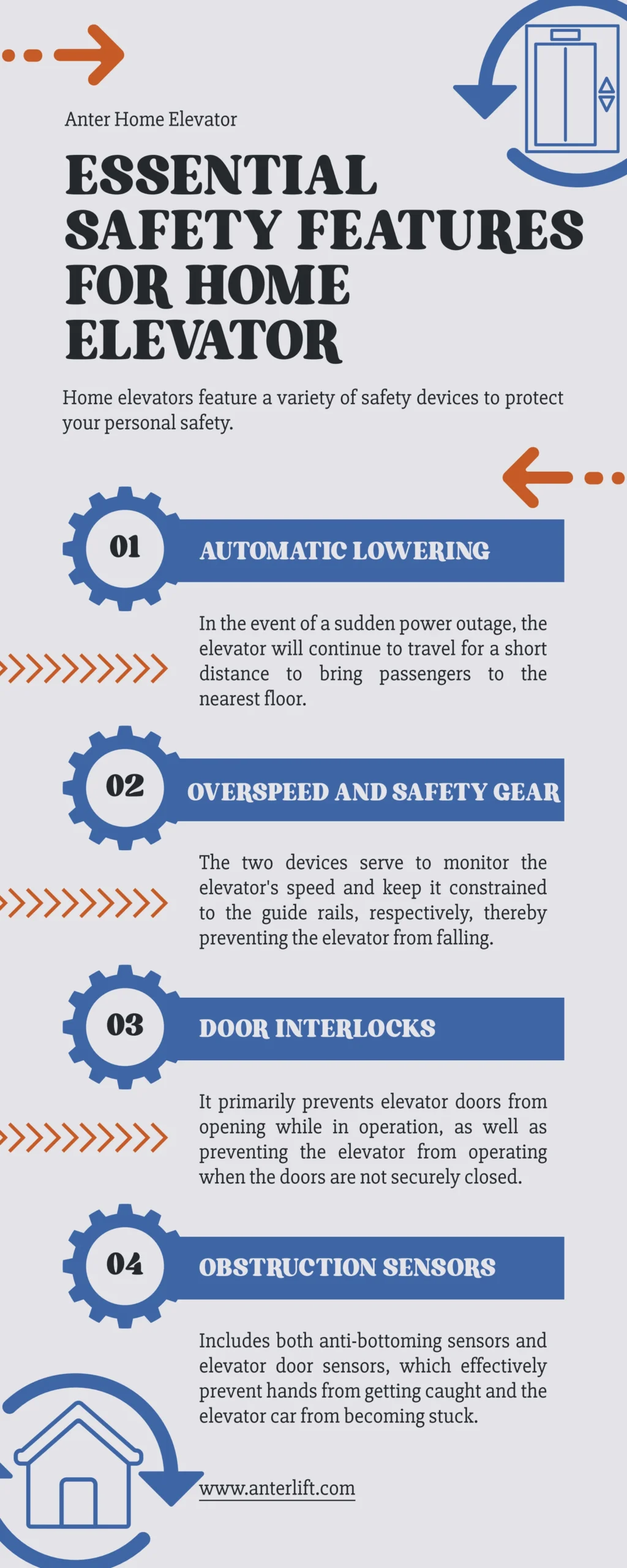
As a device that interacts directly with people and provides service to them, a home elevator must meet rigorous safety standards and incorporate various features designed to protect the physical safety of its users.
In the previous article, we explored the safety codes for residential elevators. In this article, we will take a closer look at the specific safety features that a compliant residential elevator should possess.
List of Safety Features
Door Interlocks
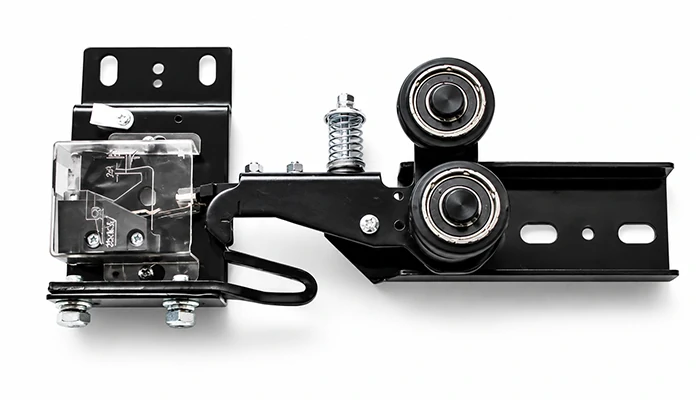
Every landing door of a home elevator should be equipped with an “invisible” lock. If any door is not fully closed and locked, the elevator will not start—remaining disabled until the safety hazard has been resolved.
Furthermore, as the elevator operates, it automatically tracks its current floor; the landing doors remain securely locked until the elevator reaches the designated floor, making it impossible to open them—even by pulling with force. This mechanism effectively prevents children or pets from accidentally opening the doors while playing, thereby averting potential danger.
Cab Gate or Door
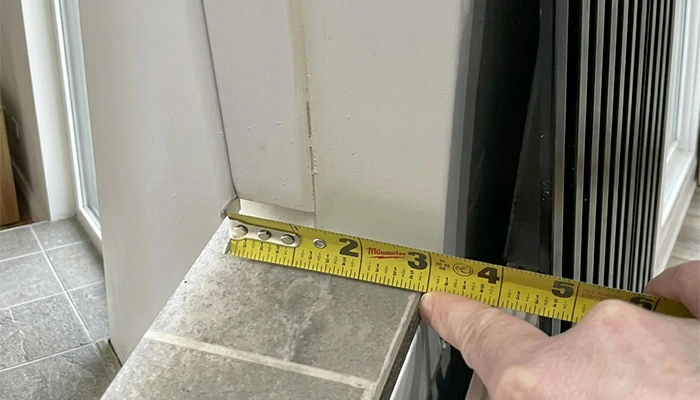
According to ASME requirements in the United States, the landing doors and car doors of residential elevators must be designed in compliance with the “3/4″ x 4” rule”—meaning the distance between the two doors must not exceed 3/4 of an inch.
The fundamental purpose of this design is to prevent children from falling into the elevator shaft through the gap between the two doors.
Overspeed Protection and Safety Gear
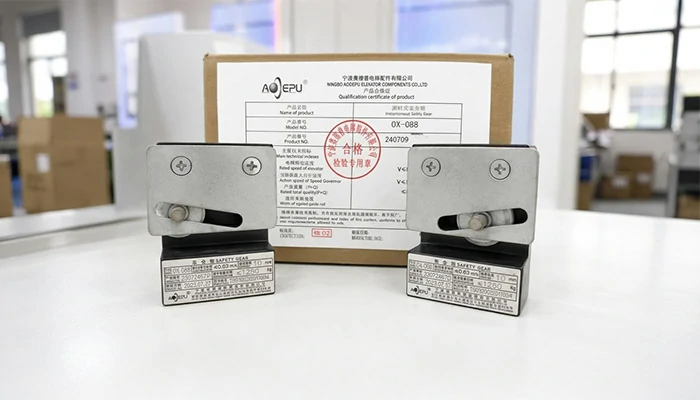
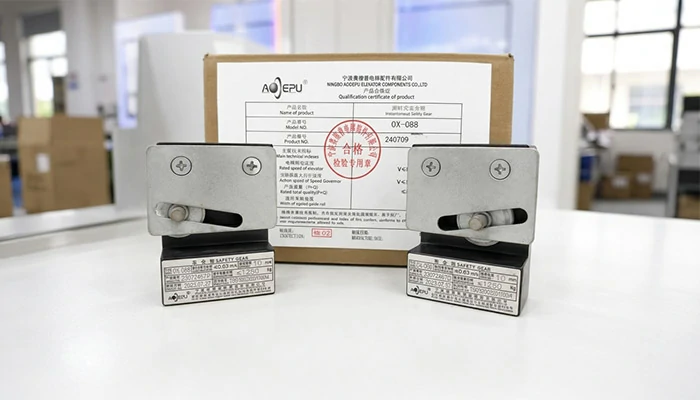
Traction-type home elevators shall be equipped with a speed governor and safety gear.
During normal elevator operation, an overspeed monitoring device continuously tracks the elevator’s status. If the elevator’s downward speed becomes abnormal and exceeds its rated speed, the safety gear located at the bottom of the elevator car is automatically triggered, bringing the car to a firm, secure stop against the guide rails.
Rupture Valve
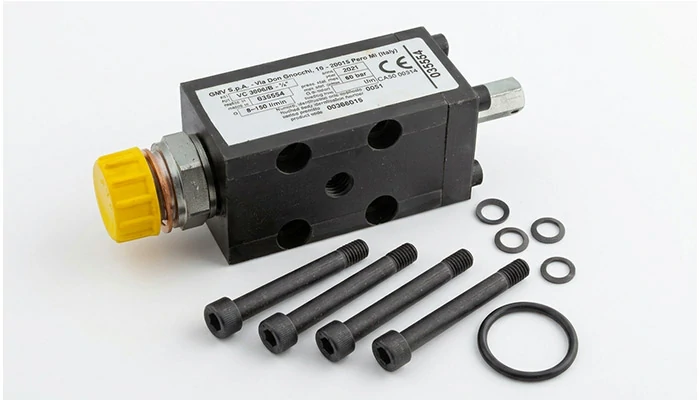
This is a safety device designed exclusively for hydraulic elevators; it is the equivalent of the safety gear found on traction elevators.
The descent of a hydraulic elevator is typically achieved by regulating the return flow of hydraulic oil via a control valve, ensuring a smooth downward movement. However, when an oil line ruptures, the abnormally high flow rate of the hydraulic fluid causes the car’s speed to become uncontrolled.
At this point, the explosion-proof valve will automatically restrict or shut off the flow of oil, thereby returning the elevator car to its original rated speed.
Obstruction Sensors
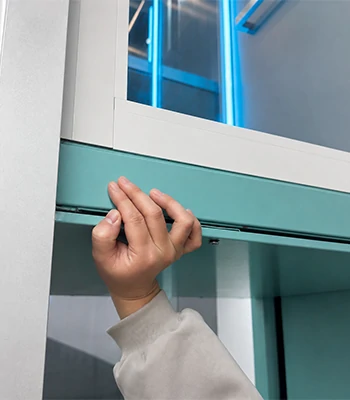
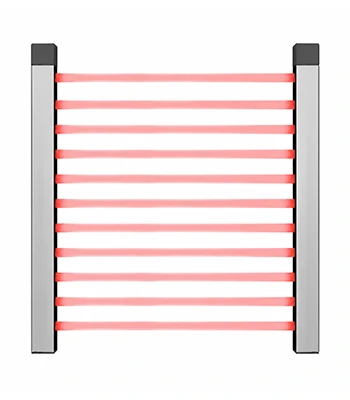
A compliant residential elevator should be equipped with sensors at the bottom and at the door locations.
If the underside of the lift encounters an obstacle while in operation, it will immediately stop, thereby preventing the equipment from becoming jammed or damaged.
Furthermore, if an obstruction is detected at the elevator doors as they are preparing to close, they will immediately reopen, and the elevator will be locked. The elevator will not start until the obstruction has been removed.
Emergency Stop and Alarm
Traction elevators and hydraulic elevators should be equipped with an emergency stop button and an alarm, both positioned within easy reach. In the event that an elevator malfunctions or goes out of control, these can be used to quickly cut off power—bringing the elevator to a safe, stable stop—and to signal for external assistance.
Communication
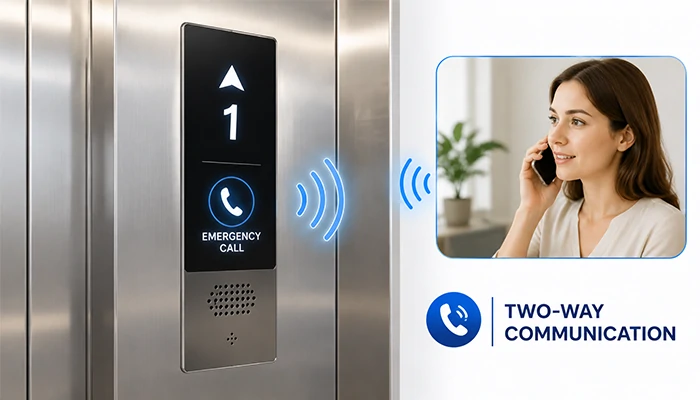
The intercom system in a residential elevator serves as a vital tool for handling emergencies. Following several iterations and upgrades, it now takes the form of a button located inside the elevator car. Should a user become trapped, they can press this button to establish contact with the outside and receive timely assistance.
Lighting
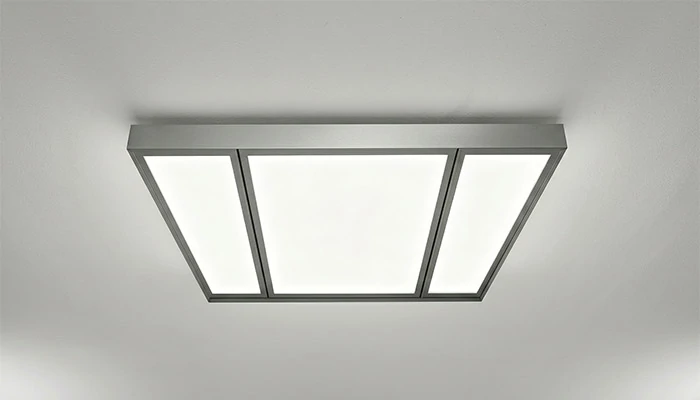
Home elevators feature two types of lighting—standard lighting and emergency lighting—both of which help ensure the safety of users.
Proper lighting can reduce the risk of users—especially the elderly—missing a step or tripping due to poor visibility. In the event of a sudden power failure, emergency lighting helps prevent users inside an elevator from panicking, acting rashly, or bumping into objects while in the dark.
Automatic Lowering During Power Outages
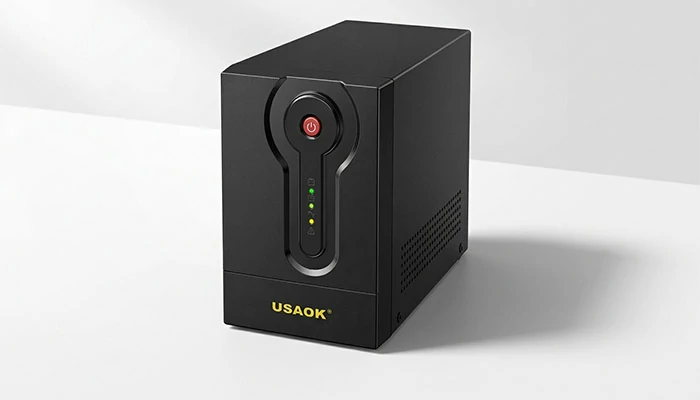
Automatic floor leveling is the most critical safety feature in a home elevator. In the event of a sudden power failure, the system switches to a backup power source within milliseconds, maintaining normal operation and moving the elevator car to the nearest floor. Once the car arrives, the doors open as usual.
Safety Locking Device for Added Child Protection
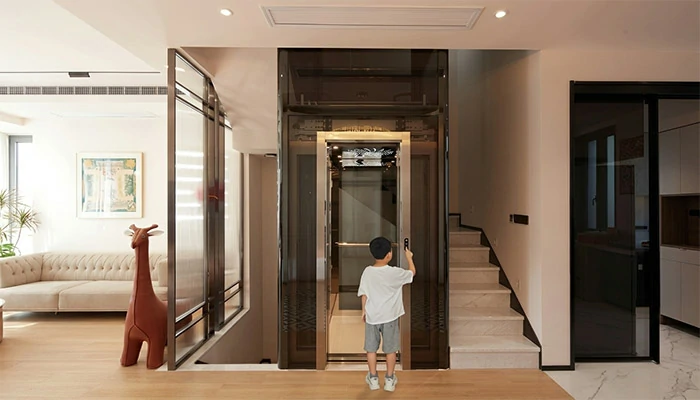
If there are children or pets in the household, you can request the addition of a safety door lock mechanism when selecting your elevator configuration.
This device adds an external electronic lock to a home elevator, which can be unlocked using a fingerprint, a card, or a passcode.
Beyond its safety function, it also protects privacy, as the elevator can only be used by individuals who have been granted permission by the homeowner.
Handrail
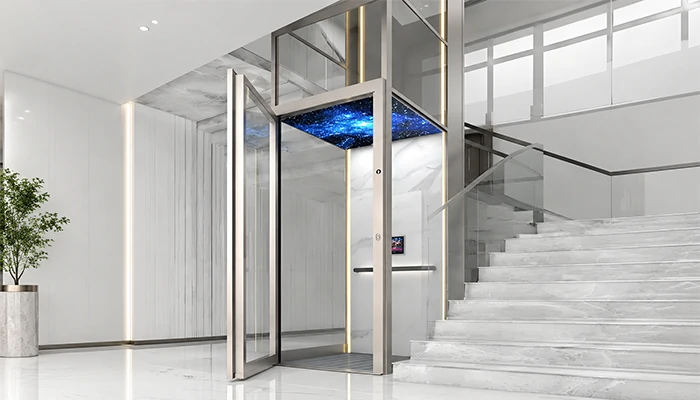
Handrails installed in home elevators are not high-tech safety devices; on the contrary, they are inexpensive and simple in function. Nevertheless, they serve as an important aid in ensuring the safety of elderly individuals whose physical coordination may have declined.
In a word, installing a handrail can effectively reduce the risk of falling inside an elevator.
FAQs
Is it possible for elevators to fall?
Currently, it is virtually impossible for a home elevator—provided it is compliant, correctly installed, and regularly maintained—to go into freefall.
Traction elevators typically rely on multiple robust steel cables to support the weight of the car; these cables do not deteriorate or sustain damage even after long-term use. Furthermore, traction elevators are equipped with the aforementioned speed governors and safety gears, while hydraulic elevators feature an explosion-proof valve designed to prevent the elevator from falling.
What are common safety failures in elevators?
Elevator malfunctions primarily stem from three sources: mechanical wear, electrical faults, and a lack of maintenance.
Common malfunctions they can cause include: elevator door sticking, abnormal noises during operation, inaccurate floor leveling, vibrations while in motion, brake irregularities, system shutdowns, control system failures, and sensor malfunctions.
What is the lifespan of a residential elevator?
The average design lifespan of a home elevator is 20–25 years; however, with proper daily care and regular professional maintenance, a traction-driven home elevator can last for 30 years.
How often does a residential elevator need to be serviced?
For home elevators that see frequent use, we recommend professional maintenance every six months; for those used less frequently, an annual maintenance check is sufficient.
What are the safety standards codes for home elevators?
Standards for residential elevators vary by country. Below are some of the common standards:
United States/Canada: ASME A17.1/CSA B44
Europe: EN 81-41/EN 81-20
China: GB/T 21739
Final Thought
In short, a suitable home elevator should incorporate a combination of basic safety features, emergency protection, and specialized, user-centric safeguards tailored for specific scenarios.
Therefore, when selecting an elevator for your home or for a client, safety features should be the primary criterion in your decision-making process.
If you are currently considering purchasing a home elevator and are looking for a reliable manufacturer, you may want to contact Anter. Anter always prioritizes customer safety, equipping every elevator with comprehensive safety features that provide all-around protection.
Take action—get a free quote and consultation today!
 English
 Arabic
 Vietnamese
 German
 Malay
 Thai