
Home elevators have become an essential amenity for individuals with disabilities and the elderly, enhancing their mobility, home-based aging experience, and overall quality of daily life. As an increasing number of people begin installing home elevators in their residences, understanding their service life has become particularly important. It can help you compare different products in the market and make an informed choice.
The following text will provide you with an in-depth look at the typical service life of home elevators, the factors that influence their longevity, and important information on how to extend their lifespan.

Average Lifespan of A Home Elevator
The average lifespan of a home elevator is 20 to 25 years. With regular maintenance and proper usage, this figure can be extended to 30 years or more.
Home elevators are classified into four types: traction elevators, hydraulic elevators, vacuum elevators, and screw elevators. The lifespan of different types of home elevators may vary.
| Type | Traction Elevator | Hydraulic Elevator | Vacuum Elevator | Screw Elevator |
| Average Lifespan | 25-30years | 20-25years | 15-20 years | 20-30years |
Factors That Affect How Long Home Elevator Lasts
Correct Installation
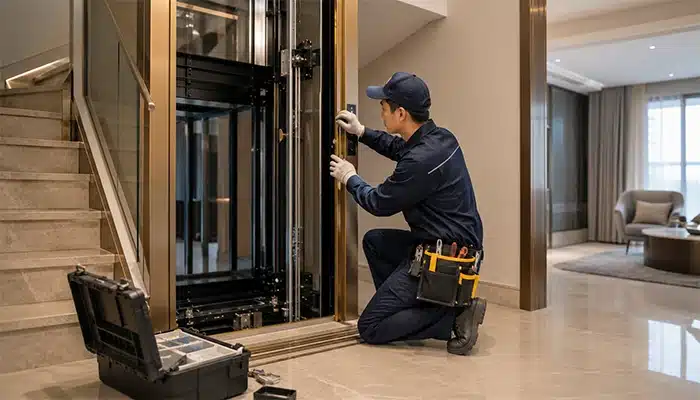
In the elevator industry, there is an old saying: success depends one-third on the equipment and two-thirds on the installation.
For home elevators, proper installation is crucial. It directly impacts the user experience, as well as long-term safety and stability. Proper installation ensures that a home elevator functions correctly from the very start and fully realizes its performance capabilities.
Conversely, improper installation may lead to the following issues:
- Elevator operation is accompanied by vibration, accelerating component wear.
- Frequent malfunctions occur, severely shortening the equipment’s service life.
To ensure the safe operation of the elevator over the long term, it is essential to select professional installers.
Environmental Factors
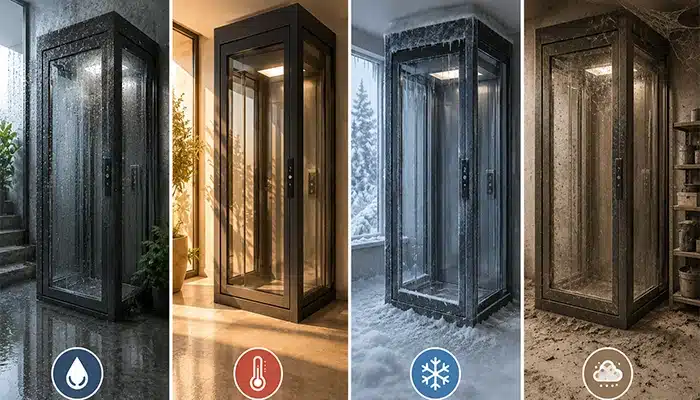
Home elevators should be installed in suitable environments. The following environments can severely shorten the lifespan of an elevator.
- Humid Environment
In environments with high humidity or moisture, the metal parts of elevators are prone to rust, and the electrical system is susceptible to moisture, which can cause problems such as short circuits, malfunctions, and poor contact. Furthermore, a humid environment can accelerate the aging of wiring and increase the risk of control cabinet malfunctions.
- High Temperature Environment
Placing a home elevator in a high-temperature environment will accelerate the aging of electrical components, reduce the heat dissipation efficiency of the motor, and cause instability in the control system.
- Cold Environment
Hydraulically driven home elevators cannot be used in cold environments. Extremely low temperatures can cause hydraulic oil to become viscous, leading to power failure, and can also cause seals to harden, resulting in oil leaks.
- Dusty Environment
If an elevator is constantly surrounded by dust, its lifespan will be significantly shortened. Dust increases mechanical wear, leading to increased noise, door system jamming, and accelerated aging of other components.
Frequency of Use
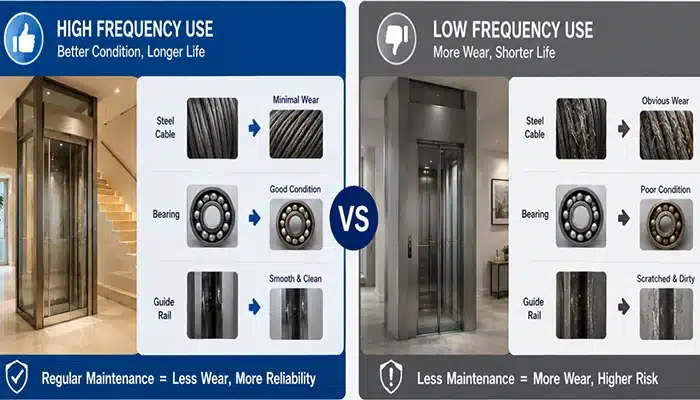
Home elevators, like commercial elevators, are mechanical devices. High usage frequency leads to faster wear and tear on parts and accelerated aging. Therefore, it requires regular maintenance to reduce wear and tear caused by high frequency of operation.
Upgrade Features
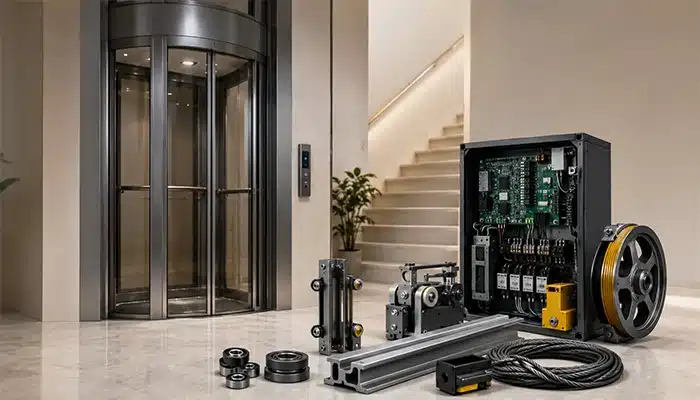
The average lifespan of a home elevator refers to the lifespan of the motor, while the lifespan of other elevator components is usually shorter than that of the motor. Therefore, during the use of elevators, parts need to be replaced as needed to ensure their normal operation.
Product Quality
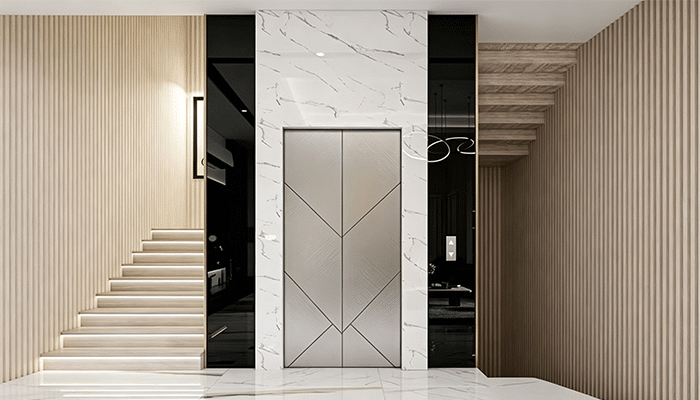
The quality of the home elevator you choose is also an important factor affecting its lifespan.
High-quality home elevators typically have a stable frame structure, durable key components, and a mature control system, resulting in a low failure rate, high safety, and longer lifespan.
Low-quality home elevators may experience various problems from the start of use, which can spread from localized issues to eventually cause the entire system to collapse.
Regular Maintenance
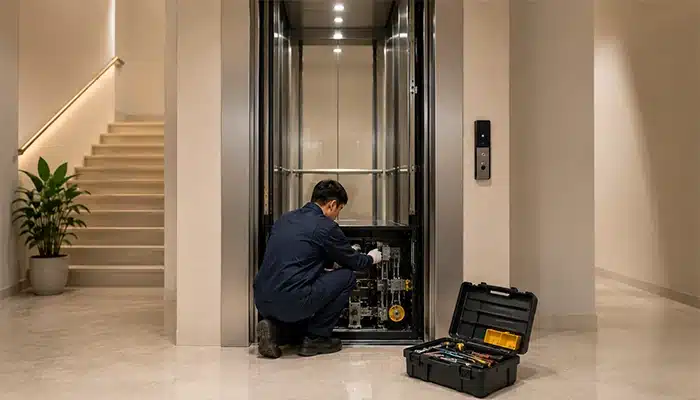
Regular maintenance can extend the lifespan of home elevators. Professional maintenance personnel will update and lubricate the elevator’s components based on its health condition, thereby reducing its failure rate and increasing its stability and longevity.
What Happens When Don’t Take Care of Home Elevator?
Proper maintenance is very important for home elevators. If elevators lack maintenance over a long period, their lifespan will be significantly shortened, and the following damage may occur:
Components wear out too quickly: Without maintenance, components of a home elevator, such as guide rails, bearings, pulleys, and wire ropes, will wear out prematurely due to insufficient lubrication, excessive dust accumulation, and increased friction between different parts. This can lead to problems such as elevator shaking and excessive noise.
Significant Failure Rate: For hydraulic elevators, the hydraulic oil needs to be changed regularly. If it is not replaced, there will be insufficient supply pressure, causing the elevator to be unable to move upwards. Furthermore, improper maintenance can cause minor elevator malfunctions to escalate into major ones, such as frequent elevator error messages, inability to open doors normally, or sudden shutdowns, ultimately resulting in huge losses.
Shortened Lifespan of Drive System: Neglecting maintenance will reduce the lubrication of the elevator shaft, increase the resistance of the drive system, cause the temperature to rise, increase the power, and thus accelerate aging.
Security Decline: Home elevators are equipped with safety devices such as buffers, safety clamps, sensors, and emergency power supplies. Failure to perform long-term maintenance will result in sensor malfunction, rendering emergency power supplies, buffers, and other components inoperable.
Increased Failure Rate of The Door System: Failure to timely clean and replace door system components will result in increased failure rates due to dust accumulation and wear and tear. The door system experiences stuttering during opening or closing, fails to open, or the elevator is unable to start.
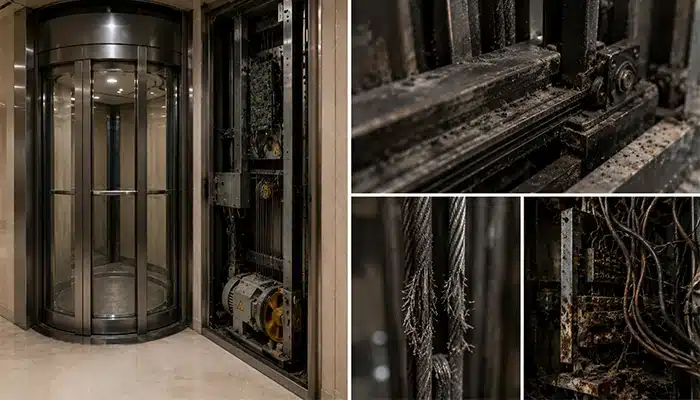
Which Parts of a Residential Elevator Wear Out First?
In home elevators, the door system, the contact components between the guide shoes and guide rails, steel ropes, pulleys and bearings, door rollers and door tracks, as well as the seals in hydraulic elevators, are all prone to wear. Because they undergo prolonged mutual friction and frequent movement.
Door System:
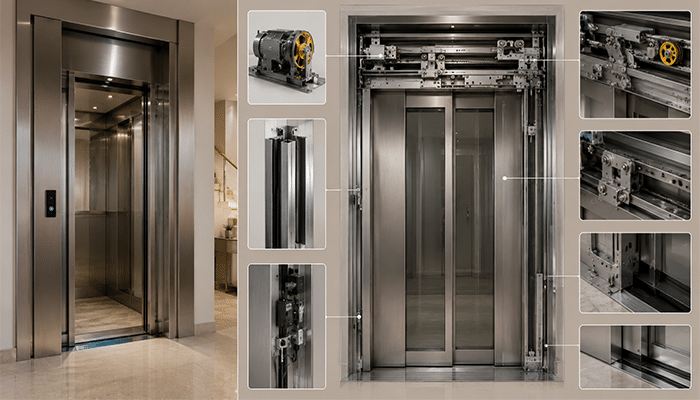
Jerky door operation
Unusual elevator noises
Door fails to open or close
Loose door lock
Door operator malfunction
Detached door pulley
The Contact Components Between The Guide Shoes and Guide Rails:
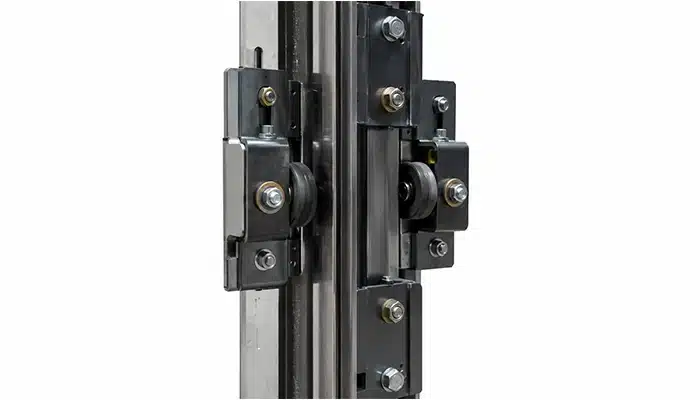
Elevator shakes during operation
Increased noise levels
Elevator operating speed has slowed down.
Floor leveling accuracy has decreased.
Wire Rope:
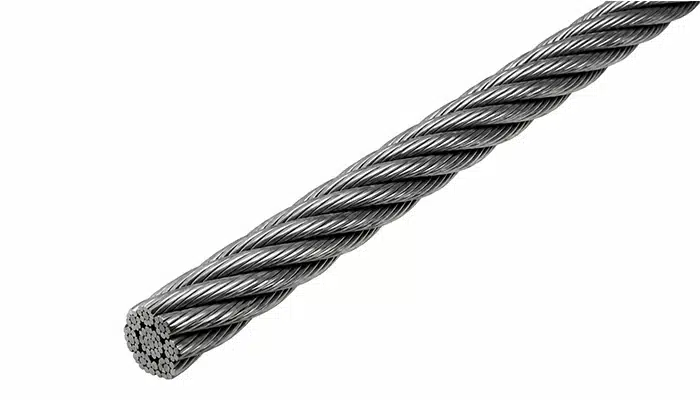
Wire Drawing Deformation
Fatigue Aging
Pulleys and Bearings
Jerky rotation
Increased noise
Severe surface wear
Door Wheels and Door Rails:
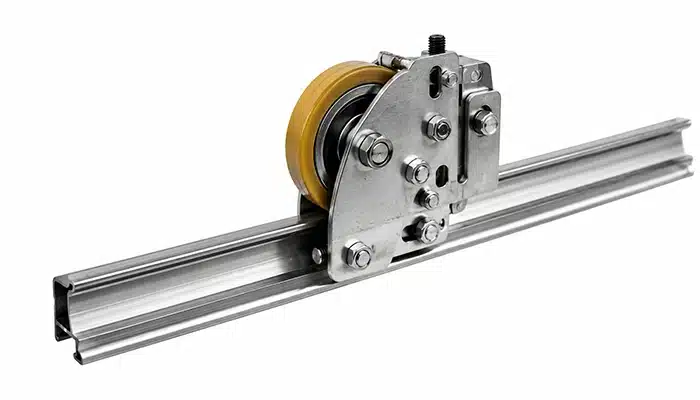
Door opening lags
The door roller has detached, causing the elevator door to deviate from its original track
Hydraulic Seals:
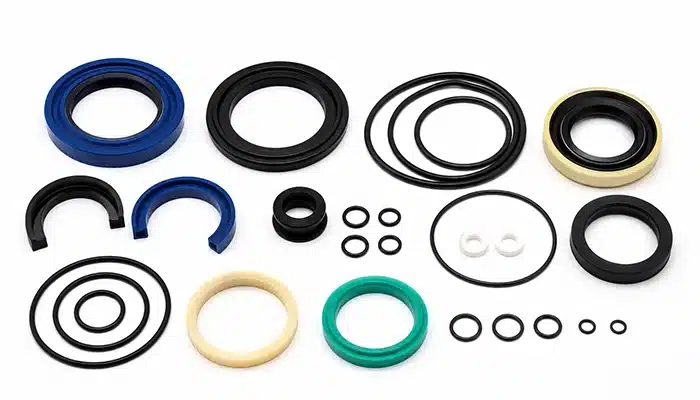
Aging and oil leakage
Insufficient supply pressure
How Can Extend the Life of a Home Elevator?
Schedule maintenance:Ensure proper routine and professional maintenance for home elevators. In accordance with the manufacturer’s instructions, carry out simple tasks such as cleaning the elevator surfaces, maintaining proper ventilation and dryness, and refraining from stacking items in the surrounding area. Every six months or once a year, invite professional maintenance personnel to visit the site and inspect the condition of the elevator. During the maintenance period, cooperate with professional personnel to replace and upgrade relevant components.
Professional installation:Invite qualified and experienced personnel to install it for you, and confirm acceptance only after repeated testing and inspection.
Address minor issues promptly:If the elevator makes unusual noises, vibrates slightly, or the doors do not open or close smoothly, contact maintenance personnel immediately to handle the situation and avoid causing major malfunctions.
Record keeping:Establish a contract with the maintenance company and keep a copy. Keeping records of every repair helps protect your rights and enables repair personnel to identify problems more quickly.
Renovation: When the elevator is nearing the end of its design life, communicate with maintenance personnel to upgrade the elevator system and accessories.
Use elevators properly: In daily life, use elevators properly, do not forcibly prevent the doors from closing, do not bump into the elevator, and use the elevator control buttons correctly.
Choose a reliable manufacturer: Carefully evaluate the quality of the components and systems used in a manufacturer’s home elevator, as well as the additional services offered, and choose a reliable manufacturer that fits your budget and offers a good balance of all aspects.
When to Replace a Home Elevator?
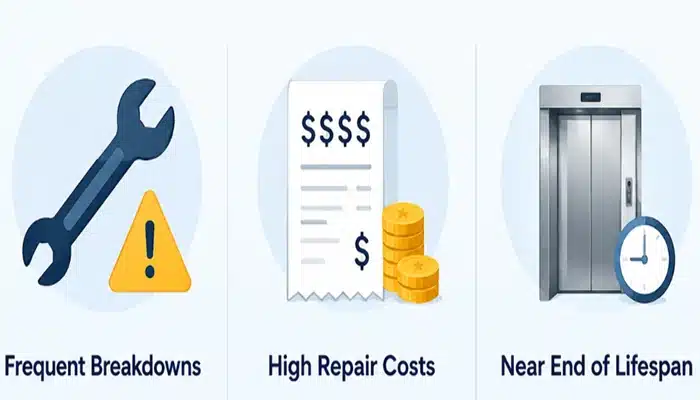
When a home elevator displays the following signals, a professional should be arranged to replace it.
The Frequency of Home Elevator Malfunctions Has Increased Significantly
The elevator experienced multiple malfunctions in a short period of time, and most of the problems were caused by substandard or aging elevator parts.
High Maintenance Costs
When elevator parts are replaced more and more frequently, the number of repairs approaches half the number of uses, and the cost of each repair is close to the price of purchasing a new unit.
Home Elevator Nearing the End of Its Service Life
After 20 years of use, it’s advisable to consider replacing your home elevator. At this point, the elevator components are aging, safety is reduced, and there is a potential danger.
Start Planning Home Elevator Today
Home elevators are a practical and aesthetically pleasing alternative to stairs, making your home more convenient, safer, and more modern. Choosing the right home elevator can not only extend its lifespan but also reduce maintenance and replacement costs.
Consult Anter for Durable Elevator Options
Whether you want to install a new elevator in your home or upgrade your existing equipment, we can help you— offer customized solutions and home elevator equipment at the best prices. If you have any ideas or questions, please contact Anter. Our design and technical teams will provide you with comprehensive assistance.
FAQs
How Often Should a Home Elevator Be Serviced?
A home elevator typically requires professional maintenance every six months to a year. However, the specific maintenance time still needs to be determined by professionals based on the type and configuration of the elevator.
How long does a service visit take?
A professional maintenance of a home elevator typically takes 1-3 hours. However, this time is not fixed and is affected by factors such as elevator type, service life, and operating condition.
Is one annual service enough?
This is sufficient for most home elevators. Some high-quality home elevators have low failure rates and can maintain stable operation with professional maintenance every two years.
 English
  Arabic
  Vietnamese
  German
  Malay
Malay  Thai
Thai