
Currently, home elevators are no longer just cold, bulky machines. Their diverse designs and comprehensive customization features have made them an important component for enhancing the quality of family life and the aesthetics of living spaces.
There is a wide range of options available for home elevator design. Whether you want it to blend into your overall style or express your individuality, professional manufacturers can design a suitable style for you.
Read this article to gain a comprehensive understanding of the customized design of home elevators and take the first step towards creating your ideal home.
Popular Home Elevator Design Elements
Home Elevator Cab Styles
The cabin is the main part of a home elevator. It is an enclosed space where people ride and move heavy objects, and it is also the part that people can most directly judge the aesthetics of the home elevator.
Depending on the materials used, elevator cars can be categorized into glass cars, stainless steel cars, and cars with wood grain trim. Stainless steel car interiors can be further categorized into brushed stainless steel, mirror stainless steel, and titanium stainless steel styles, depending on the specific manufacturing process.
The shapes of the home elevator cars also come in many different designs, such as the conventional square, round, capsule, and tubular shapes, as well as irregular shapes customized according to specific spaces, such as horseshoe shapes.
Home Elevator Framework
The frame of a home elevator, commonly referred to in the industry as the car frame, serves as the load-bearing skeleton and main structural support for the car. The main components, such as the elevator car, doors, and guide shoes, are mounted on the frame.
Home elevators can be divided into two types based on the material of their frame: light-duty and heavy-duty. Lightweight frames are mostly made of high-strength aluminum alloy or thin stainless steel. They are lighter in weight and have a weaker load-bearing capacity. They are often used in small spaces, in already decorated settings for 1-3 people. Home elevators with lightweight frames are more aesthetically pleasing.
Heavy-duty frames are made primarily of thick-walled stainless steel or I-beams, featuring a robust structure and load-bearing capacity. They are typically suitable for large spaces such as villas and duplexes. It can carry up to 8 people at a time and can be installed outdoors while maintaining stable performance.
The frame color of a home elevator can also be designed to your liking. Mahogany grain, milky white, porcelain gold, crystal champagne, apple gold, smoky gray, black, and shimmering silver are just some of the colors that can perfectly blend into your home décor.
Home Elevator Wall & Finish Options
The walls of a home elevator, specifically the inner walls of the car, form the enclosing structure of the car. The finish is the decorative layer, surface material, and process used on the car walls to enhance aesthetics and provide protection.
The interior decoration of home elevators can be chosen according to the home’s décor style, directly meeting the customer’s needs. Common interior styles are as follows:
Modern Minimalist / Industrial Style: The interior features silver-gray, space gray, and matte black stainless steel walls, concealed lighting, linear light strips, and simple decorative patterns.
Soft Luxury Style: Champagne/black titanium-plated stainless steel and gradient glass, embellished with metal lines, and a ring light strip design paired with an artistic background wall.
Classical Chinese Style: Wood grain finishes, bronze stainless steel, carved glass, traditional patterns, paired with a landscape art background wall, warm lighting, and marble flooring.
American Style: Dark wood-grain wall panels are paired with bronze metal accessories, warm yellow lighting, and antique stone flooring.
Country Style: The walls feature natural wood veneer, white or beige paneling, and a soft, gentle design.
European classical style: The walls are decorated with carved patterns, gold metal accents, and a central art lighting design. The marble-patterned walls create an overall luxurious and elegant atmosphere.
Glass & Panoramic Home Elevators
Glass home elevators are made of transparent glass, providing passengers with a wide view and a sense of openness, as well as excellent lighting. They have an inherent high-end and sophisticated feel, making them suitable for modern residences such as villas and duplexes.
Glass home elevators typically use tempered laminated glass, and the glass colors are available in white, black, frosted, bronze, and champagne mirrored glass, among others.
The frames of glass home elevators include thin aluminum frames, wide frames, and concealed frame designs. Meanwhile, the cabin structure can be configured with panoramic full glass, semi-glass splicing, or partial glass.
Home Elevator Door Design Options
Home elevator doors are divided into two categories: car doors and landing doors. The two doors work together as important components for ensuring safety, passage, sound insulation, and protection of home elevators.
The types of doors in home elevators include: automatic center-opening doors, automatic side-opening doors, manual doors, automatic swing doors, panoramic glass doors, and folding doors.
Depending on specific needs, the doors of home elevators can be customized as through doors, 90° angle doors, and three-sided doors.
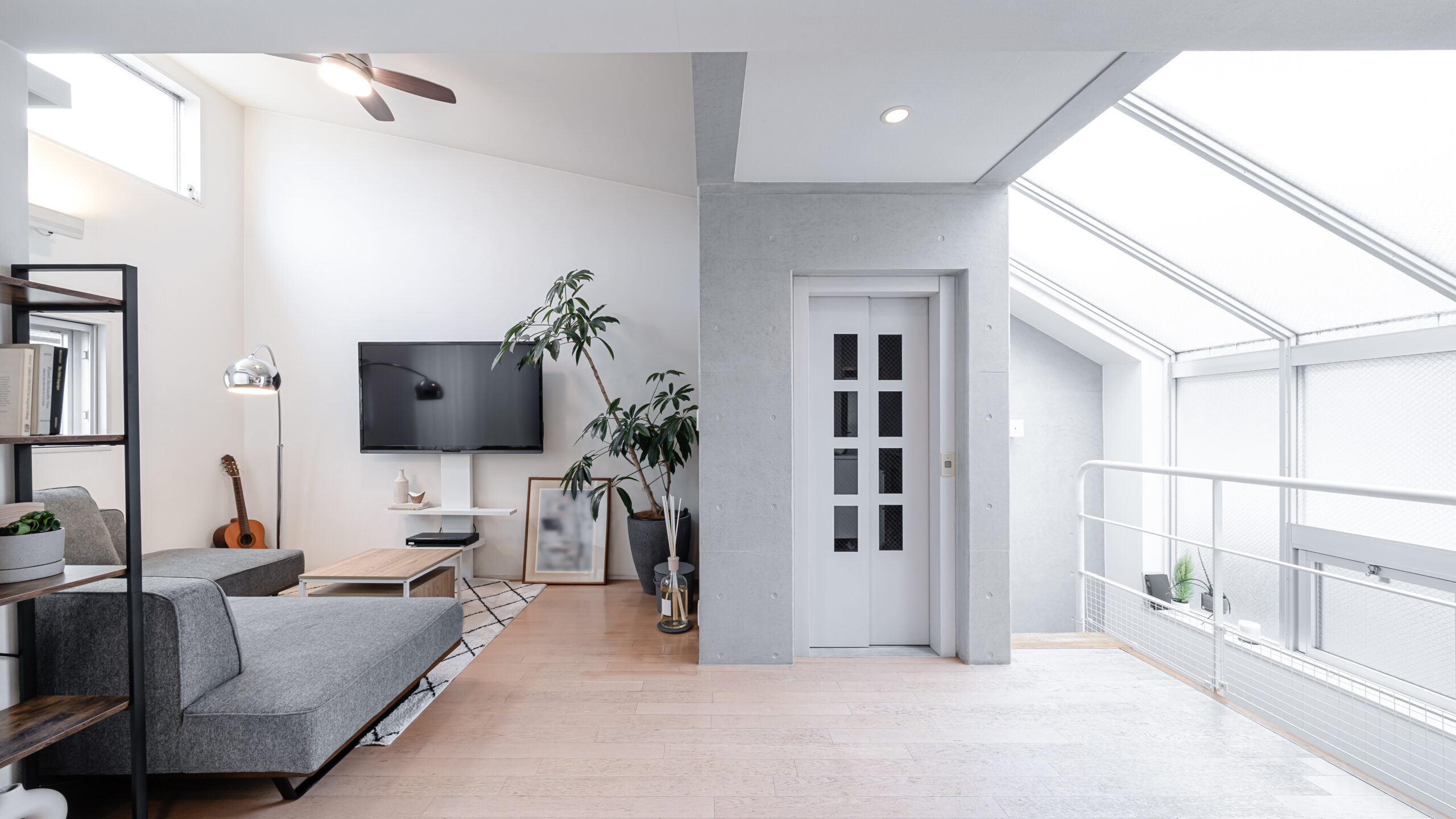
Home elevator doors also come in a variety of design styles, whether it’s a simple flat design, a linear style, or a curved door, or a mixed and matched design, all can be customized.
Home Elevator Accessories
When designing home elevators, in addition to ensuring basic functions, optional extra accessories can be added to improve the aesthetics and convenience of the equipment.
For accessibility needs, handrails and non-slip floors can be included as components of home elevators.
In terms of operation and smart accessories, you can choose to design a button-type control panel or a touch control panel, sensor lights, intercom system, combination lock, voice broadcast device, etc. on your home elevator.
In terms of safety, in addition to the essential safety devices, it can also be equipped with anti-collision strips, sound and light prompts, alarms, etc.
The drive system, the most important component of a home elevator, is not a single, fixed system. Common drive systems include hydraulic drives, traction drives, screw drives, and vacuum drives.
Different drive systems have different characteristics. For a more in-depth understanding, please click here: Home Elevator Working Principle
How to Choose the Right Home Elevator Design
Consider Your Home’s Architectural Style
To achieve a harmonious and aesthetically pleasing home, you should consider the building’s architectural style when designing your home elevator. For example, modern minimalist homes should avoid cumbersome European styles and classically carved home elevators, while homes with a light luxury style should avoid rugged industrial-style home elevators.
Only when home elevators and residences are styled in a coordinated manner can they enhance the grade and value of the house, improve its aesthetics, and showcase the homeowner’s fashionable taste.
Evaluate Available Installation Space
You need to assess the space that can be reserved for installing a home elevator. The size of the space will determine the type of elevator that can be used, the load capacity, the door opening method, the car size, and the shaft structure.
Elevator type: A reserved space of 1㎡-1.4㎡ can be used to install a hydraulic elevator; a reserved space of 0.8㎡-1.2㎡ can be used to install a traction elevator; a reserved space of 0.8–1.0㎡ can be used to install a screw elevator; and a reserved space of 0.45–0.7㎡ is suitable for a vacuum elevator.
Capacity
| Capacity | Typical Passenger Capacity | Car dimensions (approx.) |
| 250kg | 1-2 person | 600×600mm ~ 700×700mm |
| 320kg | 2–3 people | 800×800mm ~ 900×900mm |
| 400kg | 3-5 peolple | 1000×1000mm |
| 450kg | 6-7 people | 1100×1400mm |
Door Opening Methods: Single-leaf and side-opening doors require minimal space, whereas walk-through and center-opening doors require more space.
Car Dimensions: Provided that the frame structure, door opening configuration, and internal component layout remain consistent, the car dimensions are positively correlated with the overall reserved space.
Shaft Structure: If the reserved space is sufficiently large, a concrete, steel-structure, aluminum alloy, or glass shaft can be constructed; if the reserved space is limited, a shaftless home elevator is an option.
Prioritize Functionality and User Needs
While ensuring aesthetic appeal, home elevators should also possess the various functions needed to meet the daily living requirements of the household. When selecting a home elevator for a household with elderly residents or wheelchair users, the primary considerations are whether the door size and style facilitate easy access and whether the elevator car is spacious.
Secondly, the interior features custom handrails and non-slip flooring, and the control panel is positioned to be easily accessible to them.
Third, the elevator speed should be set to a gentle pace.
For households with children, consider installing elevator locking devices—such as keypad or card-swipe systems—to prevent children from accidentally entering the elevator.
If the equipment is to be used by pregnant women, the shock-absorption mechanism, noise-reduction system, and emergency systems—including anti-slip flooring, the emergency stop function, and the one-touch alarm—should be carefully inspected.
Balance Design Preferences and Budget
Keep costs within budget while maintaining overall aesthetic appeal.
When working with a limited budget, selecting from standard models—while retaining core elevator functions and selectively using high-strength, wear-resistant materials—ensures practicality while maintaining quality.
With a generous budget, the car interior can feature luxurious solid wood paneling and soft “starlight” ceiling lighting, as well as more intricate and refined carved patterns. Various smart features can also be integrated into home elevators to create a modern smart home.
Home Elevator Design Trends for 2026
In the future, minimalist panoramic glass elevators and compact, shaftless home elevators will remain popular choices in home elevator design. Meanwhile, greater emphasis is being placed on barrier-free and age-friendly design to meet the growing trend of aging in place.
Smart technology is also set to become a new trend in home elevators design. Home elevators are beginning to incorporate touchless operation features, intelligent predictive capabilities, and IoT services.
In the future, people will continue to seek a quiet and comfortable riding experience, but they will also place greater emphasis on energy-saving and eco-friendly elevator technologies.
Conclusion
The design of a home elevator involves planning its dimensions, layout, functionality, materials, and appearance to create a vertical lifting unit that complements the home’s aesthetic and meets the user’s specific needs.
Whether you are a distributor or an individual end-user, understanding the design details of home elevators is crucial. If you would like to learn more or connect with a professional supplier of custom home elevators, please contact Anter; we offer hundreds of custom designs featuring a wide range of shapes, materials, functions, finishes, lighting options, and door styles.
Furthermore, we have a professional design team and a team of senior engineers who will tailor a solution to your specific requirements.
Click here to get the Anter home elevator design PDF.
Faq
How Do I Choose the Best Home Elevator Design for My House?
The best home elevator is one that is suitable for your residence. You should evaluate your space and home style, and understand the needs of every family member who will use the home elevator. Finally, after receiving a detailed presentation from a professional home elevator company, make a choice within your budget.
Note: Precisely confirm the dimensions of the reserved space with the elevator company to ensure a perfect fit once the elevator is manufactured.
How Can I Design a Small Home Elevator for Limited Space?
First, the car is designed to carry passengers and fit within the dimensions of a limited space.
Secondly, the design features a compact shaft with a minimum clear internal dimension of 800 mm × 800 mm, capable of accommodating one person. If you prefer not to construct a dedicated shaft, a shaftless elevator with a self-supporting frame can meet your installation needs in limited spaces.
Third, the car features a rounded-corner design to prevent injuries from sharp angles; the interior is kept uncluttered—with streamlined handrails and control panels—to ensure efficient use of the limited space.
Forth, uses a side-opening sliding door, which takes up minimal space.
Are Glass Home Elevator Designs Safe?
Yes. The installation of an enclosed cabin, interior handrails, and non-slip flooring in a residential glass elevator helps ensure user safety.
In addition, the elevator utilizes tempered laminated glass, which offers high hardness and strong impact resistance. The external metal framework is made of high-strength steel, ensuring stable elevator operation without deformation.
Certified glass home elevators come equipped with a comprehensive suite of safety features—such as anti-fall systems, emergency self-rescue mechanisms for power outages, and anti-pinch door protection—ensuring your safety from every angle.
Does Home Elevator Design Affect the Price?
Yes. The design of a home elevator affects the price. Home elevators are based on a standard model; modifying or upgrading the configuration involves more complex manufacturing processes and components, as well as increased time and labor costs. Therefore, the prices of home elevators vary depending on their design.
What Is the Best Elevator Design for Wheelchair Users?
First, the door width and the interior dimensions of the car facilitate easy entry and exit, ensuring there is no sense of confinement.
Secondly, the interior is equipped with handrails, the flooring uses non-slip materials, and there is no height difference between the bottom of the car and the residential floor.
Third, pass-through door design facilitates entry and exit for wheelchair users.
Fourth, the installation position of the elevator control panel—whether featuring buttons or a screen—is adapted for wheelchair users, ensuring the controls are within easy reach.
Fifth, the elevator interior is equipped with an emergency stop, emergency lighting, and an emergency communication device.
 English
  Arabic
  Vietnamese
  German
  Malay
Malay  Thai
Thai