When choosing a home elevator, unless you have done prior research or are a professional in the field, it can be difficult to discern the differences between them. Each type of elevator has its own characteristics and uses. Currently, the most common types of home elevators on the market are traction elevators and hydraulic elevators. If you want a clear understanding of them, take some time to read this article—it clearly outlines the differences between these two types of elevators from both theoretical and practical perspectives, helping you make the wisest choice.
The Key Differences of Traction Vs Hydraulic Elevator
The following are the main differences between hydraulic elevators and traction elevators.
Principle
Hydraulic e and traction elevators operate on different principles. As the name suggests, a hydraulic elevator primarily uses hydraulic pressure as its drive source. During ascent, a hydraulic pump forces hydraulic oil into the cylinder, which in turn pushes the plunger to lift the car in a linear upward motion. During descent, the car’s own weight causes the hydraulic oil to flow back to the tank, thus achieving the downward movement. This internal hydraulic oil circulation process completes the power transmission, reducing energy consumption and extending the equipment’s lifespan.
A traction elevator uses traction as its power source and consists of two parts: a motor and a traction sheave. The motor drives the traction sheave to rotate, which in turn generates friction between the steel cables suspending the car and counterweight at both ends and the grooves of the traction sheave. This friction force provides the traction force to move the elevator up and down, ensuring that the car and counterweight move in opposite directions, thus completing the entire process of normal elevator operation.
Component
Because hydraulic elevators and traction elevators operate on different principles, their components are identical. Hydraulic elevators primarily consist of seven systems: pump station system, hydraulic system, guide system, car, door system, electrical control system, and safety protection system. Traction elevators, on the other hand, consist of eight systems: traction system, guide system, car, door system, weight balance system, electric drive system, electrical control system, and safety protection system.
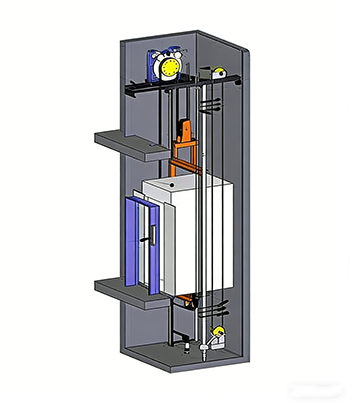
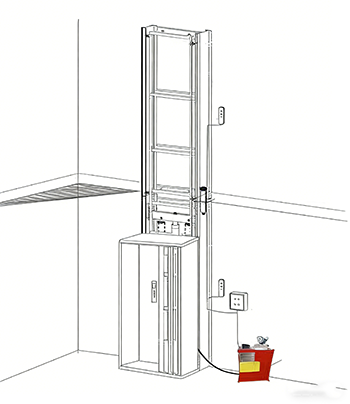
Figure 1 Traction Elevator Figure 2 Hydraulic Elevator
Load Capacity
Hydraulic elevators and traction elevators differ in their drive systems and structures, resulting in different load capacities. Residential hydraulic elevators typically have a load capacity of 250-400 kg, with a maximum of 630 kg, while commercial hydraulic elevators have a load capacity of 500-1600 kg. Residential traction elevators typically have a load capacity of 250-800 kg, with some high-end models reaching 1000 kg. Commercial traction elevators typically have a load capacity of 1000-2500 kg, and traction elevators can have a maximum load capacity of 3000-10000 kg.
In a traction elevator, the weights at both ends of the steel cable form a lever structure that saves effort; simply balancing the weight difference between the two ends increases the car’s load capacity. Hydraulic elevators, on the other hand, rely on pressure differential movement. Limited by the diameter of the hydraulic cylinder, the power of the hydraulic pump, and the pressure resistance of the hydraulic oil, increasing the load capacity would significantly increase cost and overall size, making it neither cost-effective nor safe.
Lifting Height
Home hydraulic elevators are more suitable for low-rise residential buildings, primarily between the 2nd and 5th floors, with a lifting height of 6-15 meters. Hydraulic elevators are relatively slow, and their efficiency decreases as the floor height increases, resulting in a poor user experience; therefore, they are an ideal choice for low-rise buildings. Home traction elevators are suitable for mid-rise residential buildings, between the 3rd and 8th floors, with a lifting height of 15-30 meters. Commercial traction elevators can be used in buildings with more than ten floors. Due to their very compact structure and stable efficiency, traction elevators are highly suitable for mid- to high-rise buildings.
Energy Consumption
Compared to hydraulic elevators, traction elevators consume less energy and are more efficient. Currently, advanced traction elevators use variable frequency drive systems, allowing them to operate in regenerative power generation mode, further reducing energy consumption. While hydraulic elevators also have low energy consumption on lower floors, their energy consumption increases and their performance deteriorates as the building ascends.
Safety
Traction lifts have more safety devices than hydraulic lifts. Commercial traction elevators have more safety devices than residential ones. Traction elevators generally have anti-fall devices such as counterweights, speed governors, brakes, and numerous other safety redundancy devices. Hydraulic elevators typically use hydraulic valves and some safety redundancy devices to prevent falls. Both hydraulic and traction elevators are equipped with anti-pinch and anti-collision features, power outage protection, and alarm and communication systems.
Maintenance/Inspection
Commercial traction elevators require 2-4 inspections and maintenance sessions per year, while residential traction elevators require 1-2 inspections and maintenance sessions per year. Traction elevator maintenance typically involves inspecting the steel cables, traction machine, safety devices, guide rails, door system, control system, and electrical system. The maintenance difficulty is higher than that of hydraulic elevators. Commercial hydraulic elevators require one inspection and maintenance session per year, while residential hydraulic elevators require one inspection and maintenance session every two years. Hydraulic elevator maintenance typically involves inspecting the hydraulic oil, cylinders, hydraulic pump station, valves, and car guidance system.
Travel Speed
Traction elevators operate faster than hydraulic elevators. Commercial traction elevators have operating speeds between 1 m/s and 3.5 m/s, while commercial hydraulic elevators operate between 0.4 m/s and 0.8 m/s. Residential traction elevators have operating speeds ranging from 0.6 m/s to 1.2 m/s, and residential hydraulic elevators operate between 0.15 m/s and 0.4 m/s.
Counterweight
Due to their operating principle, traction elevators require counterweights to balance the elevator car and reduce energy consumption. Therefore, counterweights are an indispensable part of traction elevators. Hydraulic elevators, on the other hand, primarily rely on a hydraulic system to drive the elevator car and therefore do not require counterweights.
Installation requirements
Commercial traction elevators require a shaft, machine room, and pit, have a long installation period, require permits, and must comply with installation requirements for public buildings. Commercial hydraulic elevators require a machine room or pump station, shaft, and pit, have a shorter installation period than commercial traction elevators, and their installation must comply with load-bearing and fire safety regulations. Residential traction and hydraulic elevators do not require a shaft, pit, or machine room, and have a fast installation time.
Cost
Under the same installation height, at the same installation location, and with the same standard basic model, the cost of a hydraulic elevator is lower than that of a traction elevator. In high-rise buildings, the cost of traction elevators is very high, while for low- and medium-rise buildings, hydraulic elevators offer better value for money.
Conclusion
Finally, hydraulic elevators and traction elevators each have their own features. If you want to know which one is right for you, you need to consider the specific conditions of the building, which involves many parameters and mechanical knowledge, making it quite complex. However, we recommend a more convenient method: contact Ant Elevator Company, a highly professional home elevator manufacturer, who can put your ideas and needs into practice. Anter can provide you comprehensive hydraulic traction elevator services, delivering exceptional quality.
FAQ
What are the advantages of hydraulic elevators and traction elevators?
Traction elevators offer high speeds, long lifting distances, and are suitable for mid- to high-rise buildings. They also operate very smoothly with low noise, maintaining a comfortable ride. Furthermore, traction elevators consume less electricity and have a longer lifespan.
Hydraulic elevators are the preferred choice for low-rise buildings due to their smooth operation and relatively low price. They also offer high safety, easy installation, small size, minimal footprint, and require no pit or shaft.
Which is better, a hydraulic or traction elevator?
Hydraulic elevators and traction elevators each have their own advantages, so you need to find the one that best suits your needs. You can refer to the above content for a clear understanding of the differences between hydraulic elevators and traction elevators, or read this article on Different Types of Home Elevators: Professional Guide for a more in-depth understanding. Choosing a home elevator is a complex process. If you have any questions, you can fill out the form on the right, and a professional will answer your questions.